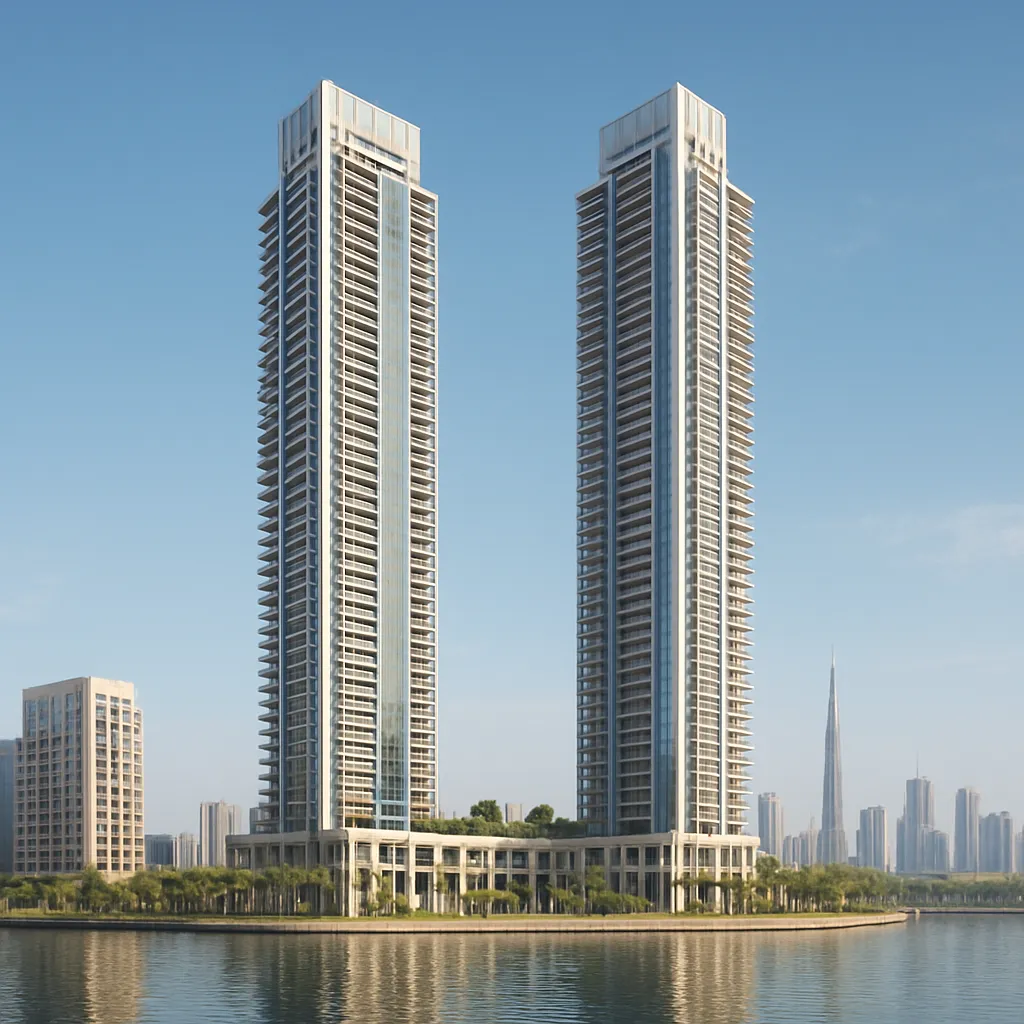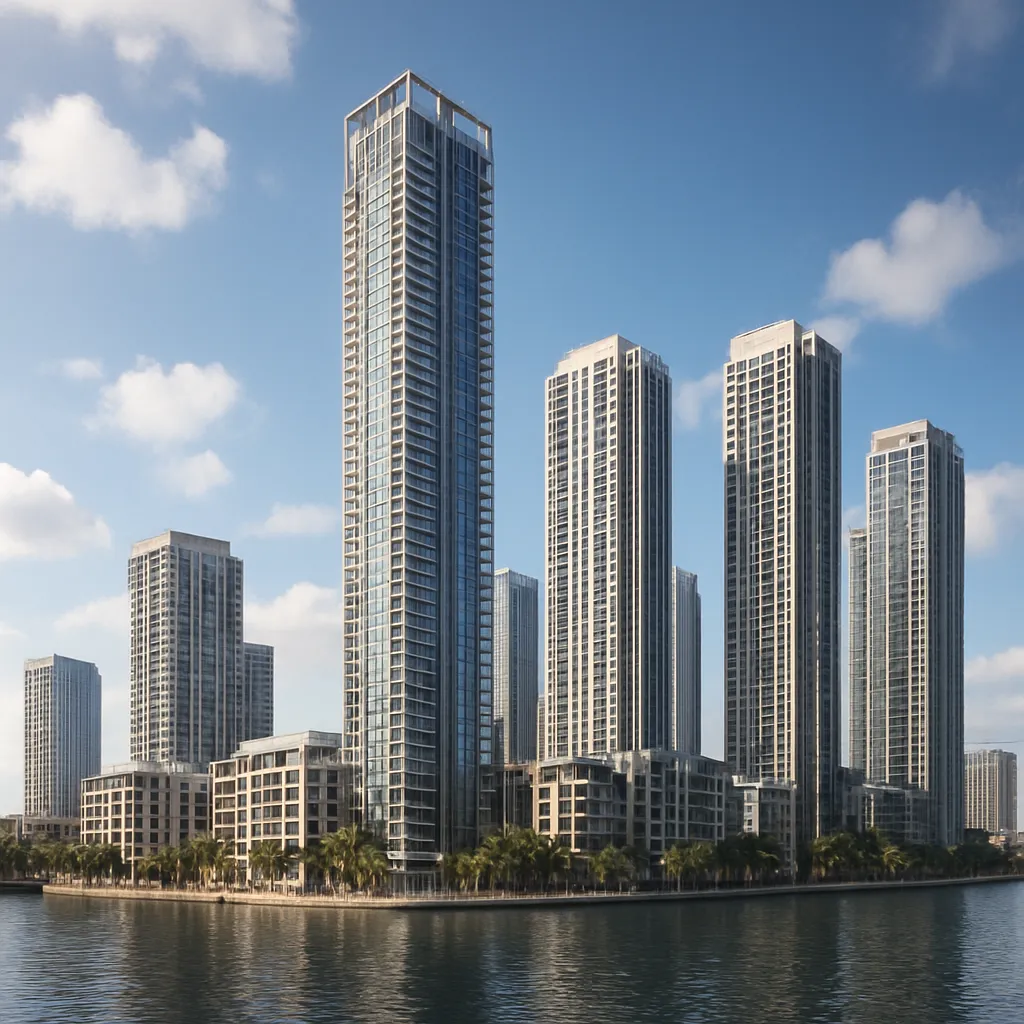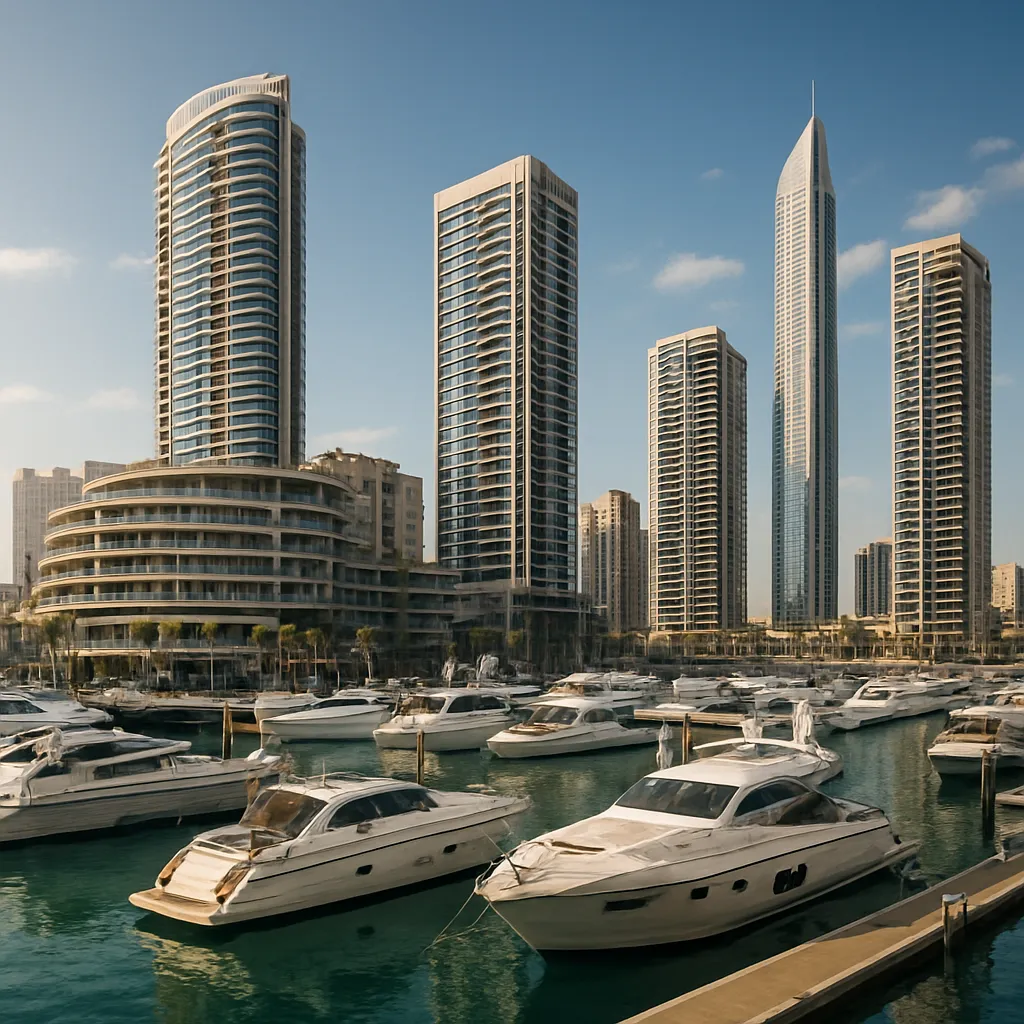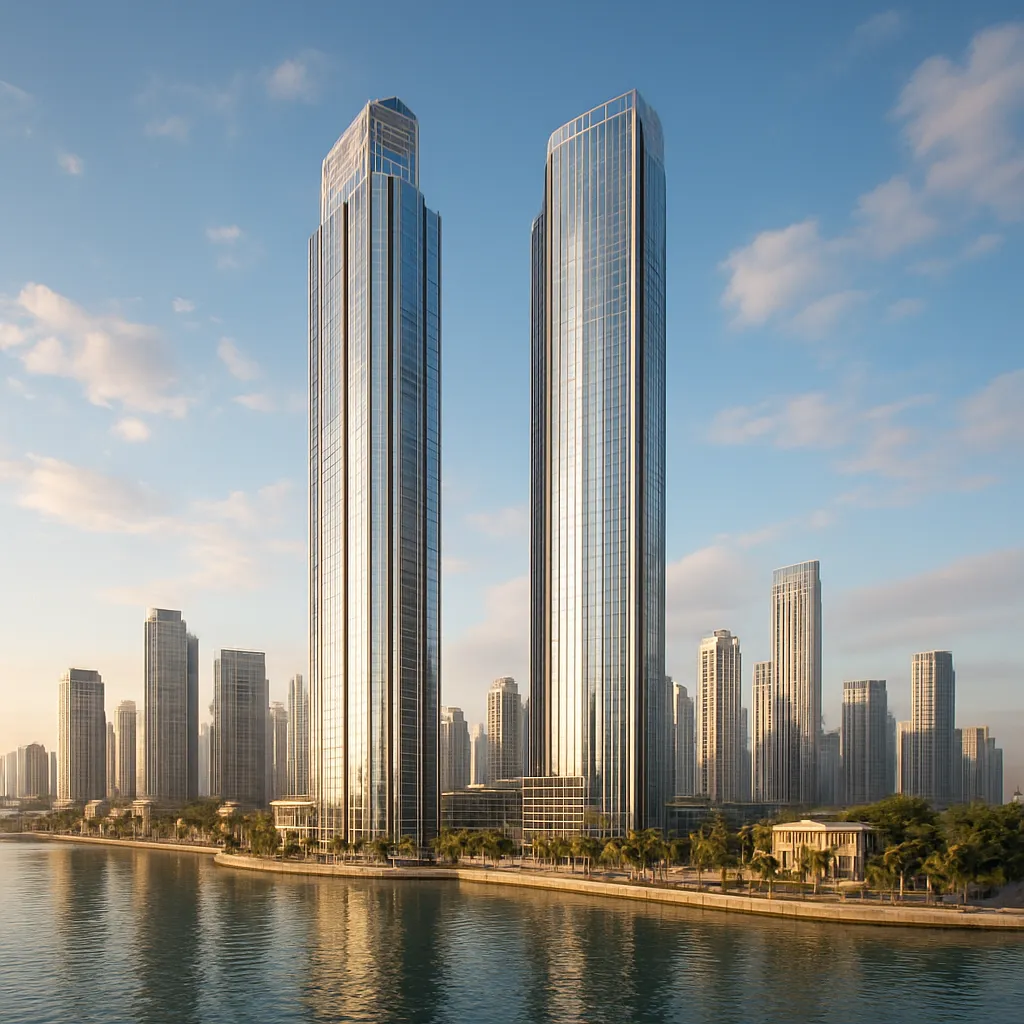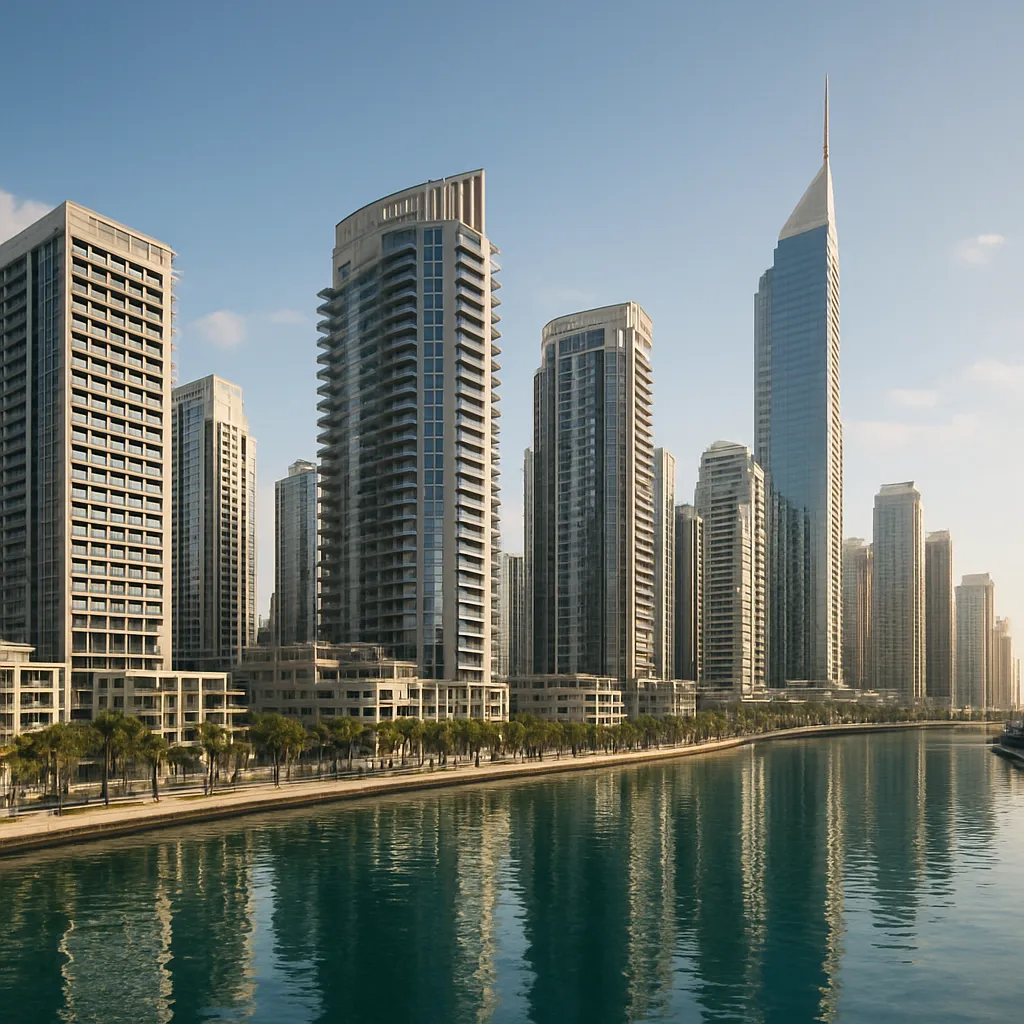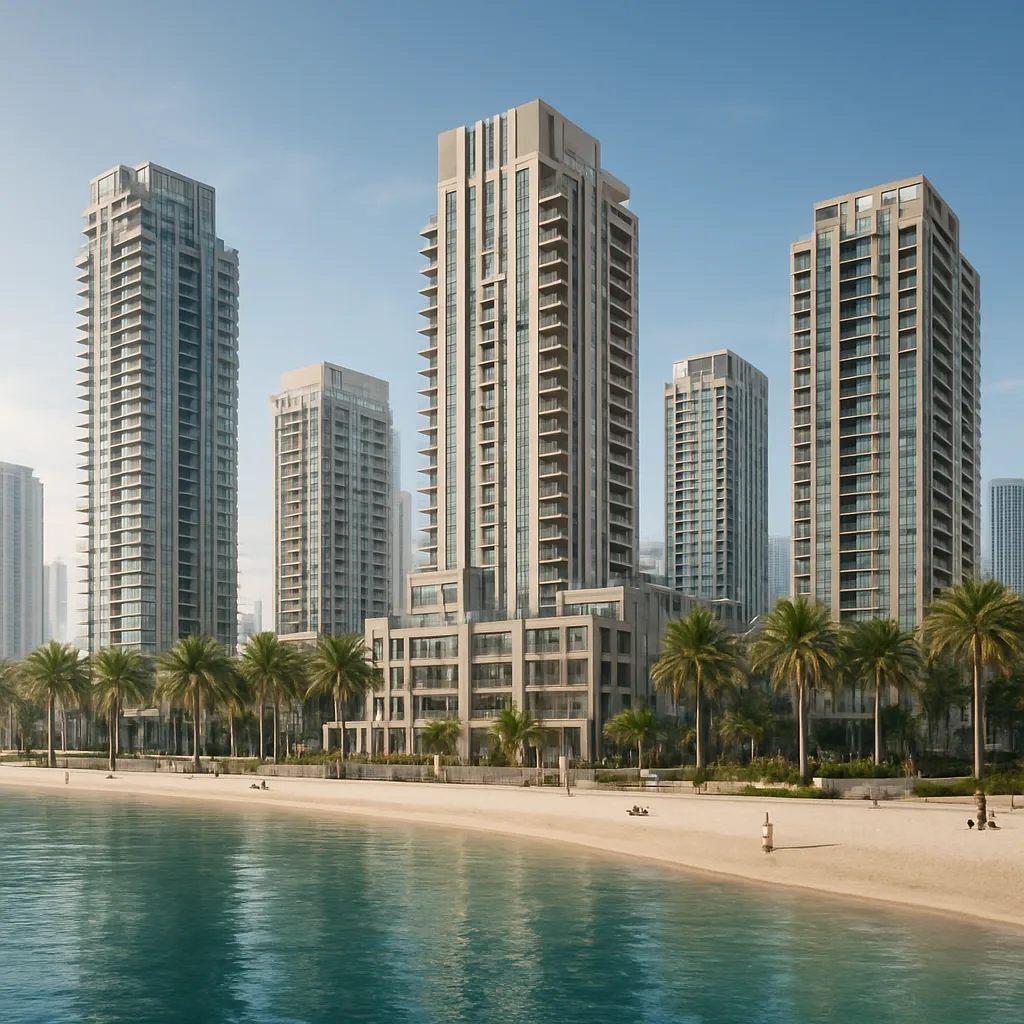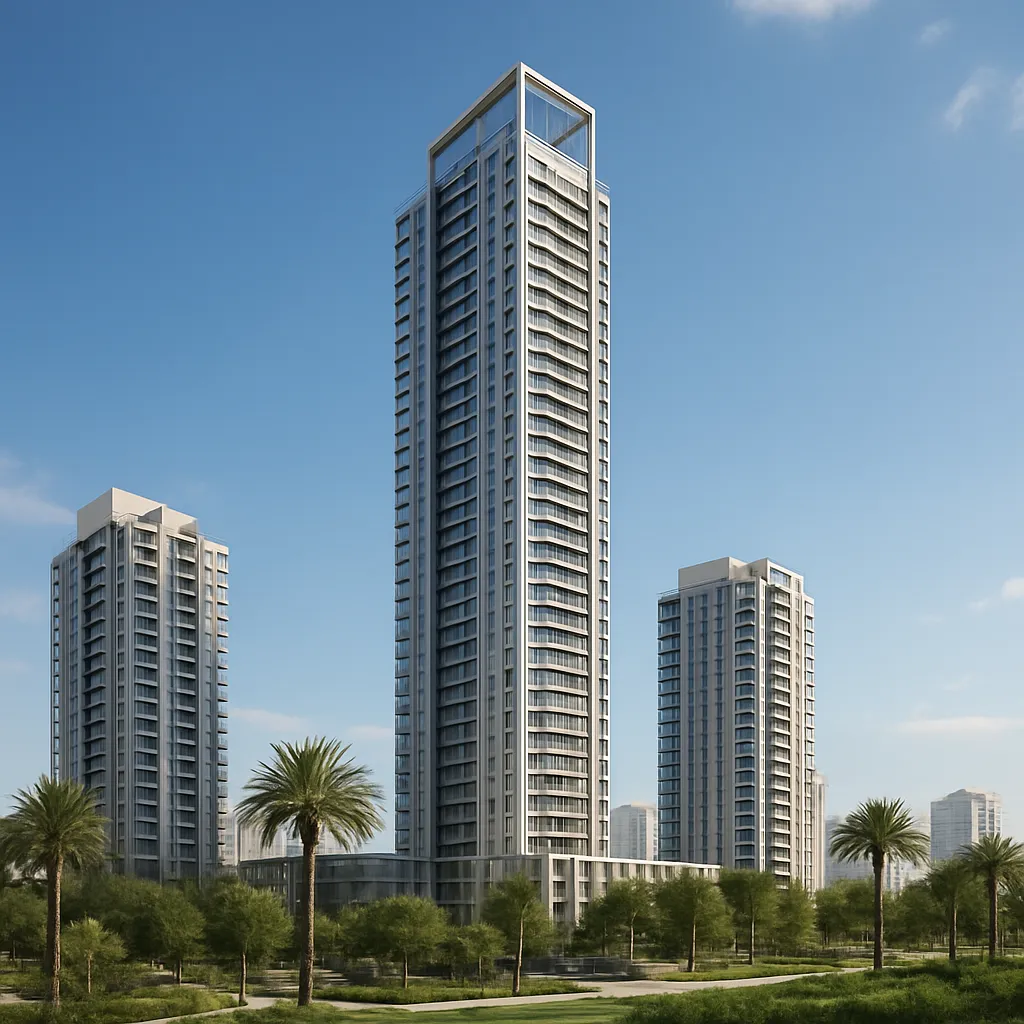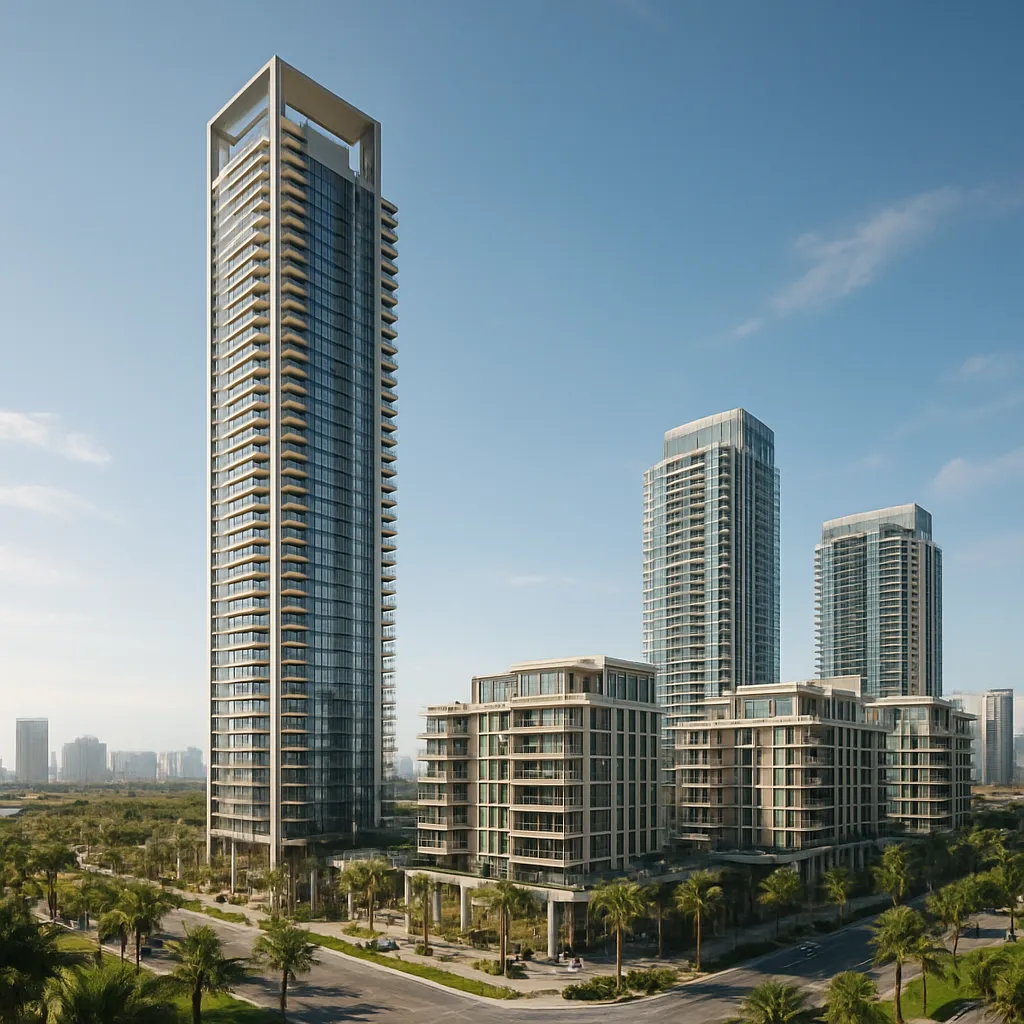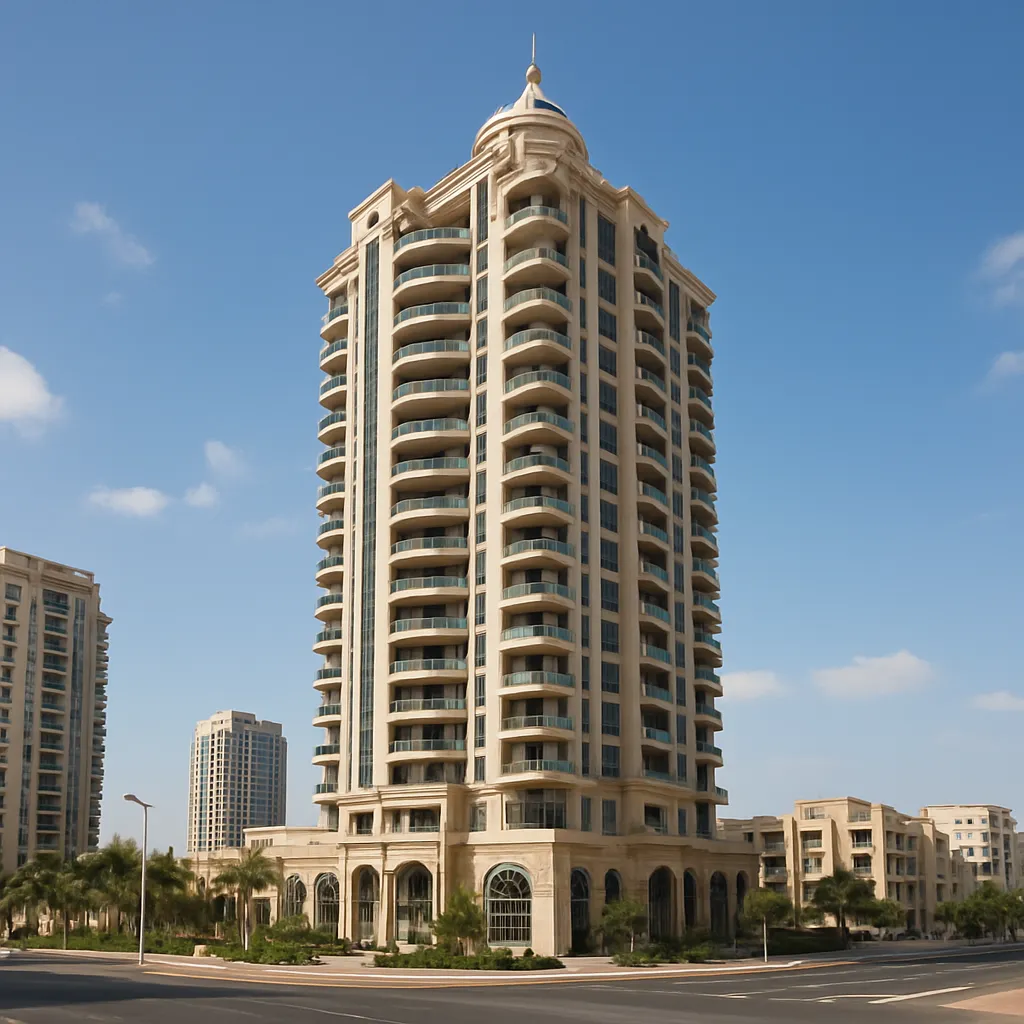
Al Jawhara Tower, located in the heart of the Jumeirah Village Triangle area of Dubai, is a modern residential building that represents the ongoing urban development of Dubai’s suburban neighborhoods. This article explores the tower’s location, architectural qualities, amenities, community role, and broader significance. It also provides available statistical estimates and contextual information useful for residents, visitors, investors, and anyone curious about contemporary residential towers in Dubai.
Location and urban context
The tower sits within the Jumeirah Village Triangle (commonly abbreviated as JVT), a planned community that forms part of Dubai’s network of mixed-use neighborhoods combining residential, leisure, and light commercial facilities. JVT is known for its quieter, low- to mid-rise developments compared with the high-density cores of Dubai Marina or Downtown Dubai. Al Jawhara Tower benefits from this balance: it is close enough to Dubai’s major arterial roads—offering reasonable access to Sheikh Mohammed Bin Zayed Road (E311) and Hessa Street—while being embedded in a relatively calm, landscaped community environment.
The tower’s location places it within commuting distance of important employment and leisure hubs. From JVT, travel times by car typically range from 15 to 30 minutes to major business districts under normal traffic conditions. Nearby communities include Jumeirah Village Circle (JVC), Arabian Ranches, and parts of the Dubai Sports City corridor. The neighborhood’s design emphasizes internal roads, parks, and pedestrian-friendly pockets, which gives Al Jawhara Tower residents access to both private building amenities and public open space.
Design, architecture, and materials
Al Jawhara Tower reflects common principles of contemporary residential tower design in Dubai: practical floor plans, façade treatments combining glass, concrete and decorative paneling, and a focus on maximizing natural light. The tower’s exterior employs a restrained palette that integrates the building into JVT’s subdued suburban aesthetic rather than competing with Dubai’s super-tall skyline.
Architectural priorities for this kind of development often include energy efficiency, modular apartment layouts, and the creation of a welcoming ground-level environment with lobbies, landscaped courtyards, and shaded drop-off areas. While detailed public architectural drawings for Al Jawhara Tower may not be widely available, towers in JVT typically use reinforced concrete structures with curtain wall or window systems that balance daylight with solar control. The choice of materials and finishes inside apartments tends toward durable, low-maintenance surfaces—porcelain tiles or engineered wood flooring, fitted kitchens with composite stone worktops, and contemporary bathroom fixtures.
Design emphasis is also placed on communal spaces: rooftop terraces or sky gardens for select developments, well-equipped gyms, children’s play areas, and secure parking. Many modern mid-rise towers in Dubai incorporate CCTV security, managed reception desks, and strata-style management for maintenance and shared services, features that are likely present at Al Jawhara Tower as part of its standard resident offerings.
Amenities, unit types, and resident experience
Residents of Al Jawhara Tower typically expect a range of amenities geared toward family living and everyday convenience. Common offerings in similarly positioned towers include:
- Swimming pool and sun deck for adults and children
- Fully equipped gym and fitness studios
- Secure underground or covered parking
- Children’s play areas and communal landscaped gardens
- Managed reception and 24-hour security services
- Multi-purpose community rooms or event facilities
- Retail or F&B units at ground level in some cases
Apartment layouts in towers within JVT frequently range from studios and one-bedroom units to larger two- and three-bedroom layouts aimed at families. The tower’s unit mix determines the demographic profile: a higher proportion of three-bedroom apartments typically attracts families, whereas more studios and one-bedrooms attract singles, couples, and investor rentals. Typical interior features include open-plan living areas, integrated kitchens, and balconies that provide private outdoor space—valuable in Dubai’s climate and for enjoying evening breezes.
The building’s management plays a substantial role in resident experience. Professional property management ensures timely maintenance, cleanliness of communal areas, landscaping upkeep, and smooth handling of utility services. Social programming—occasional community events, fitness classes, or seasonal celebrations—can further enhance the sense of neighborhood belonging among residents.
Construction timeline, ownership, and statistical overview
Exact construction timelines, ownership details, and hard statistics for Al Jawhara Tower vary depending on the developer and the specific building phase. Publicly available information for many smaller residential towers in JVT is sometimes limited compared with landmark skyscrapers. Where precise figures are not available, the following are reasonable, evidence-based estimates and typical values for similar JVT developments:
- Height and floors: Many JVT residential towers are mid-rise, commonly ranging between 12 and 25 floors. Al Jawhara Tower is likely to be within this mid-rise category rather than a podium-plus-tower superstructure.
- Unit count: Mid-rise blocks in the area commonly contain anywhere from 50 to 200 residential units depending on floor plate size and unit mix.
- Typical apartment sizes: Studio units in JVT usually start from about 400–500 sq ft (37–46 m²), one-bedroom units span roughly 600–900 sq ft (56–84 m²), and two- to three-bedroom units commonly range from 1,000 to 1,800 sq ft (93–167 m²).
- Parking ratio: Developments generally provide 1 to 2 parking spaces per apartment, with additional visitor bays incorporated into basement or podium parking levels.
- Completion and occupancy: Many JVT projects were developed and completed throughout the 2010s and early 2020s, responding to Dubai’s expansion and demand for family-oriented suburban housing. Al Jawhara Tower’s completion date should be checked against property registry or sales listings for precise timing.
Note: For investors or detailed technical analysis, always consult the official sales brochure, developer disclosures, or Dubai’s land department records to obtain verified figures such as exact floor count, gross floor area, service charges, and ownership structure.
Sustainability, energy, and modern building systems
Newer residential buildings in Dubai increasingly integrate elements of sustainability and resource efficiency. While Al Jawhara Tower may not be marketed as a high-profile green building, several practical measures are often implemented across JVT developments to reduce operating costs and environmental impact:
- High-performance glazing and shading devices to reduce cooling loads
- LED lighting in communal areas and motion-controlled lighting in service corridors
- Solar-assisted heating for pools or water pre-heating in some developments
- Water-saving sanitary fixtures and landscape irrigation systems with timers or moisture sensors
- Segregated waste collection points to support recycling
Additionally, modern HVAC systems, central chilled water plants for clusters, and energy-efficient pumps and motors contribute to lower operational consumption. Building management may monitor energy use and carry out periodic audits, which is an important consideration for long-term investment performance and resident satisfaction.
Market positioning, investment considerations, and rental outlook
Al Jawhara Tower is positioned within the mid-range residential market of Dubai. JVT as a whole attracts a mix of owner-occupiers and long-term renters rather than short-stay tourists, which creates a relatively stable rental market. For investors, key considerations include:
- Location appeal: proximity to family-oriented amenities, schools, and retail centers improves long-term demand.
- Supply and demand dynamics: JVT has seen steady development; researching upcoming completions in the neighborhood is essential to judge future rental pressure.
- Service charges and maintenance: mid-rise towers typically have moderate service fees; reviewing historic service charge records helps estimate annual ownership costs.
- Rental yields: historically, suburban Dubai neighborhoods can offer yields competitive with other residential zones, especially for three-bedroom family apartments; yields vary widely with macroeconomic conditions and should be checked with recent market reports.
- Tenant profile: family-oriented towers often have longer tenancies and lower turnover, reducing vacancy-related costs for landlords.
Investors should undertake due diligence: examine title and developer warranties, request utility and maintenance histories where possible, and consult local property agents for comparable sales and rental evidence. Legal and tax frameworks—while favorable in Dubai—also require proper review to ensure compliance with residency and ownership regulations.
Community life, nearby facilities, and lifestyle
Life around Al Jawhara Tower reflects the JVT ethos: quieter streets, parks, and a slower pace compared with Dubai’s tourism hubs. Families often enjoy the network of small parks, walking paths, and communal green spaces. Schools, nurseries, and healthcare clinics are commonly within a short drive, supporting family living.
Retail and dining options have evolved in JVT to include convenience stores, neighborhood cafés, and local supermarkets, while larger malls and entertainment centers are accessible by a short drive. The tower’s residents can therefore take advantage of both neighborhood intimacy and metropolitan amenities nearby.
Transport connectivity is primarily car-based, but ride-hailing and taxi services are widely available. Public bus routes and shuttle services to major metro stations or commercial districts sometimes serve the area, making commuting feasible even without a private vehicle for short trips.
Notable facts, cultural significance, and interesting details
Al Jawhara Tower contributes to a cluster of developments that illustrate Dubai’s multi-scalar approach to urban expansion: high-rise centers complemented by human-scale suburban neighborhoods. Several interesting aspects worth noting:
- The tower typifies Dubai’s diversification of residential product—providing options between mega-towers and low-rise villas to meet varying lifestyle needs.
- Community planning in JVT emphasizes pedestrian-friendly streets and shared green spaces, which has influenced resident preferences for more balanced urban living.
- Buildings like Al Jawhara Tower often evolve with the neighborhood: initial phases attract early residents who shape local services, and later phases benefit from added retail and institutional amenities.
- Given Dubai’s climate, architectural attention to shading, cross-ventilation in balcony design, and amenity placement (e.g., locating pools on shaded decks) is an everyday practical concern for residents and designers alike.
From a cultural perspective, towers in JVT support a cosmopolitan population—diverse expatriate communities living alongside Emirati families contribute to a multicultural local life, with festivals and events in shared spaces that reflect this diversity.
Practical information for prospective residents and visitors
For anyone considering living in Al Jawhara Tower or visiting, practical steps include:
- Visiting the tower at different times of day to assess traffic patterns, sunlight exposure, and noise levels.
- Requesting a copy of the building’s management rules, service charge breakdown, and recent maintenance records.
- Checking unit title and any restrictions on short-term rentals if planning to use the property as an investment.
- Confirming the availability of parking spaces, storage units, and access to delivery and moving facilities.
- Exploring nearby schools, supermarkets, clinics, and leisure options to ensure they match family needs.
Engaging a licensed real estate agent and legal advisor in Dubai helps streamline the process of purchase or rental and ensures compliance with local regulations such as Ejari registration for tenancy contracts.
Conclusion
Al Jawhara Tower in Jumeirah Village Triangle represents a form of contemporary residential development that balances practicality with community-focused living. While it does not dominate Dubai’s famous skyline, its value lies in providing comfortable, family-friendly housing within a planned suburban setting. With a combination of modern amenities, practical apartment layouts, and a location that pairs quiet living with reasonable access to Dubai’s commercial centers, the tower is a solid representation of the city’s diversified housing stock.
Dubai, the Jumeirah Village Triangle, and buildings like Al Jawhara Tower reflect a broader urban narrative: accommodating diverse lifestyles through varied architectural scales and community planning. Whether for long-term residence or property investment, such towers deserve attention for their role in shaping livable neighborhoods in one of the world’s fastest-evolving cities.