Cluster C Residences in International City is a residential pocket within one of Dubai’s most distinctive and widely recognized neighbourhoods. Situated in the eastern sector of the emirate, International City is notable for its themed clusters inspired by countries and cultures from around the world. Cluster C is often mentioned by tenants, property managers and local guides as one of the accessible, economical and practical choices for renters seeking compact apartments close to commercial hubs such as Dragon Mart and the Ras Al Khor industrial area. This article explores Cluster C’s location, architecture, community, facilities, transport links, market characteristics and interesting details that make it a unique component of Dubai’s urban fabric.
Location and Urban Context
Cluster C is located within International City, a planned development lying to the south of Al Warsan and north of Ras Al Khor. International City itself was developed as a mixed-use project combining residential, retail and light commercial uses to serve a large and diverse population. It lies east of central Dubai and is often perceived as part of the city’s outer suburban ring, with quick access to major arterial roads that connect it to central business districts, industrial zones and the airport.
The surrounding environment includes a mixture of low- to mid-rise residential blocks, retail streets, parks and purpose-built commercial clusters. One of the most prominent nearby landmarks is Dragon Mart, a large Chinese retail and wholesale complex that influences shopping patterns and employment in the area. Other regional anchors include local souks and retail strips offering everyday services to residents of International City and neighbouring communities. This proximity to major retail and industrial nodes is one reason Cluster C attracts a largely practical, commuter-oriented populace.
International City’s masterplan emphasized a collection of themed enclaves, and Cluster C sits within the residential mosaic rather than representing a standalone theme-building such as the “China” or “England” clusters. Its position makes it a convenient base for people working in the surrounding commercial districts or seeking lower-rent accommodation while still maintaining reasonable commute times to central Dubai.
Architecture and Building Characteristics
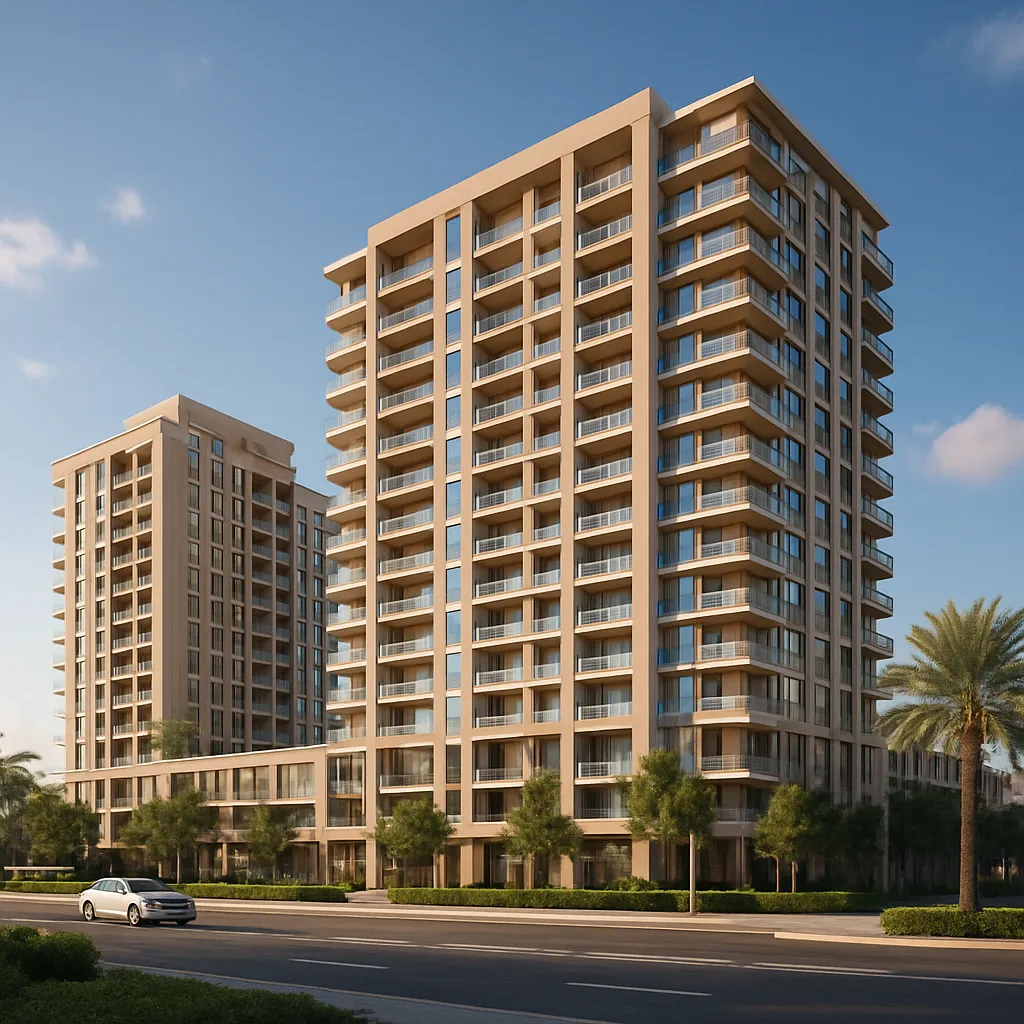
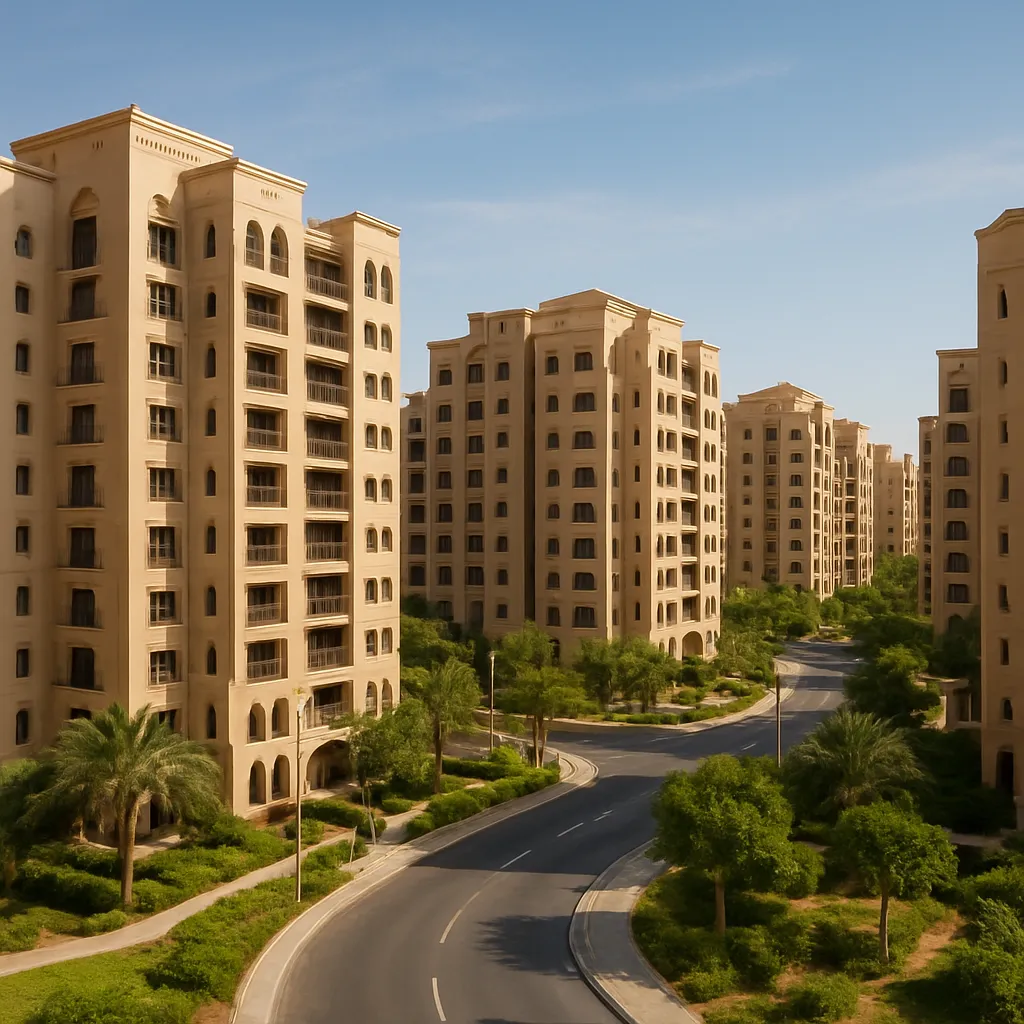
The buildings in Cluster C are characterized by functional, low- to mid-rise construction typical of International City’s residential blocks. Designed primarily as apartment buildings with a mix of studio, one-, two- and three-bedroom units, Cluster C prioritizes efficient use of space and affordability. Interiors tend to be modest, offering the essentials rather than luxury finishes, which appeals to a large segment of the rental market.
Externally, the facades follow straightforward, repetitive patterns that support quick construction and minimize maintenance costs. Building materials are commonly concrete and precast elements adapted to the desert climate. Windows, balconies and shared corridors are designed to balance cross-ventilation and privacy while conforming to Dubai Municipality regulations regarding safety and fire access.
Common architectural features you will notice around Cluster C include integrated ground-floor retail strips, covered parking areas, and communal open spaces such as small landscaped courtyards. Many units are accessed via a central corridor with elevator cores serving the key stories, while staircases provide secondary access and emergency egress. The planning approach emphasizes walkability within the cluster with short distances between residential blocks and local convenience stores or services.
Community, Demographics and Lifestyle
Cluster C’s population is representative of International City’s broader demographic profile: culturally diverse, largely expatriate, and skewed toward young professionals, small families and workers who value cost-effective housing. Residents come from a broad range of nationalities, and the area’s retail mix and services reflect that multicultural composition — small supermarkets stocking international brands, a variety of affordable restaurants, and service providers catering to everyday needs.
Community life in Cluster C tends to be informal and service-oriented. Social interaction frequently occurs in small retail clusters, local cafés and parks. The presence of numerous small businesses and home-based service providers creates a lively neighbourhood economy. Many residents appreciate the convenience of being able to walk to grocery shops, laundries, barber shops and repair services.
Because units in Cluster C are generally priced below the rates found in central Dubai or luxury districts, the area attracts tenants who prioritize value and functionality. This extends to a high turnover of rentals compared to upscale communities; however, there is also a stable core of long-term residents who find the location practical for work and schooling.
Amenities, Services and Public Spaces
Cluster C benefits from a typical set of amenities for International City residential clusters. These include:
- Local supermarkets and grocery stores supplying both regional and international products
- Small to medium-sized cafés and dining outlets offering a range of cuisines
- Daycare centers and small educational facilities suitable for young children
- Medical clinics, pharmacies and basic healthcare services
- Open communal spaces and small landscaped areas for recreation
- Convenience retail on ground floors, including laundries, salons and electronic shops
One of the distinguishing services near Cluster C is the ease of access to wholesale and speciality retail at Dragon Mart. This large shopping complex not only supplies goods but also functions as an employment center, meaning many Cluster C residents work there or use it frequently for major shopping. Additionally, practical public services such as postal facilities and vehicle servicing centers are available within short driving distances.
Open spaces in Cluster C are modest but functional. Smaller parks, playgrounds and shaded walkways provide daily recreational options. While the cluster does not feature expansive green belts, the design acknowledges the need for basic outdoor amenities that support family life and socializing.
Transport and Connectivity
Connectivity is a key factor shaping life in Cluster C. Although International City is not in the immediate heart of Dubai, it is designed to be well-connected by road. Major arteries and expressways allow drivers to reach Dubai’s business districts, industrial areas, and the airport in reasonable time depending on traffic. Car ownership is common among residents who need to commute to jobs in different parts of the emirate.
Public transport options include municipal bus routes that link International City with central parts of Dubai and neighbouring communities. Taxis and ride-hailing services are widely used, offering a flexible alternative for residents without private vehicles. Recent years have seen enhancements to bus frequency and route coverage, reflecting growing demand as the community’s population expands.
It is important to note that while International City is serviced by buses, it does not have a dedicated Metro station within its immediate footprint. For many residents, a short bus ride or drive to the nearest metro or major transit hub is part of the commute plan. This trade-off between lower rental costs and slightly longer public transit times is a common dynamic in the area.
Market Characteristics and Statistical Overview
Cluster C sits within a rental market segment that is considered affordable relative to Dubai’s premium neighborhoods. Typical rental units are compact and priced to attract budget-conscious tenants. Market behaviour in Cluster C reflects demand from young professionals, small families and contract workers who seek functionality rather than luxury.
Some market characteristics worth noting:
- Rental levels tend to be significantly lower than in central Dubai or waterfront districts. Studios and one-bedroom apartments in Cluster C are typically priced in a lower bracket, making them accessible to a wide cross-section of tenants.
- Occupancy rates can fluctuate with economic cycles and employment trends in the logistics and retail sectors nearby. Because the area is tied to employment hubs like Dragon Mart and industrial zones, shifts in those sectors influence local rental demand.
- The tenant turnover rate is comparatively higher than in family-centric upscale communities, partly because of the transient nature of some employment contracts and the rental affordability that attracts short-term stays.
- Investment yield for landlords can be attractive due to lower acquisition costs; however, capital appreciation tends to be more modest than in prime areas of the city.
Precise statistics for Cluster C specifically are not always publicly segmented from International City as a whole, but some broader figures provide context. International City as a whole has been known to accommodate tens of thousands of residents and contains thousands of residential units across its themed clusters. Rental averages and vacancy rates vary over time; anyone seeking exact current figures should consult local real estate portals, broker reports or government statistics for the latest data.
Practical Tips for Prospective Residents and Visitors
For people considering Cluster C as a place to live or invest, a few practical suggestions can improve the experience:
- Inspect properties during daytime and evening hours to assess noise, sunlight and ventilation. Some units benefit from cross-ventilation while others face internal courtyards with less direct airflow.
- Check the proximity to ground-floor retail and service outlets. Convenience stores and laundry services are extremely useful in daily life.
- Consider transport needs carefully. If you rely on public transit, verify bus routes and schedules. If you commute by car, check typical travel times to your workplace during peak hours.
- Ask about management and maintenance provisions. Building upkeep, waste collection and common area cleaning can vary between blocks, so choose properties with responsive management where possible.
- For investors, evaluate both short-term rental demand and longer-term capital growth potential. Rental yields in International City can be relatively strong due to low purchase prices, but resale appreciation is more modest compared with central areas.
Interesting Facts and Local Highlights
Cluster C and International City as a whole offer several interesting features that contribute to their identity:
- Theme-driven planning: International City’s overall design revolves around cultural themes, with many clusters named after nations. This unusual planning concept creates a distinctive visual and marketing identity for the area.
- Dragon Mart proximity: Many residents of Cluster C use Dragon Mart for both shopping and employment, creating a tight linkage between residential life and wholesale retail activity.
- Community services: A wide network of small service providers — from tailors to electronics shops — supports daily life and contributes to a dynamic local economy.
- Affordability niche: Cluster C is widely recognized for providing affordable residential options in a city where housing costs can be high.
- Practical urban design: Blocks are generally walkable at a neighborhood scale, and commercial strips provide everyday essentials close to home.
Future Outlook and Development Considerations
Looking ahead, Cluster C’s prospects are tied to a number of factors that will shape its evolution. Urban policy in Dubai prioritizes connectivity and diversified housing, which may encourage incremental upgrades in public transport and local infrastructure. Market conditions will influence renovation and redevelopment patterns; older low-rise blocks may undergo refurbishment to refresh façades, improve energy efficiency and upgrade communal amenities.
Investments in nearby commercial assets or infrastructure — such as improvements to road capacity or enhanced bus services — could further strengthen Cluster C’s attractiveness to renters. Conversely, changes in employment patterns or major redevelopment in surrounding industrial zones would also impact demand and rental dynamics.
For residents and investors, the most important considerations remain practical: transport connectivity, building management quality, and proximity to employment and retail hubs. When these elements align, Cluster C can offer a compelling combination of convenience, affordability and community vibrancy.
Summary
Cluster C Residences in International City represent a pragmatic housing choice within a uniquely themed and multicultural district of Dubai. Emphasizing affordability, functional living spaces and proximity to major retail and employment hubs such as Dragon Mart, Cluster C attracts a diverse population of tenants who value convenience and cost-effectiveness. While not a luxury enclave, the cluster benefits from a clear community identity, practical amenities and the potential advantages of ongoing infrastructure improvements in the wider area. For anyone exploring residential options in eastern Dubai, Cluster C offers a realistic and accessible alternative — especially for those whose priorities center on value, convenience and day-to-day functionality.