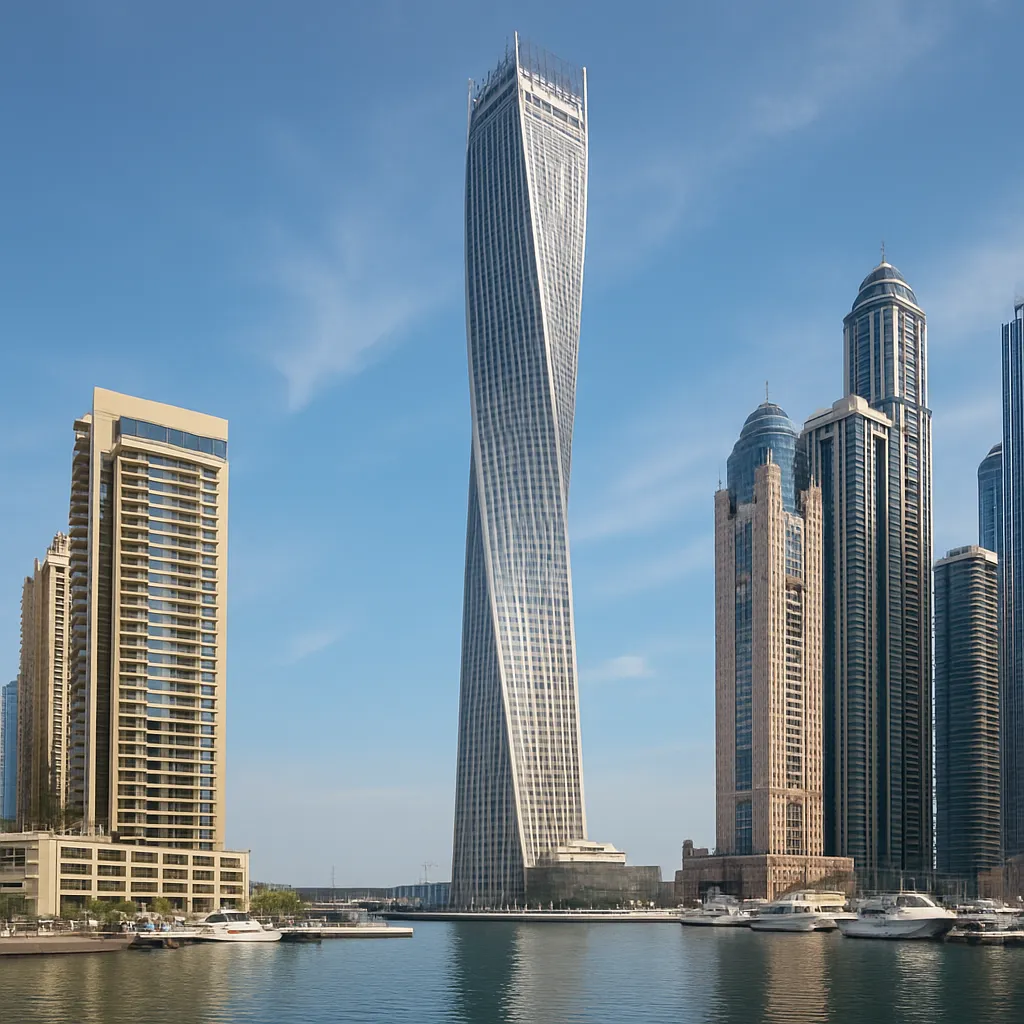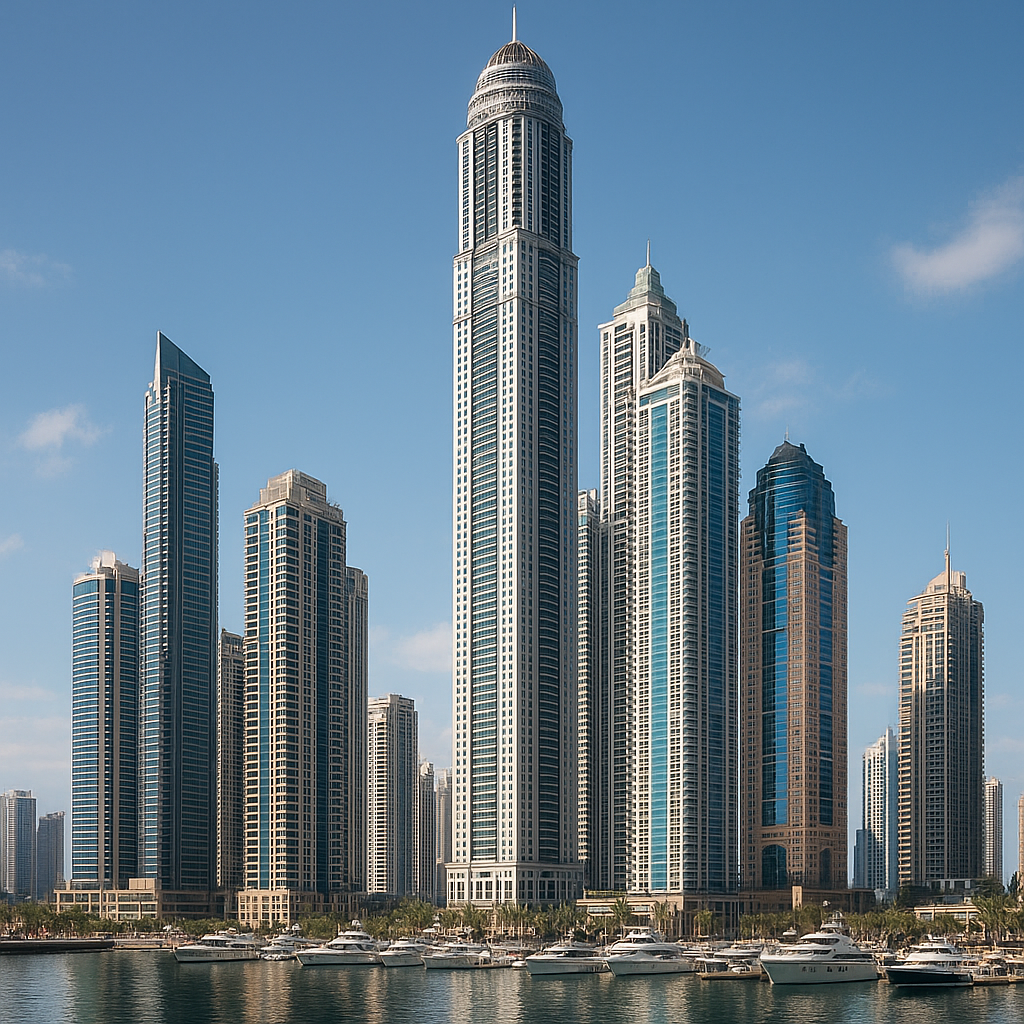
The Princess Tower stands as one of Dubai’s most recognizable residential landmarks, rising prominently in the heart of Dubai Marina. This article examines the tower’s location, design, statistics, amenities, and wider significance — tracing how a single skyscraper came to symbolize the city’s appetite for height, luxury, and architectural ambition. Below are detailed sections covering the building’s context, structure, notable facts, and the living experience it offers.
Location and urban context
Located along the waterfront promenade of Dubai Marina, the Princess Tower occupies a prime position in one of Dubai’s most dynamic and densely developed neighborhoods. Dubai Marina is an artificial canal city carved along a two-mile waterway and bordered by a continuous ribbon of high-rise residential and mixed-use towers. The district has been engineered to offer residents and visitors a metropolitan lifestyle of dining, leisure, and convenient access to the coastline and Sheikh Zayed Road.
The tower’s exact placement near the marina promenade means many apartments enjoy direct sightlines to the water, the marina’s fleet of yachts, and the distant Persian Gulf. The surrounding environment is a carefully curated mix of public spaces and private developments, with an urban design that emphasizes pedestrian circulation, waterfront leisure, and high-density vertical living. As such, Princess Tower benefits from excellent connectivity to Jumeirah Beach Residence (JBR), the Dubai Tram, and major arterial roads that link to Dubai’s business districts.
Architecture, form and design philosophy
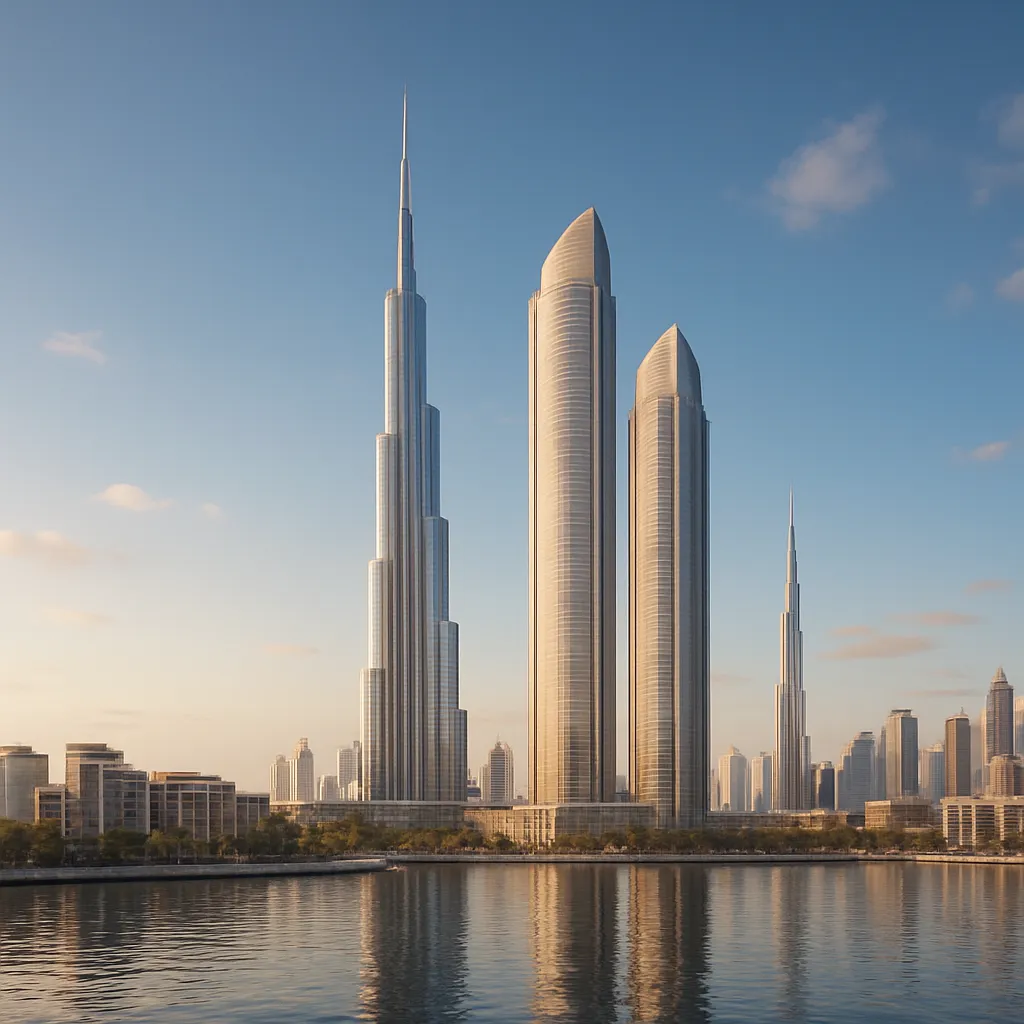
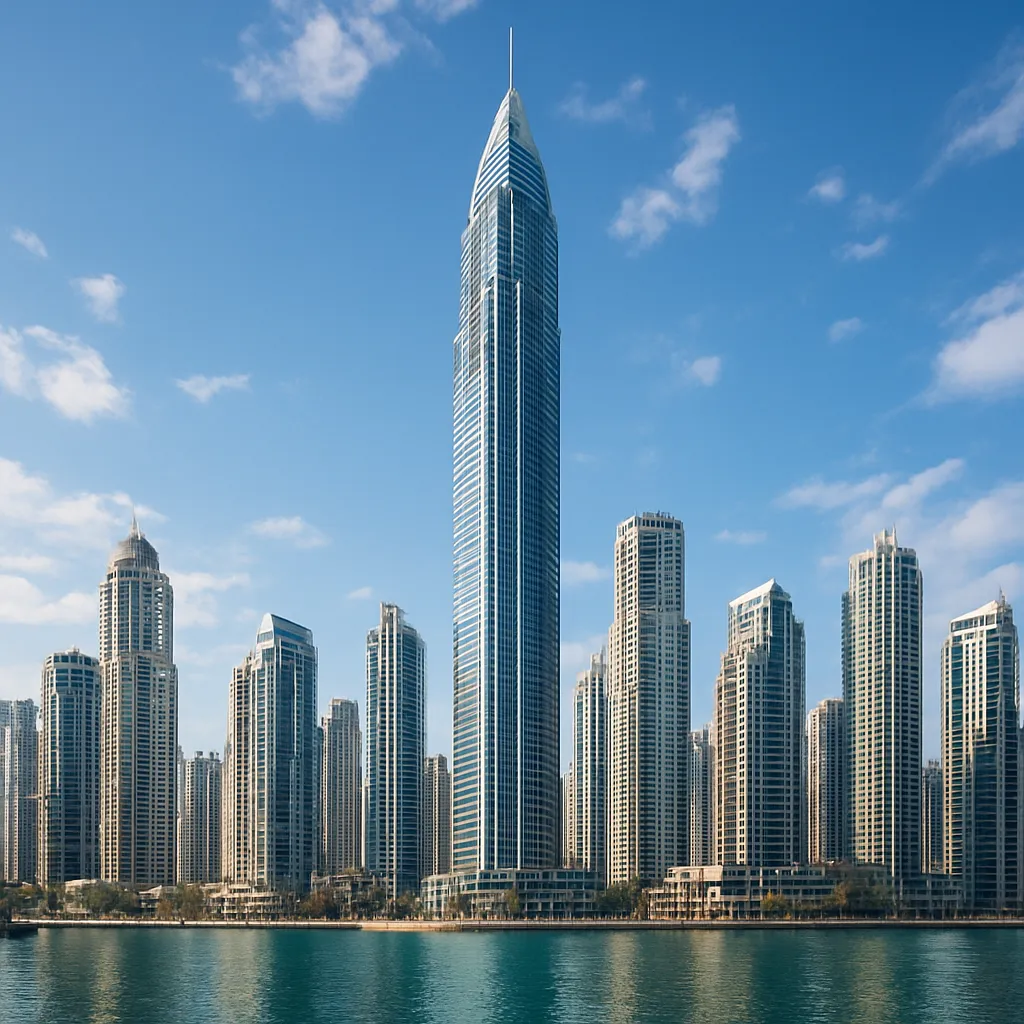
Princess Tower is celebrated for its sculptural silhouette and a crown-like spire that caps the building. The overall massing is composed of a tall central shaft topped by setbacks and a pointed architectural crown, which together create a conspicuous vertical emphasis against the skyline. The façade rhythm alternates between glass curtain wall components and clad sections that enhance depth and shadow, giving the building a refined, layered appearance at different times of day.
Structurally, the tower employs a reinforced concrete core and an outer framed system designed to resist wind loads and provide large, efficient floor plates for residential layouts. The use of concrete as the primary structural material is common in Dubai’s tall residential towers for its economy and adaptability in creating deep, column-free interiors. The crown and spire are primarily architectural features that add to the tower’s height while contributing to the distinct identity of the Marina skyline.
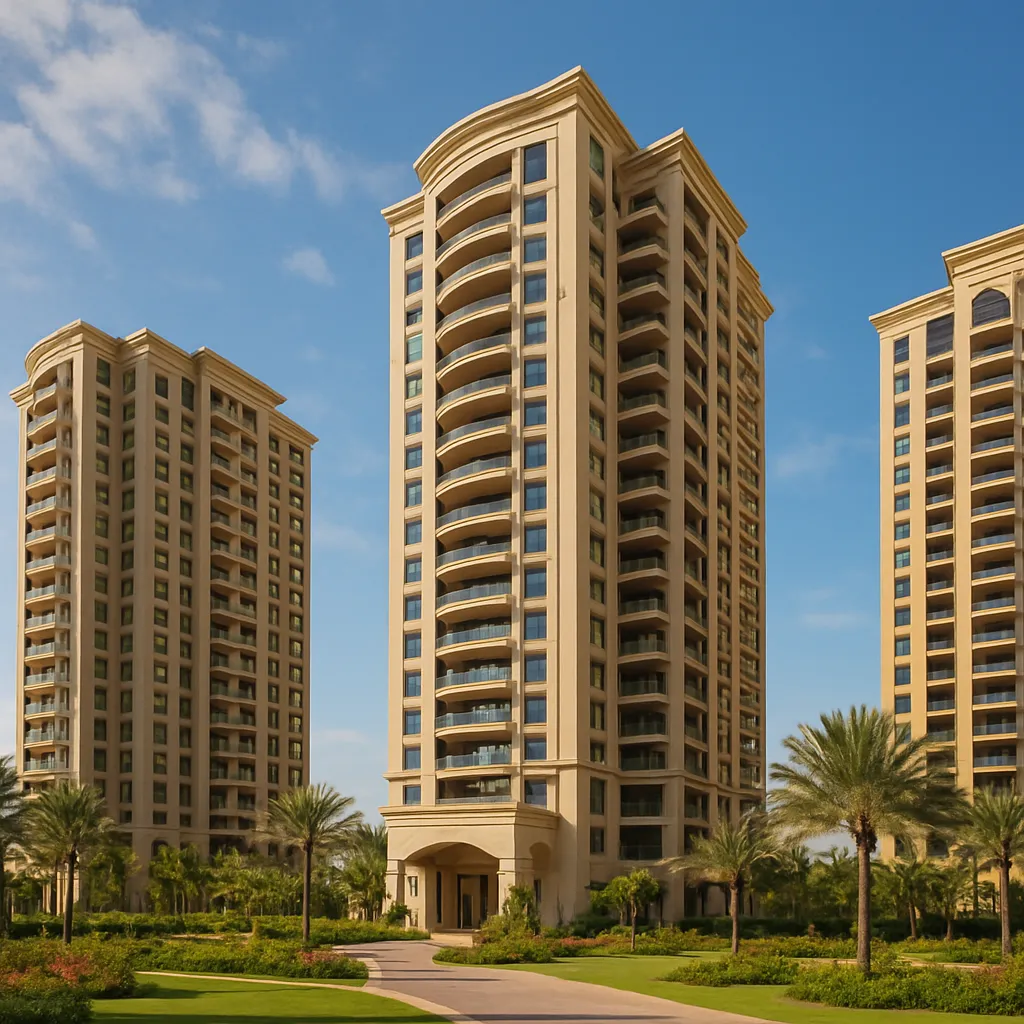
Design considerations also prioritized panoramic views, natural light, and private outdoor space. Many units are equipped with balconies or terraces that take advantage of the tower’s elevation to offer sweeping vistas of the marina basin, the high street below, or the Gulf horizon. Internally, layouts range from compact one-bedroom apartments to expansive penthouses on the upper levels, designed to cater to a mix of permanent residents and investors seeking short-term rental yields.
Statistics and records
The Princess Tower has been notable in the record books and in the realm of tall residential buildings. Key factual data associated with the building include:
- Height: approximately 414 m (around 1,357 ft), including the spire.
- Floors: around 101 floors above ground, making it one of the tallest fully residential towers in the world at the time of completion.
- Completion: the building was completed in the early 2010s, with official occupation following final commissioning and handovers.
- Units: the tower houses several hundred residential units, ranging from studios and one-bedroom apartments to multi-bedroom units and upper-floor penthouses.
- Records: upon completion the tower was widely recognized as the world’s tallest residential building for a period, symbolizing Dubai’s rapid vertical expansion during that decade.
These figures encapsulate the tower’s status as a supertall residential edifice whose profile contributed to Dubai’s reputation as a global hub of skyscraper construction. The presence of more than one hundred habitable stories provides a large resident population within a single structure, representing modern urban density executed vertically.
Amenities, services and resident experience
Princess Tower was designed to offer a full suite of amenities aimed at creating a self-contained lifestyle for residents. These usually include:
- Multi-level leisure facilities such as swimming pools and sun decks.
- Indoor health and fitness centers, including gymnasiums and spa areas.
- Dedicated children’s play spaces and family-friendly communal areas.
- Concierge and 24-hour security services to provide privacy and safety.
- Extensive parking facilities, often under podium levels or in integrated basements.
- Retail and service outlets at podium or street level to provide daily conveniences close at hand.
Living in a skyscraper like Princess Tower means residents trade horizontal outdoor space for vertical advantages: elevated privacy, dramatic views, and an assortment of on-site conveniences. Higher floors provide quieter environments and better panoramic vistas but also require careful elevator planning to minimize wait times. The building’s operational management typically focuses on maintaining communal areas, ensuring safety codes are met, and providing property management services essential in large residential complexes.
Construction, engineering and technical aspects
The construction of a tower exceeding 100 storeys requires significant engineering coordination. Key technical aspects include wind engineering, foundation design, vertical transportation, and fire safety systems:
- Wind engineering: Tall slender towers are subject to vortex shedding and lateral wind forces. The tower’s shape, setbacks, and structural stiffness are calibrated to reduce wind-induced motion and ensure occupant comfort.
- Foundations: A building of this mass requires deep foundations, often piled foundations, to transfer loads to competent strata below the marina’s reclaimed ground.
- Vertical transportation: Efficient elevator systems — typically a bank of high-speed passenger lifts and service lifts — are crucial to move residents swiftly between lobbies and upper floors while providing redundancy during peak times.
- Fire and life-safety: Redundant systems, protected stair cores, refuge floors (in some tall residential designs), and compartmentation strategies are integrated to satisfy stringent codes and to enhance the tower’s resilience.
Additionally, mechanical systems for water pressure, HVAC, and power distribution are specially configured for high-rise application. For example, multi-stage pumping systems are necessary to maintain water pressure at high levels, and chilled-water systems may include localized plantrooms to reduce distribution losses.
Cultural, economic and symbolic significance
Princess Tower is more than a residential block; it’s a symbol of Dubai’s real estate ambitions in the early 21st century. It exemplifies several broader themes:
- Ambition: Projects like Princess Tower served to announce Dubai as a global city willing to push architectural and engineering boundaries.
- Investment and urban densification: The tower reflects Dubai’s model of attracting global capital into high-end residential products targeted at both expatriate professionals and investors seeking rental income.
- Skyline identity: The distinctive crown and slender form contribute to the visual narrative of Dubai Marina, a stretch of the city defined by clustered supertalls.
Such towers also raise broader urban questions about sustainability, infrastructure capacity, and social mix. High-density residential towers minimize urban sprawl but increase demands on transit, utilities and public services. Developers and urban planners must therefore balance the allure of vertical living with investments in public realm improvements and community services that support a higher population density.
Visiting, tourism and public perception
While Princess Tower is primarily residential and not a tourist attraction in the traditional sense, its height and presence make it a frequent subject of photography and skyline tours. Visitors to Dubai Marina often photograph the tower from the promenade, from boat cruises across the marina basin, or from adjacent leisure destinations such as The Beach at JBR.
Public perception of high-rise living varies: some celebrate the convenience and views afforded by towers like Princess Tower, while others critique issues like maintenance, crowding, or the transient nature of many units in investor-driven markets. Nevertheless, the tower remains a talking point for anyone exploring Dubai’s modern architectural landmarks.
Notable anecdotes and lesser-known details
A number of interesting practical and cultural details surround a building of this scale:
- Skyscrapers in Dubai often require bespoke logistics during construction: cranes, material lifts and staging areas must be coordinated within narrow urban plots and alongside active waterfront promenades.
- Residential life in such a tower includes a high degree of shared infrastructure; effective property management is therefore central to resident satisfaction and the building’s long-term condition.
- The visual impact of the tower changes dramatically between day and night — exterior lighting schemes and illuminated crown features often highlight the building’s silhouette after dark, contributing to a distinctive nocturnal skyline.
Future outlook and legacy
As urban growth continues, towers like Princess Tower will likely remain important markers of Dubai’s development narrative. They set benchmarks in residential verticality, and their performance — in terms of longevity, maintenance, and resident satisfaction — will inform future high-rise designs. Architectural trends may evolve toward greater sustainability, smarter building systems, and enhanced communal amenities, but the tower’s role as a pioneering residential supertall endures.
The legacy of Princess Tower also lies in its demonstration of how residential architecture can create dense, amenity-rich vertical communities. As cities worldwide grapple with population growth, rising land costs, and the desire for walkable urbanity, the lessons from supertall residential projects will continue to be relevant — particularly in rapidly growing metropolitan regions.
Summary
Princess Tower stands as a bold example of modern high-rise residential architecture, combining striking form with mass-market residential capacity. Located in the vibrant district of Dubai Marina, the tower’s approximate 414 m stature and around 101 floors made it a global reference point for tall residential buildings after its completion in the early 2010s. Its amenities, strategic position, and architectural profile make it an emblem of Dubai’s vision for vertical, waterfront living. For residents and observers alike, Princess Tower represents both the opportunities and challenges of constructing and inhabiting life at great heights.