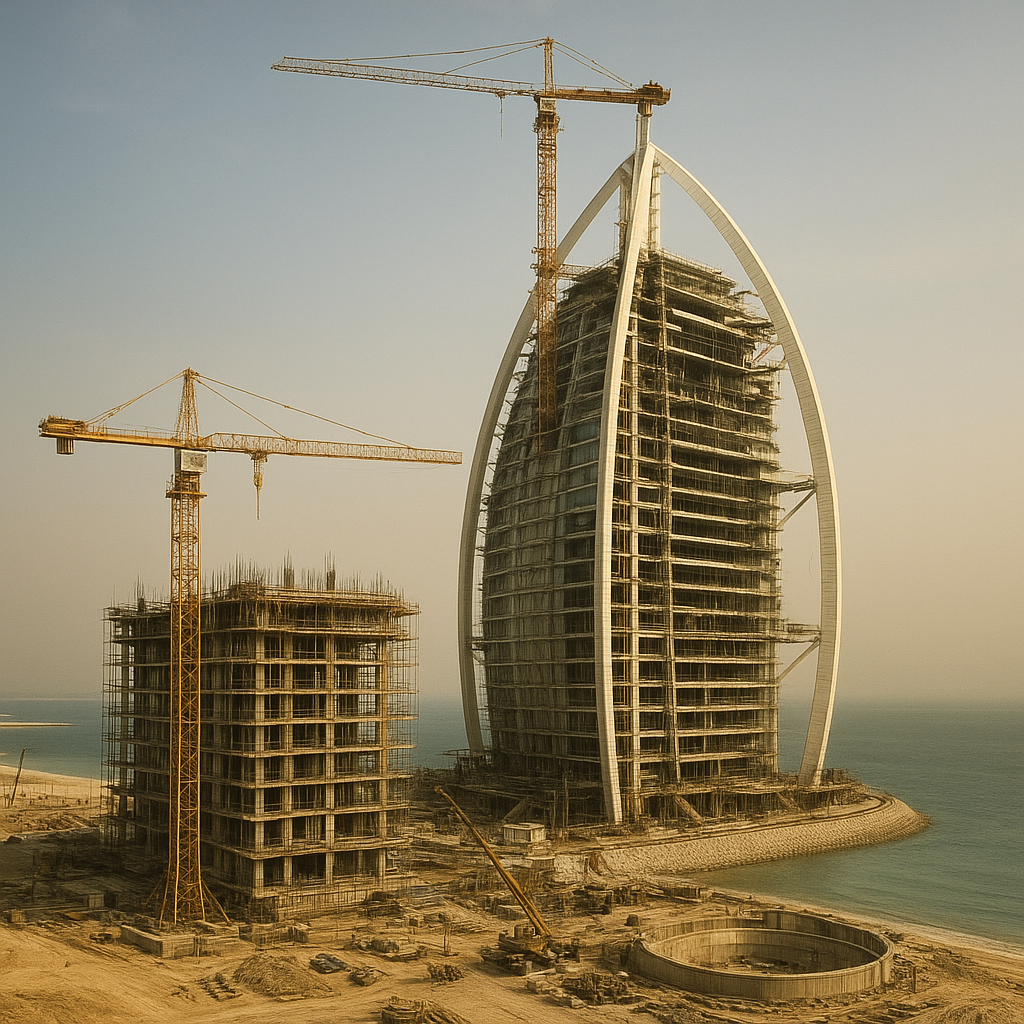
The rise of Dubai’s skyline is a testament to ambition and daring vision. Among its many wonders, the Burj Al Arab stands out as a landmark that redefined hospitality standards worldwide. This article explores how this sail-shaped hotel emerged from the desert, blending cutting-edge architecture with marine inspiration, and overcoming formidable challenges during its realization.
Vision and Design Concept
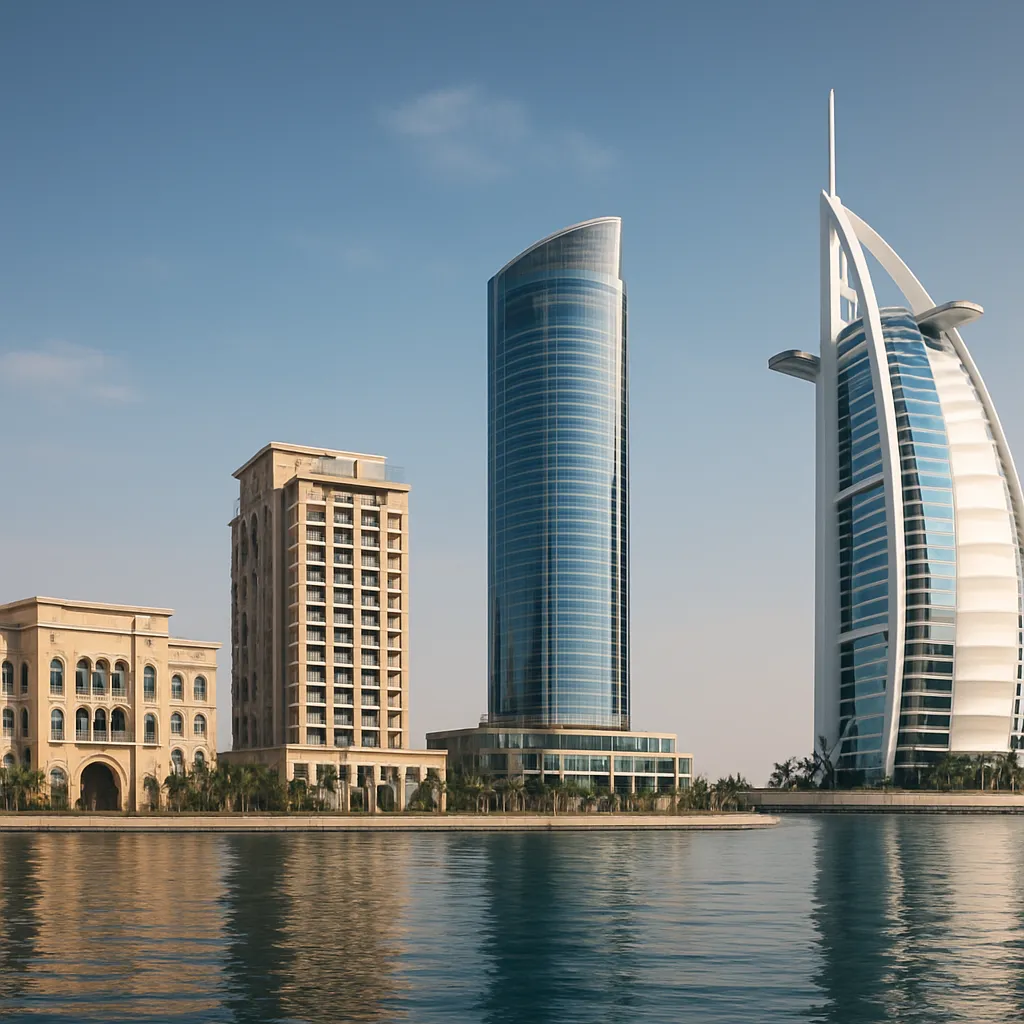
The idea for the Burj Al Arab originated in the early 1990s when Dubai sought to transform itself into a global tourism hub. The goal was to create an iconic structure that not only offered unparalleled luxury but also became synonymous with the city’s futuristic ambitions. British design firm WS Atkins was commissioned to conceive a form inspired by a dhow, the traditional Arabian sailing vessel. The result would rise 321 meters above the Persian Gulf on an artificial island, visible for miles around.
Sailing into the Sky
- Concept sketch: A sail billowing in the wind, symbolizing motion and freedom
- Symmetry and form: Two mirrored wings enclosing a glass atrium
- Distinct silhouette: A profile that would define Dubai’s skyline
To reinforce the maritime theme, designers tucked a helipad near the top and installed a massive atrium that soars through the building’s core. These elements served both aesthetic and functional purposes, blending the experience of the sea with state-of-the-art hospitality.
Engineering Marvels and Challenges
Building on reclaimed land just offshore introduced significant engineering hurdles. The foundation had to resist erosion, saltwater corrosion, and extreme loads. Around 250 concrete piles were driven 45 meters into the seabed, each encased in a protective sleeve. A double-curved exoskeleton of steel and concrete supports the sail shape, while the island itself sits atop a ring of rock and sand, secured by geotextile membranes.
Breakthrough Solutions
- Jet grouting: Created a solid soil mix around piles for stability
- Protective coatings: Ensured long-term resistance to marine elements
- High-strength steel: Allowed the structure to maintain its graceful curvature
Engineers collaborated with maritime experts to guarantee that the island’s breakwater would withstand storms and currents. The entire structure was tested through scale models and computer simulations, validating every aspect of its resistance and durability.
Construction Process and Materials
Construction spanned from 1994 to 1999, involving tens of thousands of workers, craftsmen, and engineers from across the globe. Key materials included specialized concrete mixes, 70,000 tons of steel, and 1,790 piles for the island’s base. Each element was chosen for its performance under harsh climatic conditions and its visual impact.
Key Phases
- Land reclamation: Building the artificial island using dredged sand and rock
- Pile driving: Positioning and securing support columns deep into the seabed
- Core erection: Assembling the central concrete spine to anchor the sail
- Exoskeleton assembly: Installing steel trusses for the external façade
- Interior fit-out: Crafting opulent suites and communal spaces with gold leaf accents
Inside, the hotel features lavish materials, from imported marble to hand-tufted carpets, while artisans created intricate patterns inspired by Islamic art. The atrium alone rises nearly 180 meters, making it one of the tallest in the world, and punctuated by vibrant lighting that evokes the shifting hues of dawn and dusk.
Impact on Dubai and the World
Since its opening in December 1999, the Burj Al Arab has become a symbol of Dubai’s transformation from desert settlement to global metropolis. It spurred further investments in nearby projects such as Palm Jumeirah and Dubai Marina, establishing the city as a destination for ultra-modern innovation and high-end tourism.
- Tourist magnet: Attracts millions of visitors seeking an iconic experience
- Economic catalyst: Boosted real estate and hospitality sectors dramatically
- Cultural landmark: Featured in films, advertising, and international media
Its engineering legacy continues to influence skyscraper projects worldwide, illustrating how ambition, technical expertise, and bold construction methods can coalesce into a truly unforgettable edifice. The Burj Al Arab remains a testament to what is possible when visionaries, designers, and engineers unite to push the boundaries of modern architecture.