The Dubai World Trade Centre is one of the United Arab Emirates’ most recognizable and historically significant landmarks. Since its opening, the complex has served as a focal point for business, trade and international gatherings in the Gulf region. Located at the heart of Dubai’s business corridor, the Centre has grown from a single iconic tower into a vast multi-venue campus hosting exhibitions, conferences, concerts and major public events. This article explores the Centre’s location and history, architectural features and facilities, its role in Dubai’s economy and culture, practical visitor information, and several interesting facts and statistics.
Location and historical background
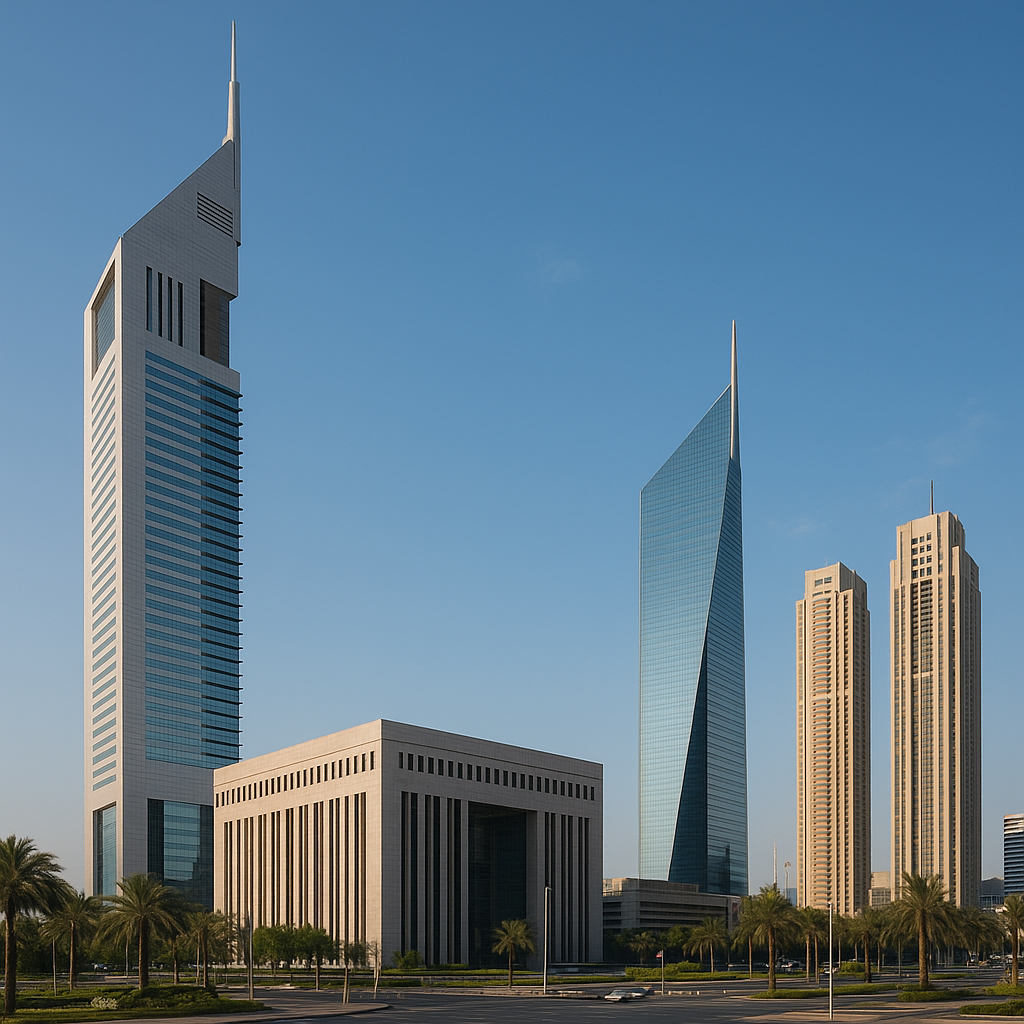
The Dubai World Trade Centre stands along Sheikh Zayed Road in central Dubai, within easy distance of Downtown Dubai, the Dubai International Financial Centre and Dubai International Airport. The original building, often referred to as the Sheikh Rashid Tower, was completed and officially opened in 1979. At the time of its completion it was the tallest building in the city and one of the earliest vertical symbols of Dubai’s ambitions to become a regional commercial hub.
The Centre was commissioned during a period when Dubai’s leadership was positioning the emirate as a gateway between East and West. The original tower became a landmark and a visible signal of Dubai’s modernization. Over the decades the site evolved from a single tower into a comprehensive complex that accommodates exhibition halls, meeting rooms, conference centres, hotels, offices and retail spaces. This gradual transformation has mirrored Dubai’s own rapid growth into a global business and tourism destination.
Architecture, layout and major facilities
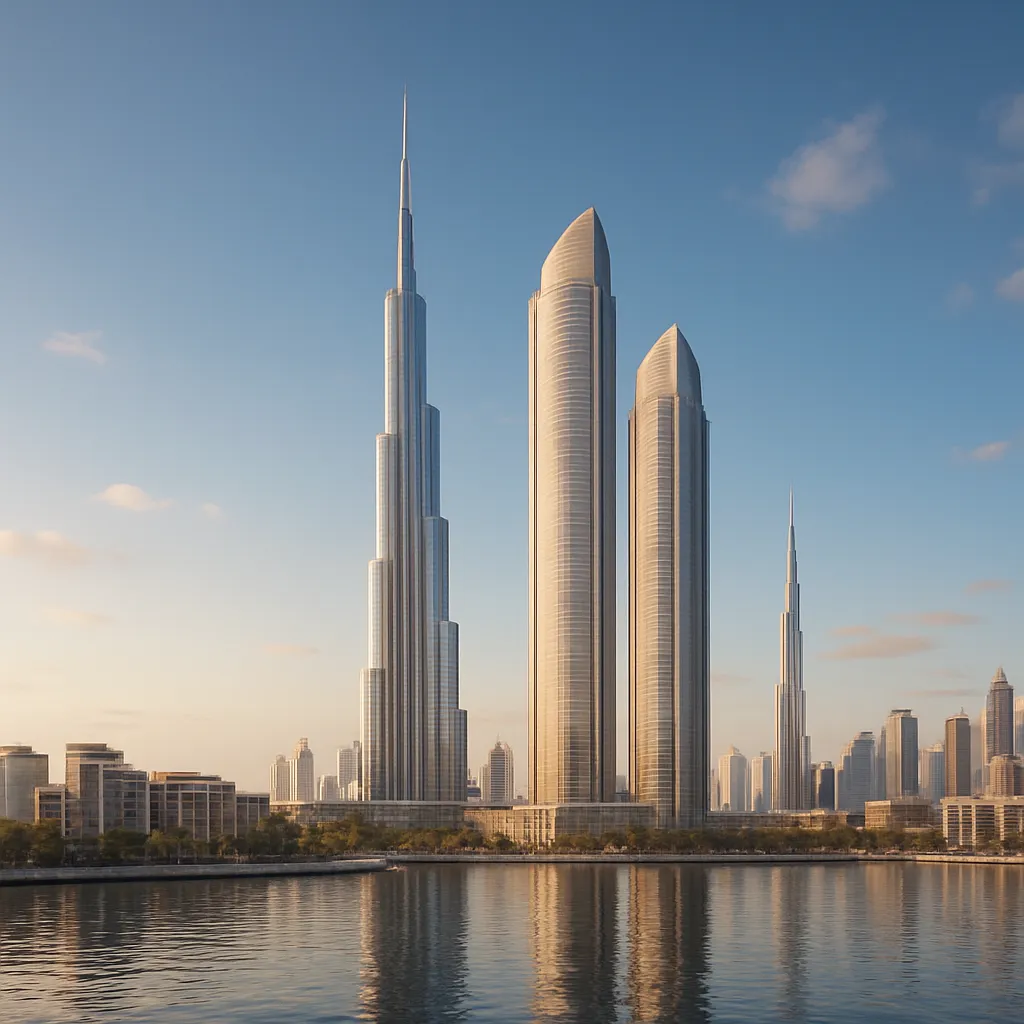
The Dubai World Trade Centre complex includes the mid-rise Sheikh Rashid Tower and a number of purpose-built exhibition and conference facilities arranged around it. The original tower rises to approximately 39 floors and stands at roughly 184 meters in height. While newer skyscrapers have long since overtaken it in height, the tower remains a historic architectural icon for the city.
Key facilities within the complex include:
- Dubai International Convention and Exhibition Centre (DICEC) — the core exhibition and events space hosting trade shows and large-scale conventions.
- Multiple exhibition halls and pavilions configured to host a wide variety of industries, from technology and aviation to hospitality and food.
- Conference suites and meeting rooms capable of accommodating intimate board meetings as well as plenary sessions for thousands of delegates.
- On-site hotels and hospitality services, ranging from business-class hotels to luxury options, providing convenient accommodation for international attendees.
- Business centres, retail outlets and dining venues that support day-to-day visitors and delegates.
In terms of scale, the exhibition and event space available at the Centre is substantial. The complex offers roughly 1.3 million square feet (approximately 120,000 square metres) of flexible indoor and outdoor event space, making it one of the region’s largest single-site exhibition and convention venues. Halls can be configured together or separately to suit small trade shows, major international exhibitions and concerts.
Events, exhibitions and cultural significance
The Dubai World Trade Centre has hosted some of the most important trade events and exhibitions in the Middle East. Among the regular marquee events held at the Centre are:
- GITEX Technology Week — one of the largest and longest-running technology shows in the region, drawing startups, major global tech companies and government delegations.
- Arab Health — a leading medical and healthcare trade exhibition and conference attracting healthcare professionals and manufacturers worldwide.
- Gulfood, Arabian Travel Market, Cityscape and a wide spectrum of specialised exhibitions spanning energy, hospitality, logistics, education, and more.
The Centre’s event calendar typically includes hundreds of events and trade shows every year, attracting a combined attendance that runs into the millions. These events serve not only commercial purposes but also foster cross-border collaboration, technological exchange and cultural engagement, reinforcing Dubai’s reputation as a cosmopolitan, trade-oriented city.
Economic role and impact
The Dubai World Trade Centre is more than an events venue; it is an economic engine for the emirate. By attracting international exhibitions and conferences, the Centre generates significant revenue through event operations, hotel stays, tourism, local business spending and logistics services. Large exhibitions bring buyers, investors and policymakers together, facilitating deals that can extend well beyond the show floor.
Some measurable economic contributions include:
- Direct spending associated with events (venues, suppliers, catering, temporary staffing).
- Indirect benefits for hospitality, retail and transport sectors in Dubai.
- Long-term business relationships and foreign direct investment opportunities catalysed at trade shows.
While annual totals fluctuate based on the events calendar and global economic conditions, the Centre’s strategic importance to Dubai’s non-oil economy is clear: it supports export-oriented business, knowledge transfer and tourism-led services, aligning with Dubai’s broader economic diversification goals.
Transport, access and visitor information
Accessibility is one of the strengths of the Dubai World Trade Centre. The complex sits directly on Sheikh Zayed Road and is served by multiple modes of transport:
- Dubai Metro Red Line: Dubai World Trade Centre station provides an easy rail link between the Centre and major urban nodes including Dubai International Financial Centre, Downtown Dubai and Dubai International Airport.
- Extensive road access via Sheikh Zayed Road and nearby arterial streets, with designated drop-off and service access points for large exhibitions.
- Taxi and ride-hailing services operate heavily around event days, with additional traffic management measures deployed to handle peak arrivals and departures.
- Pedestrian connectivity to adjacent hotels and business towers via covered walkways and thoroughfares, improving comfort for delegates moving between venues.
Practical tips for visitors:
- Check event schedules in advance: major exhibitions often span several days and may include evening sessions, keynotes and hosted networking events.
- Plan arrival times: large exhibitions may have queues at access points during opening hours; early arrival can ease check-in and allow time for navigation.
- Use public transport when possible during peak events; metro services are frequent and reliable, while road access can be congested.
- Allow time for security checks: high-profile international events typically have thorough security procedures in place.
Interesting facts and notable milestones
The Dubai World Trade Centre has accumulated a number of notable firsts and anecdotes through its decades of operation:
- Historic landmark: when the original tower opened in 1979 it was one of the first modern high-rises in Dubai and symbolised the emirate’s commitment to economic transformation.
- Regional hub: the Centre has been central in establishing Dubai as a hub for trade shows in the Middle East, North Africa and South Asia (MENASA) region.
- Crisis response: in extraordinary times, the Centre has been repurposed to support public health and emergency responses, showcasing its logistical flexibility and civic value.
- Cultural platform: beyond trade, the venue has hosted concerts, festivals and cultural events that contribute to Dubai’s diverse cultural life.
Recent developments and future outlook
Over time the Dubai World Trade Centre has progressively modernised its infrastructure to meet contemporary expectations for technology, sustainability and visitor experience. Recent upgrades have focused on digital event services, improved audio-visual capabilities, enhanced connectivity and customer services for international exhibitors.
Strategic development plans for the broader DWTC precinct emphasize mixed-use growth: new hotels, office towers, retail streets and public spaces that integrate with the existing exhibition footprint. The goal is to create a year-round business district that supports both events-driven spikes in activity and steady commercial tenancy, which helps reduce seasonality and increases the economic resilience of the area.
Sustainability and innovation initiatives
Like many large event venues, the Dubai World Trade Centre has been moving toward greener operations by implementing waste-reduction measures, energy-efficient lighting and HVAC systems, and digital ticketing to reduce printed materials. Event organisers increasingly aim to meet environmental standards for exhibitions, pushing for sustainable stand-building, responsible catering and recycling programmes.
Innovation is another priority: the venue integrates connectivity infrastructure that enables virtual and hybrid event formats. This digital readiness expands reach for exhibitors and attendees who cannot travel, allowing events to blend in-person and online participation more effectively.
Architectural and cultural legacy
Architecturally, the original tower remains an emblem of Dubai’s first wave of modern construction. Even as the skyline evolved with progressively taller and more ambitious skyscrapers, the World Trade Centre’s tower retains a historical and sentimental value to residents and the business community. It is often featured in photographic retrospectives of Dubai’s urban development.
Culturally, because the Centre hosts international delegations, major trade associations and cultural events, it has served as a place where ideas and people meet. For many businesses in the region, participating in a trade fair at the Dubai World Trade Centre is considered a major milestone and an opportunity to access new markets.
Statistics and notable figures (summary)
- Opening year: 1979.
- Tower height: approximately 184 meters with around 39 floors.
- Approximate exhibition and event space: about 1.3 million square feet (roughly 120,000 square metres).
- Typical event activity: the Centre hosts hundreds of events each year, attracting millions of visitors collectively across shows (annual totals vary by calendar and global conditions).
Practical closing remarks
The Dubai World Trade Centre remains a central component of Dubai’s identity as a global business and events hub. From its role in the early stages of the emirate’s urban and economic modernisation to its present-day function as a venue for cutting-edge conferences and mass exhibitions, the Centre has continuously adapted. For visitors and exhibitors alike it offers a blend of historic significance, practical facilities and strategic connectivity that supports commercial exchange across the MENASA region and beyond.