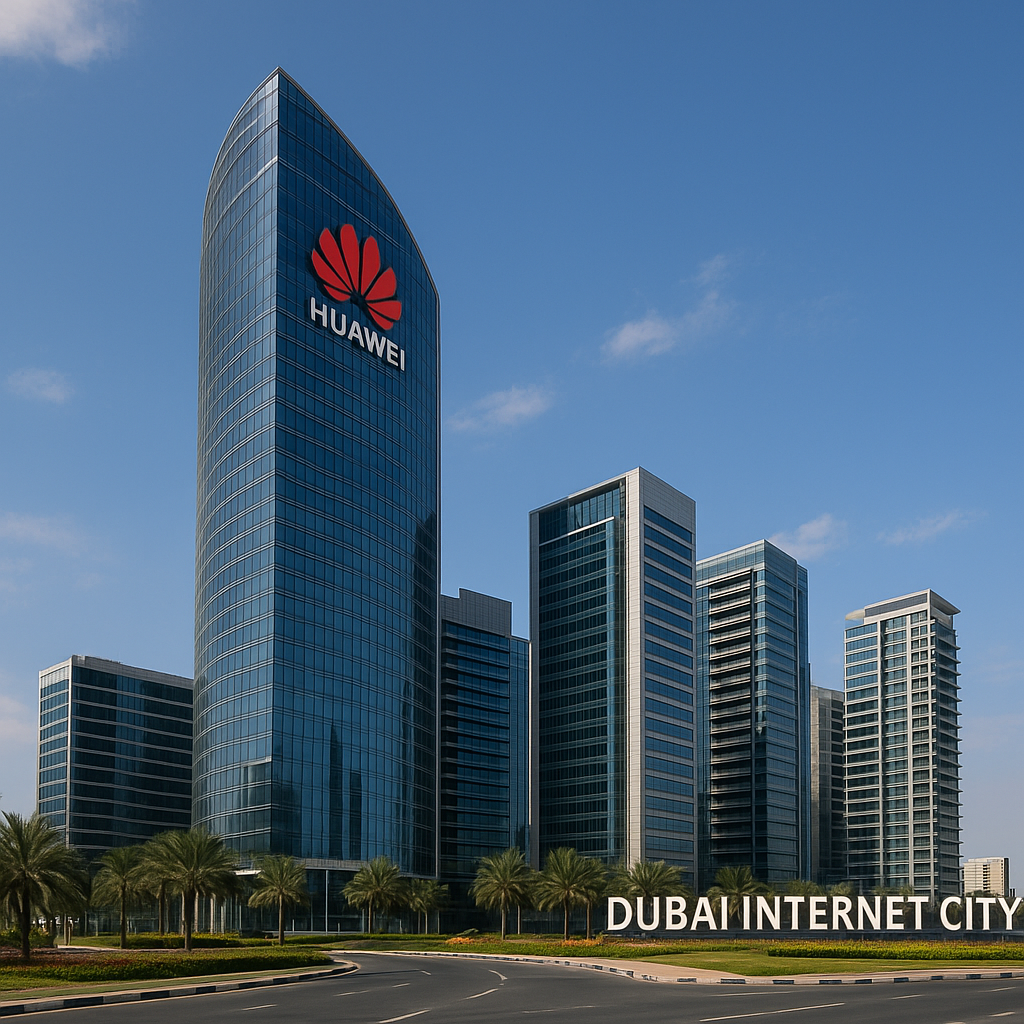
The Dubai Internet City Huawei Tower stands as a visible symbol of the city’s transformation into a global technology hub. Located inside the bustling campus of Dubai Internet City, this office building represents not only the physical presence of one of the world’s largest telecommunications and ICT companies, but also the larger story of how Dubai has cultivated an ecosystem for innovation, digital services and regional technology leadership. The following article explores the tower’s location, role, architecture, and wider significance within the UAE’s business landscape, while highlighting practical details and interesting context that help explain why the building matters.
Location and context within Dubai Internet City
The Huawei Tower is situated in Dubai Internet City (DIC), a dedicated technology free zone developed to attract ICT, media and communications companies to the emirate. Dubai Internet City was established in the late 1990s as part of a broader strategy to diversify the economy beyond oil. Over the following decades DIC became home to an international community of technology firms, startups and regional headquarters.
Geographically, DIC lies in the western part of Dubai, adjacent to other business districts such as Dubai Media City and the Dubai Knowledge Park. The area is highly accessible: the Dubai Internet City Metro Station on the Red Line provides direct public transit links to central Dubai, and the district is connected by major arterial roads serving the Dubai Marina, Jumeirah Lake Towers and the wider Jebel Ali / Dubai Marina corridor. This connectivity has helped make the campus attractive for multinational corporations seeking ease of access for staff, clients and partner companies.
The campus environment blends commercial towers, landscaped public spaces and support facilities — restaurants, business centres, conference venues and fitness amenities — that serve the daily needs of employees and visitors. Within this context, the Huawei Tower anchors Huawei’s presence in the region and functions as a point of contact between the company and the wider MENA technology community.
Architecture, design and building features
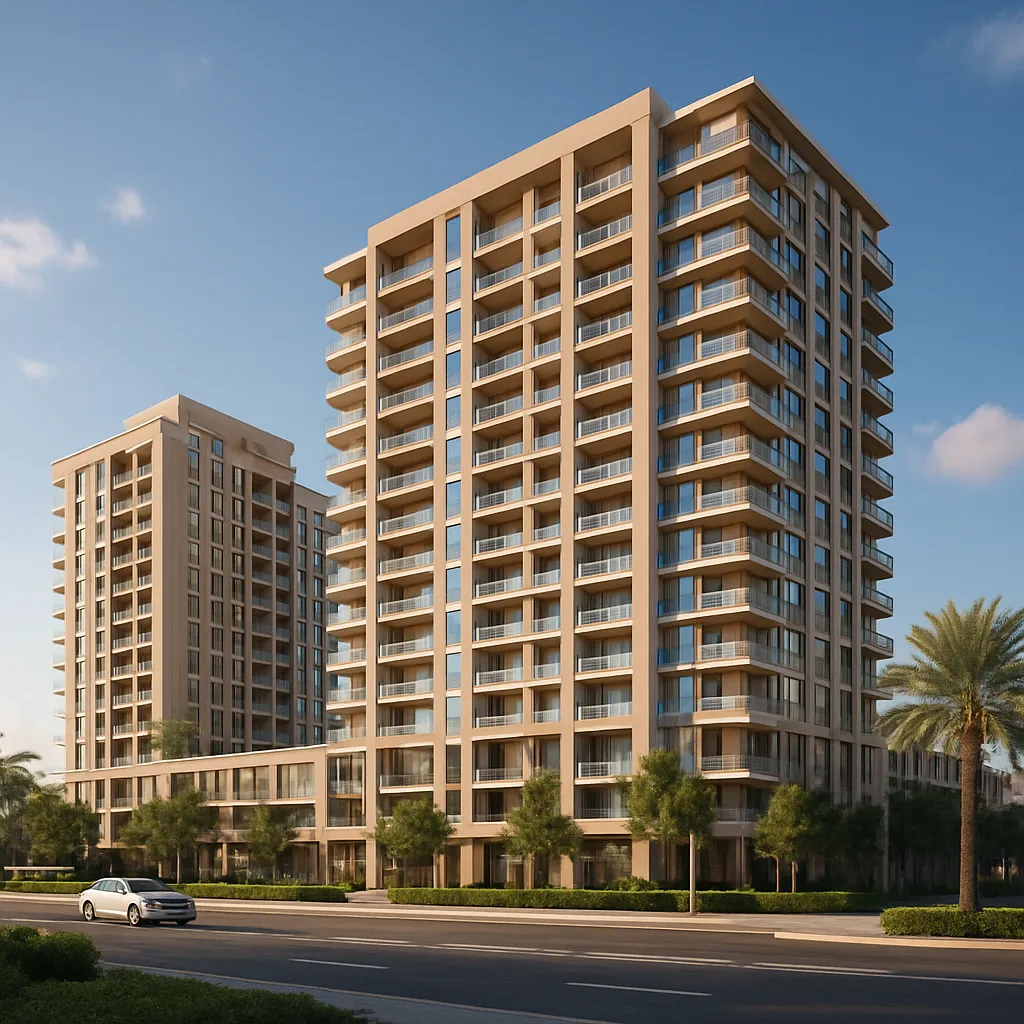
While not designed as an iconic landmark in the way of Dubai’s supertall skyscrapers, the Huawei Tower exemplifies modern office architecture focused on functionality, flexibility and technology integration. The tower’s design typically emphasizes efficient floorplates, glazed facades for natural light, and modular office spaces that can be adapted for corporate operations, showrooms or technical demonstration areas.
- Smart building infrastructure: As expected for a technology company’s office, the Huawei Tower incorporates advanced ICT wiring, fiber-optic connectivity and structured cabling to support high-speed data transmission and secure communications.
- Workspace flexibility: Interior spaces are arranged to support a mix of private offices, open-plan work areas, meeting rooms and demonstration labs, enabling the building to host sales teams, technical support, R&D activities and customer briefings under one roof.
- Energy management: Modern HVAC systems, intelligent lighting controls and building management systems are commonly employed in DIC towers. These features help reduce operating costs while maintaining comfortable conditions in the hot UAE climate.
- Amenities: Ground-level retail, staff cafeterias, visitor reception and conference facilities provide convenience for employees and partners. Proximity to hotels and serviced apartments makes short-term stays easy for visiting delegations.
Although the Huawei Tower is primarily functional rather than spectacular, the building’s technical readiness and integration with regional telecom infrastructure are among its most notable characteristics. The presence of redundant power feeds, secured network access points and on-site technical teams supports the needs of a major ICT company operating in a fast-paced regional market.
Huawei’s role and activities in the Tower
Huawei’s office in the tower functions as a regional hub for multiple business activities: sales and marketing for enterprise and carrier solutions, technical support, partner management, and sometimes demo facilities that showcase Huawei’s latest products — from network equipment and cloud services to enterprise ICT solutions and smart-city technologies.
Key activities typically associated with the Huawei Tower include:
- Regional operations: Coordination of sales and business development across the Gulf and wider Middle East regions, handling government and large enterprise accounts.
- Technical demonstrations: Showrooms or demo labs where customers can see working solutions for data centers, 5G networks, cloud computing, and enterprise digital transformation.
- Partner ecosystem: Collaboration spaces and meeting rooms to host regional partners, systems integrators and local resellers who work with Huawei’s solutions.
- Training and certification: Facilities for workshops and training sessions aimed at upskilling local engineers and reseller staff on Huawei technologies.
Through these functions, the tower helps Huawei maintain close ties with regional operators, government entities and enterprise clients. It also serves as a visible statement of commitment to the Middle East market — showing that Huawei is not just selling equipment remotely, but investing in local teams and infrastructure.
Significance within Dubai’s technology ecosystem
The Huawei Tower’s importance extends beyond the company itself. It contributes to Dubai Internet City’s reputation as a place where multinational tech companies establish regional headquarters, creating a dense cluster effect that benefits the whole ecosystem.
Clusters like DIC drive value in several ways:
- Knowledge exchange: Proximity fosters informal and formal interactions between different technology players, enabling collaboration and knowledge transfer.
- Talent attraction: International corporations help attract skilled professionals to Dubai, while local universities and training programs benefit from this demand for qualified personnel.
- Supply-chain development: Local vendors, systems integrators and service providers find robust markets for their offerings when major global vendors maintain regional bases.
- Innovation: Joint projects, pilot deployments and smart-city initiatives often arise from collaborations centered in technology clusters, accelerating the city’s broader digital transformation.
For Dubai, having buildings like the Huawei Tower occupied by global tech giants reinforces the emirate’s positioning as a regional technology hub. It also supports national priorities such as digital government services, smart infrastructure and the adoption of new connectivity standards like 5G.
Accessibility, transport and amenities
Accessibility is a major advantage for tenants in Dubai Internet City and for the Huawei Tower specifically. The district’s transport options and on-site services are designed to support the large daytime population of professionals.
- Public transit: The Dubai Internet City Metro Station on the Red Line provides efficient access to central Dubai and Dubai International Airport via connecting transport options.
- Road connectivity: Major highways and internal arterial roads offer convenient car access; adequate parking is typically available for employees and visitors.
- Business services: The surrounding campus includes banks, courier services, legal and business advisory firms that cater to multinational companies operating in the free zone.
- Leisure and hospitality: Nearby hotels, dining options and recreational spaces make the area appealing for international visitors and long-term employees.
These practical advantages contribute to operational efficiency for companies located in the tower and increase the attractiveness of the location for client meetings, regional events and collaborative activities.
Statistics and practical facts
Exact figures for a single corporate office building such as the Huawei Tower are not always publicly disclosed, and the composition of tenants and floor usage can change over time. However, some useful contextual statistics about Dubai Internet City and the broader business environment can help illustrate the scale and significance of the location:
- Campus scale: Dubai Internet City hosts hundreds of technology and media companies spanning startups to global multinationals, creating a concentrated cluster of ICT activity within the TECOM free zone family.
- Free zone advantages: Companies located in Dubai Internet City typically benefit from incentives such as 100% foreign ownership, customs and import advantages, simplified company registration processes and competitive tax arrangements under UAE law.
- Employment and talent: The district supports a large professional workforce with varied expertise in software, telecoms, digital media, cloud services and cybersecurity. This access to specialized talent is a key reason multinational firms maintain offices there.
- Infrastructure: Buildings in DIC, including international corporate towers, are wired with high-capacity fiber connections and resilient power and cooling infrastructure, enabling enterprise-grade operations and data services.
For readers seeking precise numbers such as floor area, employee counts, or year of fit-out for the Huawei Tower, these details are often available through property management firms, corporate filings or press releases from the company or the Dubai government. Such sources can provide up-to-date metrics for those requiring exact figures for research or reporting purposes.
Interesting facts and regional impact
Several interesting aspects make the Huawei Tower and its presence in Dubai Internet City noteworthy beyond mere office occupancy:
- Regional showcase: Many global technology companies use their DIC locations as demonstration hubs to show prospective customers how complex network and cloud solutions operate in real-world environments. The Huawei Tower often serves this demonstrative purpose for the company’s regional clients.
- Events and partnerships: Huawei and other tenants frequently participate in or host seminars, product launches and partner summits in the area, drawing industry professionals and government representatives to the campus.
- Digital transformation projects: The presence of major ICT vendors in Dubai, including Huawei, accelerates dialogue on urban digital initiatives such as smart metering, intelligent transport systems and public Wi-Fi deployments.
- Local talent development: Training programs, certification courses and internships organized within the region help transfer skills to local and regional workforces, supporting national objectives for knowledge-based employment.
These roles position the tower not just as a workplace, but as a node in a broader network of technology deployment, policy influence and commercial partnerships across the Middle East.
Security, compliance and regulatory environment
Corporate buildings housing major technology and telecommunications companies operate under stringent security and compliance expectations. In the UAE, businesses also adhere to national regulations governing telecommunications, data privacy and foreign investment. Practical implications for the Huawei Tower include:
- Access controls: Secure entry points, visitor vetting and badge systems help maintain physical security for staff and sensitive equipment.
- Data protection: Network segregation, secure hosting practices and adherence to applicable regulatory frameworks are important for protecting customer and operational data.
- Regulatory engagement: As a major regional vendor, Huawei engages with regulators, carriers and partners to ensure deployments meet local legal and technical standards.
Understanding and complying with local regulations is a critical part of operating regional offices and delivering services across borders — something that the tower’s teams are routinely involved in managing.
Conclusion
The Dubai Internet City Huawei Tower is more than a single corporate address: it is a part of Dubai’s tech landscape and a functional hub where commerce, technology and regional strategy intersect. Its location within Dubai Internet City places it amid a dense cluster of ICT activity, with excellent transport links, supportive free-zone policies and a robust talent pool. Though it may not be the tallest or most famous building in Dubai’s skyline, the tower’s real value lies in its role as a regional operational base — supporting sales, technical demonstrations, partnerships and training — and in contributing to the emirate’s wider ambitions in digital transformation and technology-led growth.
Huawei Tower and Dubai Internet City together symbolize the collaboration between global technology providers and local innovation ecosystems — a collaboration that continues to shape the future of digital infrastructure and services across the Middle East.