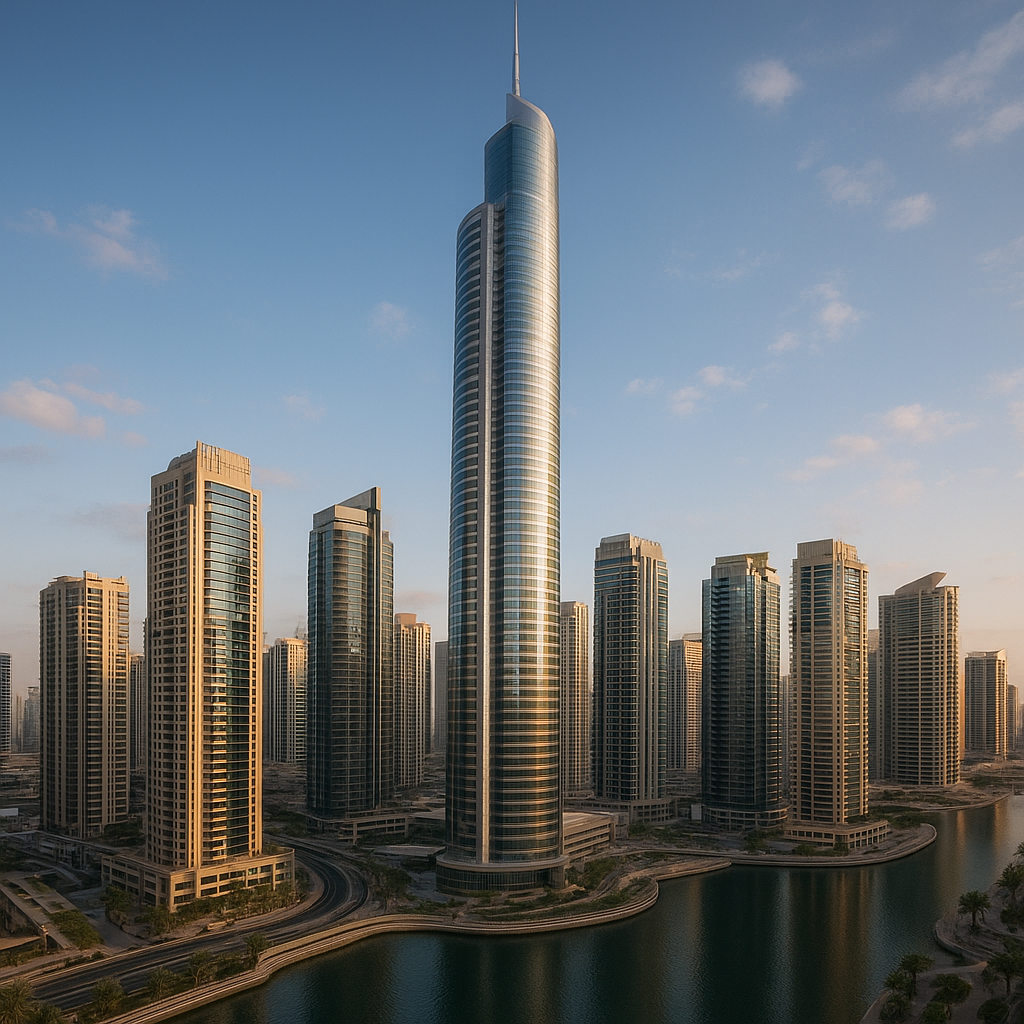
Almas Tower stands as one of the most distinctive and purposeful skyscrapers in Dubai’s modern skyline. Located within the bustling free-zone cluster of Jumeirah Lakes Towers (JLT), the building is not only an architectural landmark but also a central hub for global commodity trading, especially in precious stones. This article explores the tower’s location, design, uses, and notable statistics, along with lesser-known facts that make Almas Tower unique in the world of tall buildings and international trade.
Location and urban context
Almas Tower occupies a prominent position in the Jumeirah Lakes Towers development, a mixed-use district laid out around a series of artificial lakes and organized into a grid of clusters. JLT is situated parallel to Sheikh Zayed Road, one of Dubai’s principal transport corridors, and is adjacent to a number of other major business and residential districts. The tower itself is built on a small, dedicated island within the JLT lake system, giving it a visually isolated and commanding presence that underscores its role as the centerpiece of the DMCC (Dubai Multi Commodities Centre) free zone.
The location was chosen strategically: JLT provides easy access to Dubai’s main highways, proximity to Dubai Marina and Dubai Internet City, and a rapidly developing urban fabric that caters to multinational corporations, financial institutions, and logistics providers. As a result, Almas Tower is not merely a tall building but an axis for cross-border commodity flows and professional services in the region.
Design, symbolism and architecture
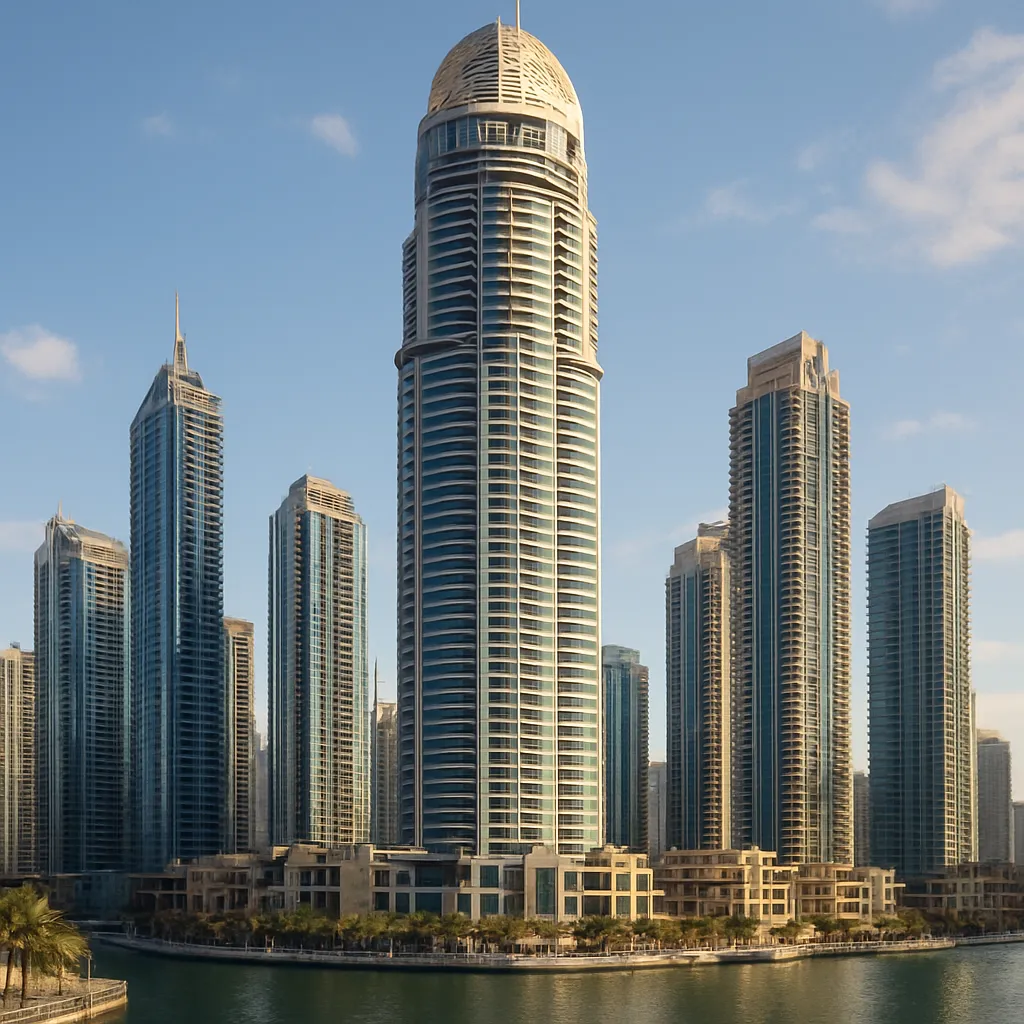
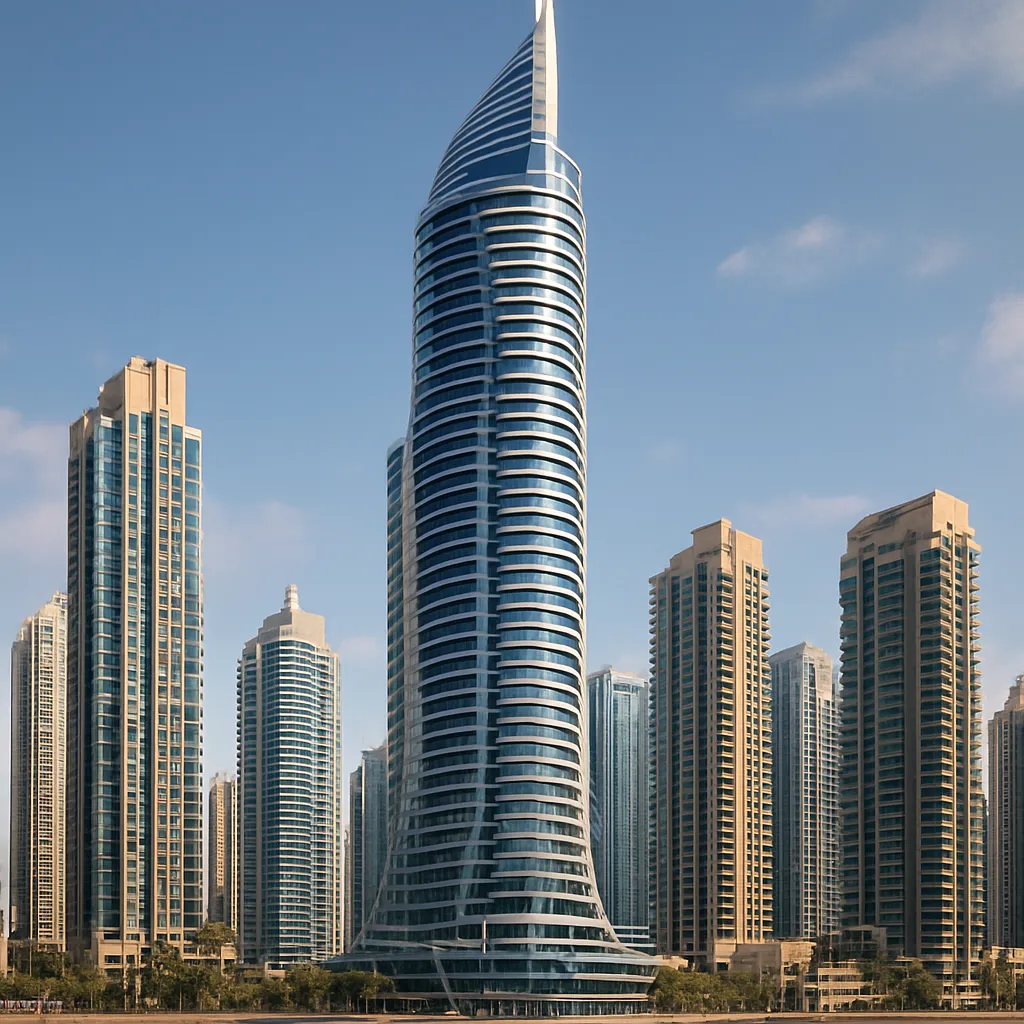
The name Almas means “diamond” in Arabic, and both the tower’s external expression and internal program reflect that heritage. The building was conceived to suit the exacting needs of the diamond and precious metals trades, as well as other commodity markets. Its exterior silhouette is recognizably tapering, with a crown that gives the impression of a cut gemstone—an apt metaphor for the industries it houses.
Architectural intent and materials
While visually striking, the tower’s architectural language also follows practical imperatives. The façade combines high-performance glazing and metallic elements that create a reflective, crystalline effect, reducing solar gain and enhancing the building’s identity. Internally, finishes and layout accommodate high-security trading floors, meeting rooms, and vaults, requiring reinforced structural elements, specialized mechanical systems, and resilient services installations.
Structural and engineering considerations
Designing a tall structure intended to host heavy vaults and densely populated trading floors demanded careful structural engineering. The podium and lower floors are designed with robust floor slabs capable of supporting concentrated loads from safes, handling equipment, and reinforced security installations. Mechanical, electrical, and life-safety systems were scaled for continuous operation: climate control for sensitive goods, redundant power and communications, and layered fire and access management systems are typical provisions for Almas Tower’s program.
Primary functions and major occupants
Almas Tower was planned and developed with the specific purpose of servicing commodity markets. It is home to several major trading floors, vaults, and offices for companies involved in diamonds, precious metals, pearls, and other traded commodities. The tower’s occupant mix includes:
- Commodity exchanges and bourse-type facilities that provide regulated environments for buying and selling valuable goods.
- Secure vaults and storage spaces for diamonds, gold, and other high-value items, with custodial and logistics services.
- Corporate headquarters and regional offices for trading firms, brokers, and supporting service providers such as insurance and legal specialists.
- Conference and meeting facilities configured to handle both private negotiations and larger industry events.
The presence of the DMCC authority in the cluster enhances the building’s attractiveness for companies needing a trusted regulatory and business services environment. Occupants benefit from free-zone incentives, specialized clearing and logistics infrastructure, and proximity to related services within the JLT community.
Notable statistics and technical data
Almas Tower is frequently cited among Dubai’s tallest and most specialized towers. While reported figures vary slightly across sources, commonly referenced statistics include the following:
- Height: approximately 363 meters (about 1,191 feet), which makes it one of the taller commercial towers in the city.
- Floor count: roughly 60–70 floors, with a mixture of trading floors, office levels, and technical/mechanical storeys.
- Gross floor area: reported figures place the building’s total floor area in the range of several hundreds of thousands of square meters of usable space, accommodating offices, vaults, and support services.
- Completion: the tower was completed in the late 2000s and became operational shortly thereafter; it has since functioned as a long-term hub for commodities in the Gulf region.
- Specialized installations: multiple high-security vaults, extensive telecommunications and data backup capabilities, and redundant power systems to maintain continuous trading operations.
Because Almas Tower is both a functional commercial asset and a symbol of commodity trade in the Middle East, many of the technical details tied to security and internal configuration are not widely published for reasons of confidentiality. Nevertheless, the tower’s scale and fit-out clearly reflect a bespoke solution for heavy and sensitive trading activity.
Construction history and development background
Almas Tower was developed as part of a broader vision to create a global trading hub in Dubai. The DMCC initiative aimed to attract commodity traders by offering a secure, regulated environment with strong logistics and connectivity. Building a dedicated tower for high-value trade required a development approach that synchronized architecture, engineering, and logistics planning.
Construction logistics were complex: the tower was erected on its own island within the JLT lake, which meant carefully staged access for materials and equipment. The project involved close coordination between the developer, structural engineers, mechanical contractors, and security consultants to ensure that the building met the unique programmatic needs of future tenants. The tower’s completion helped solidify the DMCC’s proposition by providing an iconic and practical base for international commodities companies.
Records, recognition and urban impact
Almas Tower carries several noteworthy distinctions. It has been recognized as:
- A defining landmark in the JLT skyline and the tallest building within that cluster.
- A purpose-built structure for the commodities and diamond trade, representing a rare example of a tower whose design and internal systems are primarily driven by a specific industry’s requirements.
- An icon of modern Dubai’s project-driven urbanism, where specialized buildings are created to support targeted economic clusters.
The tower’s presence has had measurable effects on the surrounding urban area. It has attracted a concentration of supporting businesses—logistics firms, secure transport operators, jewelry and gemstone-related businesses, legal and financial service providers—creating an ecosystem that supports rapid transactions and high-value storage.
Security, operations and logistics
Because the tower serves industries that handle extraordinarily valuable goods, its operational profile emphasizes security and secure logistics. Some operational features typically associated with Almas Tower include:
- Layered access control with restricted zones for vaults and trading floors.
- Dedicated secure loading bays for armored vehicles and freight handling.
- Advanced surveillance and monitoring integrated with building management systems.
- Environmentally controlled storage spaces to protect sensitive materials from humidity and temperature fluctuations.
These features are complemented by on-site customs facilitation and specialized insurance and escrow services offered by tenant firms and third parties, all of which help streamline the movement of goods across borders while keeping them protected during storage and exchange.
Culture, business events and public engagement
Although much of Almas Tower’s activity is private and trade-oriented, the building and the surrounding DMCC complex occasionally host public-facing industry conferences, seminars, and exhibitions related to gems, precious metals, and global trade. These events draw professionals from around the world and contribute to Dubai’s reputation as a meeting point for commodity markets.
The tower’s visual presence also contributes to JLT’s identity as a serious business district, supporting a cluster economy that blends corporate offices with hotels, restaurants, and residential towers. For visitors, the area offers waterfront promenades, dining, and urban amenities, though direct public access to many of the tower’s internal trading and vault areas is restricted.
Environmental considerations and building performance
While Almas Tower’s primary mission is commercial functionality and security, its design also includes features intended to manage energy use and environmental comfort. High-performance glazing and shading treatments reduce solar heat gain, helping limit cooling loads in Dubai’s hot climate. Mechanical systems are configured for stable, continuous operation, which accelerates energy use but is essential for the building’s mission-critical tenants. Over time, operators and tenants have opportunities to implement further efficiency measures, including improved lighting, optimized HVAC controls, and energy management systems, to balance operational requirements with sustainability goals.
Interesting and lesser-known facts
- Almas Tower’s name is more than a label: it is a deliberate marketing and symbolic device that aligns the building with the diamond trade’s historic emphasis on purity, precision, and value.
- The tower’s island location within the JLT lakes gives it a distinctive visual separation from other towers, emphasizing its function as a central hub.
- Because of the high value of items stored and traded within, some of the tower’s security and logistics operations resemble those of high-security financial institutions rather than conventional office buildings.
- The building played a role in positioning Dubai as a major node for gem and precious-metal trading in the 21st century, attracting firms from Africa, Asia, Europe, and the Americas.
How Almas Tower fits into Dubai’s development narrative
Almas Tower exemplifies Dubai’s strategy of creating targeted economic clusters supported by high-quality infrastructure. The DMCC’s approach—combining regulatory incentives, world-class logistics, and purpose-built real estate—has been a template for other industry-focused developments in the emirate. In this sense, Almas Tower is not only an office building but a tangible manifestation of a broader economic policy aimed at capturing and facilitating international trade flows.
By offering a secure, well-equipped base for commodity traders, the tower has helped Dubai diversify beyond hydrocarbons and tourism into finance and goods trading, with benefits that ripple through the logistics, legal, and professional services sectors.
Visiting information and practical tips
For those interested in seeing Almas Tower from the outside, the JLT promenade and adjacent public areas provide excellent vantage points for photography and casual observation. If you are seeking entry to the building for business, advance arrangements through the appropriate tenant or the DMCC administrative offices are necessary. Access to trading floors or vault areas is strictly controlled; visitors should expect to provide identification and to be escorted when entering sensitive zones.
Nearby amenities include hotels, cafes, and retail outlets along the JLT waterfront, making the area convenient for business visitors who require short-term accommodation or meeting spaces. Public transport options and taxi services connect JLT to other parts of Dubai, including Dubai Marina, Sheikh Zayed Road, and the wider metro network.
Conclusion
Almas Tower is both a functional powerhouse and a symbolic structure. Its strategic location in Jumeirah Lakes Towers, design tailored to the specialized needs of the precious stones and commodities markets, and its role within the DMCC ecosystem make it an important asset in Dubai’s commercial landscape. With its striking silhouette, emphasis on security and continuous operations, and position as a hub for high-value trade, the tower exemplifies how architecture can be aligned with an economic mission. Whether viewed as an engineering achievement, a business enabler, or an urban landmark, Almas Tower remains a compelling example of Dubai’s targeted, infrastructure-led growth model.