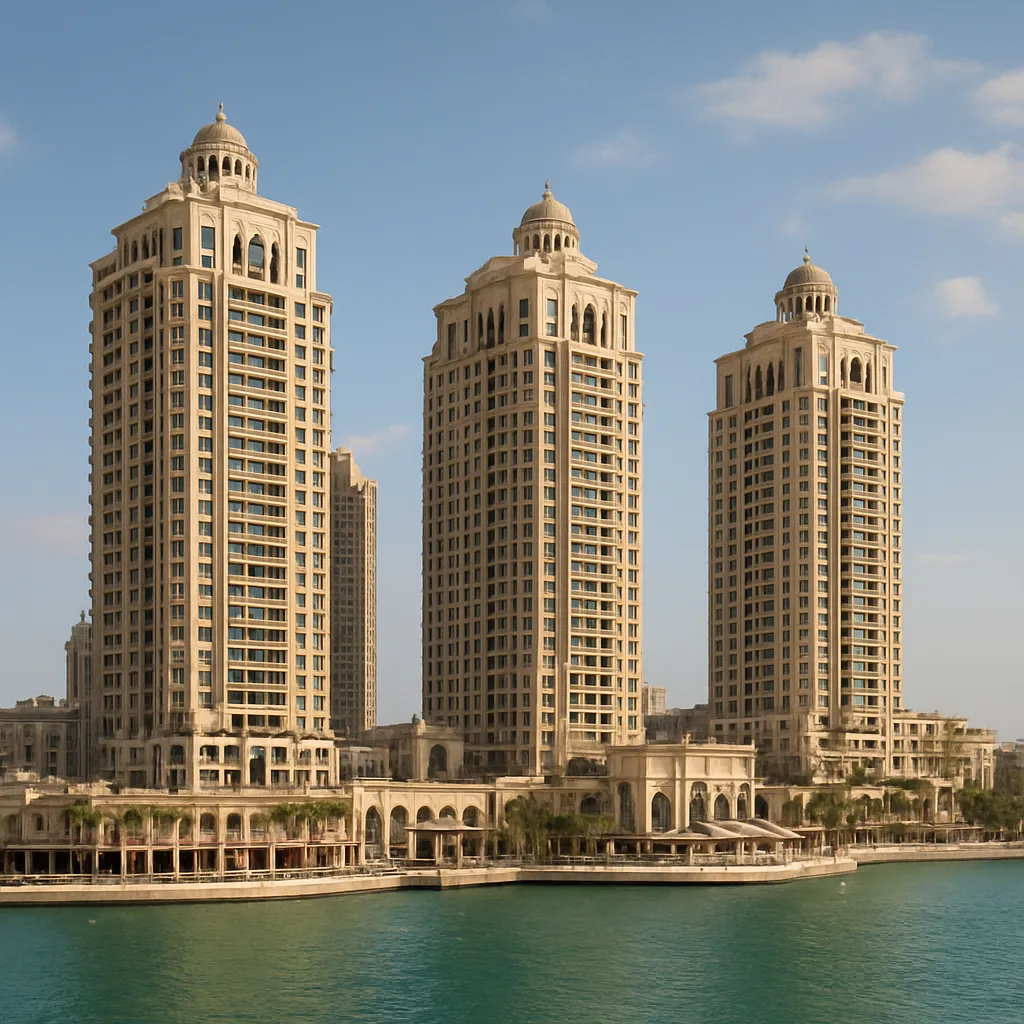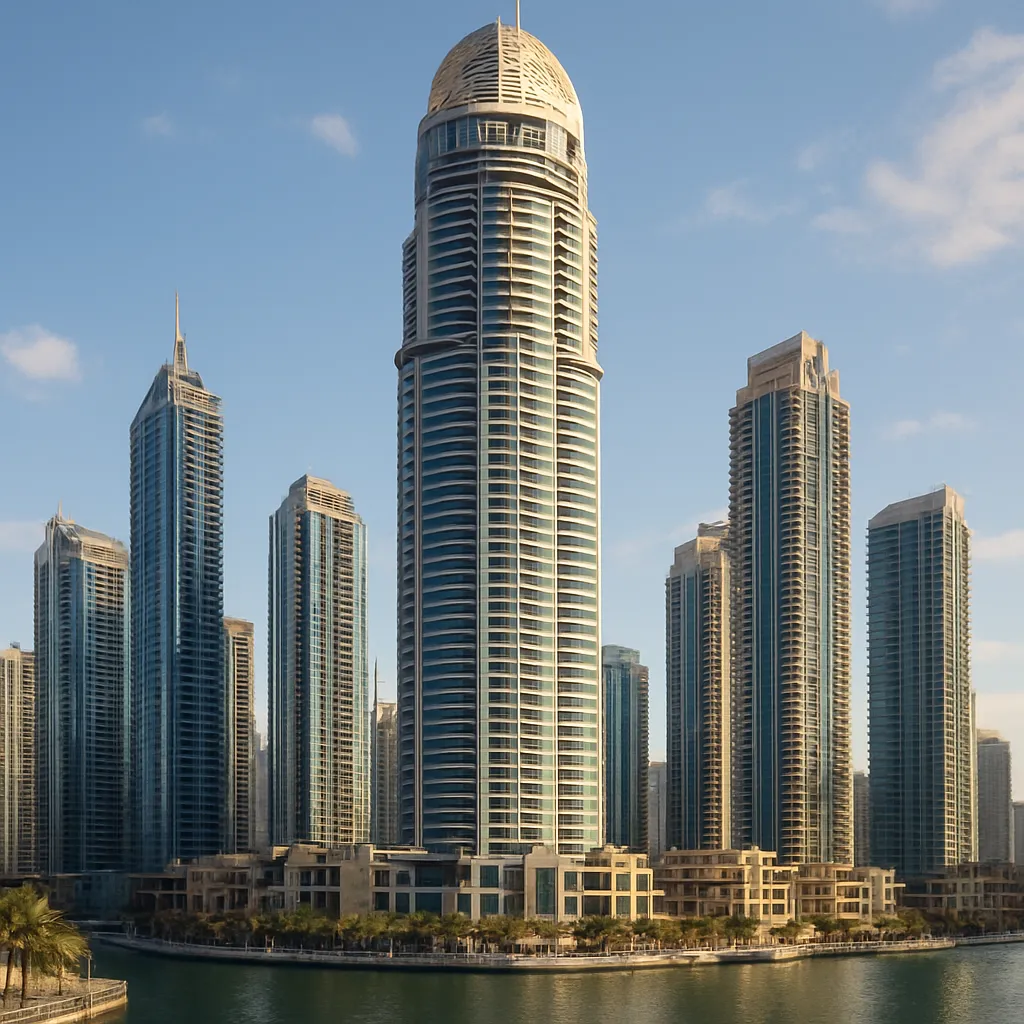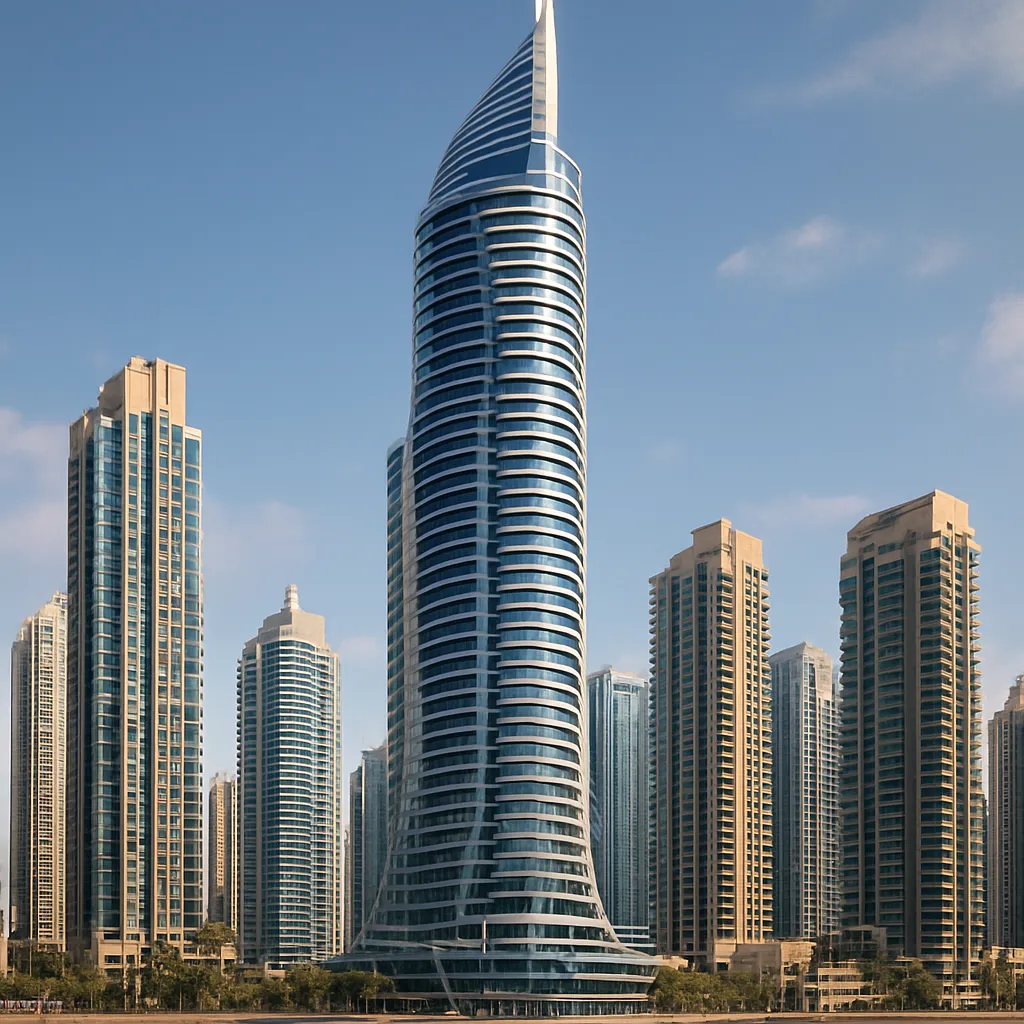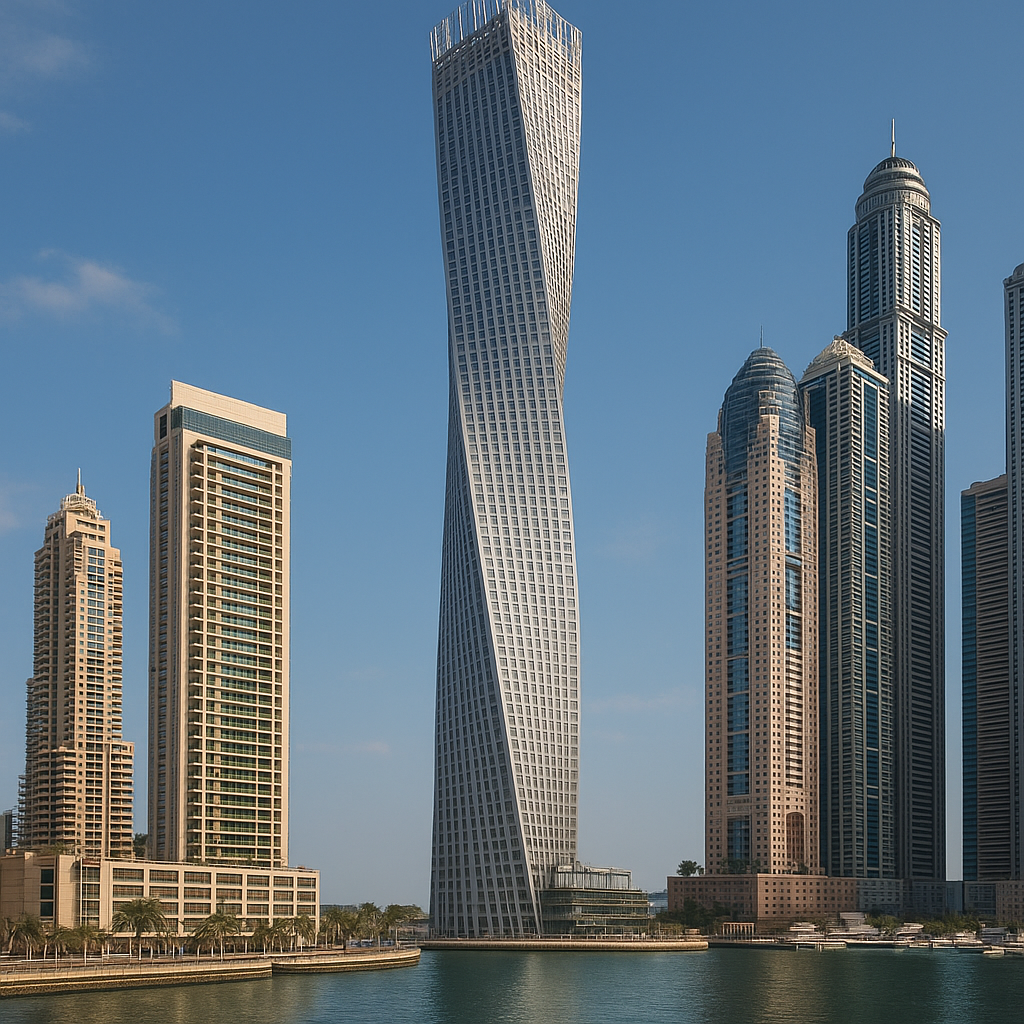
The Cayan Tower in Dubai Marina is one of the most visually striking skyscrapers of the 21st century, celebrated for its dramatic helical profile and status as a modern urban icon. Situated within the dynamic waterfront district of Dubai Marina, this residential tower combines imaginative architectural form with complex engineering solutions, creating a building that is both a technical achievement and a piece of public art. Below you will find an in-depth exploration of the tower’s location, design, construction, statistics, and cultural significance, along with a selection of lesser-known facts and practical information for visitors and architecture enthusiasts.
Location and urban context
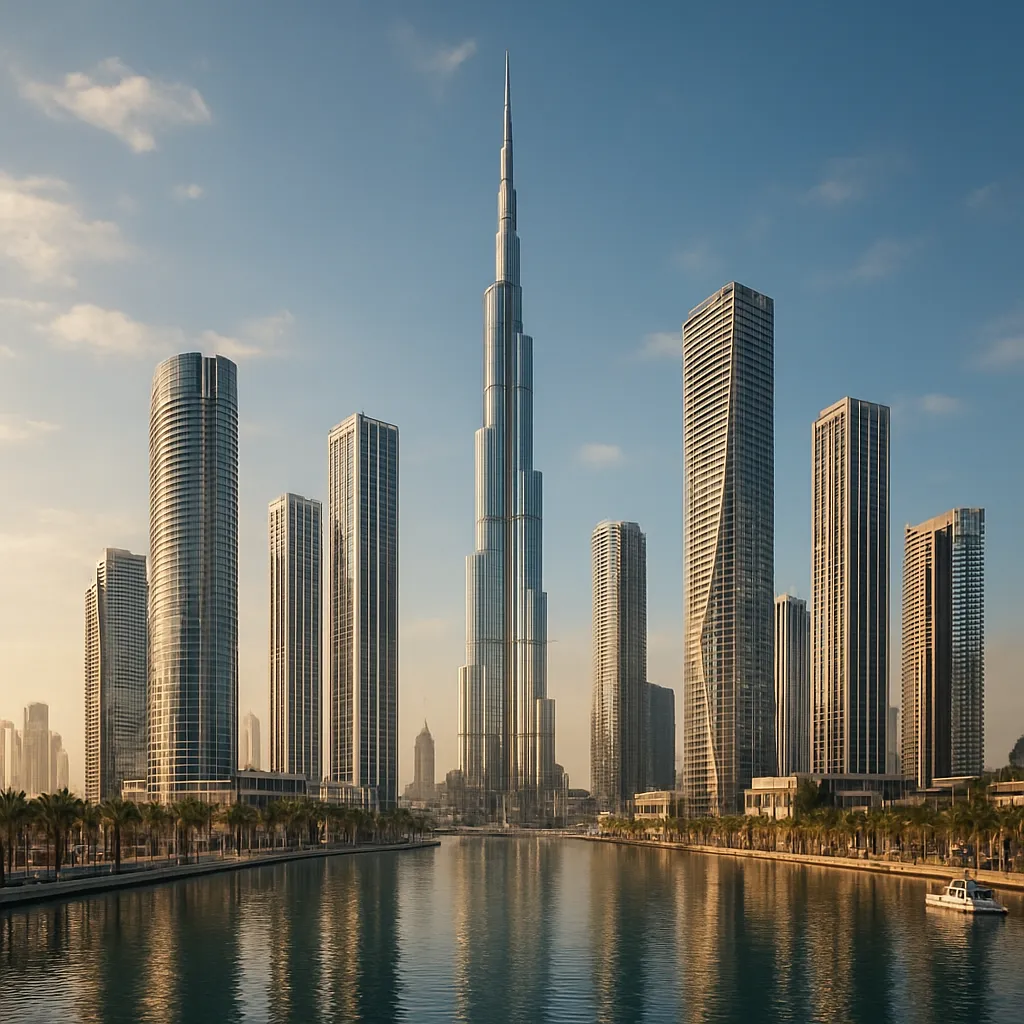
Located on the western bank of the artificial waterway of Dubai Marina, Cayan Tower occupies a prominent position among a dense cluster of high-rise developments that define Dubai’s contemporary skyline. Dubai Marina itself is an ambitious urban development project that transformed reclaimed land into a mixed-use waterfront neighborhood filled with residential towers, hotels, retail corridors, and promenades. The Marina’s artificial canal extends for several kilometers and is lined by promenades and leisure spaces; Cayan Tower stands out among these structures due to its twisting silhouette.
The building is easily accessible from major transport links and is within walking distance of the Marina Mall, Jumeirah Beach Residence (JBR) promenade, and numerous cafes and restaurants. The setting—an interplay of water, sky, and high-rise architecture—helps accentuate the tower’s visual effect. At night the illumination plays across the façade, enhancing the sense of movement created by the helical design.
Architectural concept and distinctive features
The most immediately recognizable characteristic of Cayan Tower is its continuous twist: the tower rotates a full 90-degree from base to crown. This rotation produces an elegant helical form that appears different from every vantage point around the Marina. The design intention was not only aesthetic but also functional; the twist reduces wind loads on the structure by altering how wind flows around the mass and creates a variety of balcony orientations and views for residents.
Key architectural features include:
- Helical geometry: Each floor plate is rotated slightly relative to the one below, producing the 90-degree rotation over the tower’s entire height.
- Balcony diversity: The twist yields balconies and terraces with varying exposures, allowing residents more diverse views of the Marina, the skyline, and the sea.
- Façade articulation: The external cladding and fenestration are arranged to emphasize the spiraling motion while providing solar shading and visual continuity.
- Integration with urban fabric: Ground-level spaces and pedestrian routes connect the tower to the Marina promenade, encouraging interaction between the building and the public realm.
From an aesthetic point of view, the building communicates movement and fluidity—qualities that mirror the adjacent water and the dynamic character of Dubai Marina. The visual connection between the tower’s form and the surrounding environment contributes to its role as an urban landmark.
Engineering challenges and structural solutions
Creating a tall, twisting building requires sophisticated engineering to address wind behavior, structural stability, facade performance, and construction sequencing. The rotational geometry imposes nonstandard loads and torsional forces that must be taken into account across the foundation, core, and perimeter frame.
Structural considerations and solutions typically involved:
- Central reinforced-concrete core: The tower uses a robust central core that resists vertical and lateral loads and provides the primary backbone for the structure.
- Perimeter columns and transfer systems: Carefully detailed column layouts and transfer slabs accommodate the incremental rotations while ensuring effective load paths.
- Wind engineering: Wind-tunnel testing and computational fluid dynamics (CFD) analyses helped optimize the geometry and structural stiffness to control sway and vortex shedding at high elevations.
- Precision construction methods: The incremental rotation meant that every floor plate and façade panel had to be placed with high precision, and construction sequencing was key to maintaining alignment and tolerances.
Such solutions ensure occupant comfort, safety, and longevity while preserving the architectural intent. The combination of a solid structural core and a carefully engineered perimeter allowed the tower to achieve its twisting form without compromising performance.
Construction timeline, statistics, and program
Construction projects of this scale are typically multi-year efforts involving coordination among developers, contractors, consultants, and local authorities. Cayan Tower is widely reported to have been completed in the early 2010s and delivered as part of the broader phase of Dubai Marina development that intensified in the late 2000s and early 2010s.
Commonly cited statistical highlights for the tower include:
- Rotation: Approximately 90 degrees from the ground level to the top of the tower.
- Height: Commonly reported as approximately 306–307 meters (around 1,004–1,007 feet), making it one of the taller residential towers within the Marina cluster.
- Number of floors: Frequently listed in the range of roughly 70–80 storeys, depending on reporting conventions (mechanical floors, double-height lobbies, and rooftop structures can affect counts).
- Program: Predominantly residential units—apartments and penthouses—designed for mid- to high-end markets; some floors include shared amenities, parking, and services.
Additional project data that is often referenced includes floor area, number of residential units, and parking provision. These figures can vary depending on source definitions and updates to the building program after practical completion. For readers focused on precise figures (for example, for academic citation or professional use), consulting the developer’s or building manager’s published documentation or authoritative building databases is recommended.
Cultural impact, reception, and awards
Cayan Tower quickly achieved iconic status within Dubai’s architectural discourse because of its visual distinctiveness. The tower is frequently featured in photography, promotional material, and media that aim to capture Dubai’s contemporary skyline. Its spiraling profile offers an immediately recognizable silhouette that contributes to the city’s identity as a place of bold architectural experimentation.
Public and professional reception has tended to emphasize:
- Architectural boldness: Observers praise the tower’s inventive form as an example of expressive high-rise design that goes beyond simple verticality.
- Skyline contribution: The building is often cited as a “signature” piece among the many tall towers of Dubai Marina, a visual counterpoint to neighboring rectilinear towers.
- Photographic popularity: Its twisting geometry is photogenic from multiple vantage points, making it a favorite subject for tourists and photographers.
While specific award listings may vary over time, the tower’s influence is evident in the number of essays and case studies that analyze its design and the technical strategies used in its realization.
Interesting facts and lesser-known details
Beyond the obvious visual appeal, Cayan Tower has a number of intriguing aspects that may surprise readers.
- Variation in views: Because each floor is rotated slightly, residents on different floors and sides experience unique vantage points and shading conditions—no two balconies are exactly alike.
- Visual dynamism: The building’s appearance shifts dramatically depending on the viewer’s location and the time of day. Sunlight and shadow emphasize different facets of the twist.
- Engineering precedents: The tower sits within a lineage of twisting towers around the world that explore rotation as an architectural strategy—each project adapting the idea to local conditions and programmatic needs.
- Nighttime identity: Strategic lighting design enhances the helical form after dark, turning the tower into an illuminated sculpture that complements Dubai Marina’s nocturnal ambiance.
- Residential lifestyle: The emphasis on balcony variety and panoramic views was intended to offer an elevated urban living experience oriented toward water views, promenades, and city vistas.
Environmental performance and sustainability considerations
High-rise residential buildings in hot climates must balance aesthetic ambition with environmental performance. In Dubai, issues such as solar heat gain, cooling loads, and embodied energy are central concerns for tall buildings. Cayan Tower’s design addresses some of these factors through façade articulation and balcony design that provide shading and outdoor space, reducing direct solar exposure on living areas.
While not necessarily marketed as a net-zero or highly certified green building, the tower benefits from features that contribute to occupant comfort and reduced energy peaks:
- Balcony overhangs and shading: Help moderate solar gains on residential façades.
- High-performance glazing: Typically used in modern high-rises to reduce heat transfer while maintaining views.
- Efficient mechanical systems: Modern HVAC and building systems installed during construction help maintain thermal comfort and reduce overall consumption compared with older stock.
Many contemporary and retrofit strategies—such as improved insulation, efficient lighting, and smart controls—could further enhance the performance of such towers over time.
Visitor information and experiencing the tower
Although Cayan Tower is primarily a residential building and not a public attraction in the way a museum or observation deck would be, there are several ways to experience and appreciate its architecture:
- Promenade walks: The Marina promenade offers excellent vantage points for photography and viewing the tower against the water.
- Boat tours: A cruise along the Marina waterway provides dynamic, moving perspectives of the tower’s twist and its relationship to neighboring buildings.
- Nearby public spaces: Cafes, parks, and open plazas in the Marina and JBR area provide comfortable places to pause and observe the skyline.
- Evening views: Visiting around sunset or after dark reveals the tower’s lighting strategies and how it contributes to the Marina’s nocturnal character.
For those interested in architectural tours or in-depth study, contacting local architecture firms, universities, or tour operators that specialize in Dubai’s high-rise architecture can provide curated insights and context.
Legacy and influence on contemporary design
By transforming a simple vertical form into a spiraling statement, Cayan Tower helped popularize the notion that residential towers can be expressive and contextually responsive. Its legacy is visible in subsequent projects worldwide where rotation, curvature, and sculptural silhouettes are used to differentiate towers in dense urban settings.
Designers and developers often look to such exemplary projects when considering how to balance visual impact, market appeal, and technical feasibility. In this sense, the tower functions both as a practical residential building and as a case study in integrating architectural concept with structural and environmental systems.
Final remarks
Cayan Tower remains a compelling example of how innovative form-making and careful engineering can produce a building that is simultaneously functional and iconic. Its presence on the Dubai Marina waterfront continues to draw attention from residents, tourists, photographers, and professionals in architecture and engineering. Whether regarded as a dramatic piece of skyline art, a study in structural ingenuity, or simply as distinctive housing, the tower exemplifies the ambitious spirit of contemporary high-rise design.
Key terms highlighted in this article: Cayan Tower, Dubai Marina, twist, 90-degree rotation, skyline, residential, engineering, innovation, landmark, sustainability.