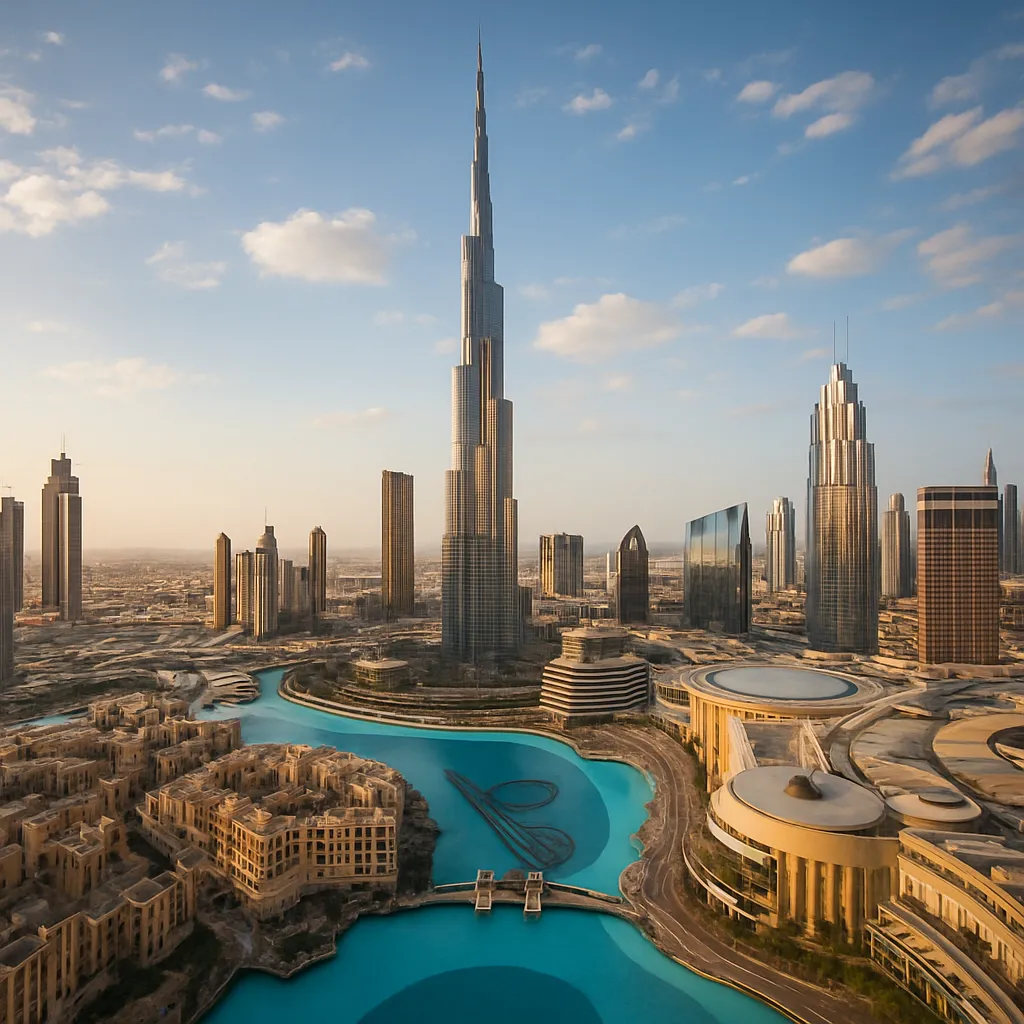
Dubai’s skyline continues to redefine the very notion of modern architecture, integrating cutting-edge technologies and groundbreaking aesthetics. From spiraling towers that defy gravity to green facades that breathe life into the desert, the emirate’s architectural scene is an ever-evolving canvas of ambition. This article explores some of the most inventive skyscraper designs in Dubai, examining the engineering feats, the sustainability initiatives, and the futuristic methods that are shaping tomorrow’s high-rises.
Visionary Architectural Marvels in Dubai
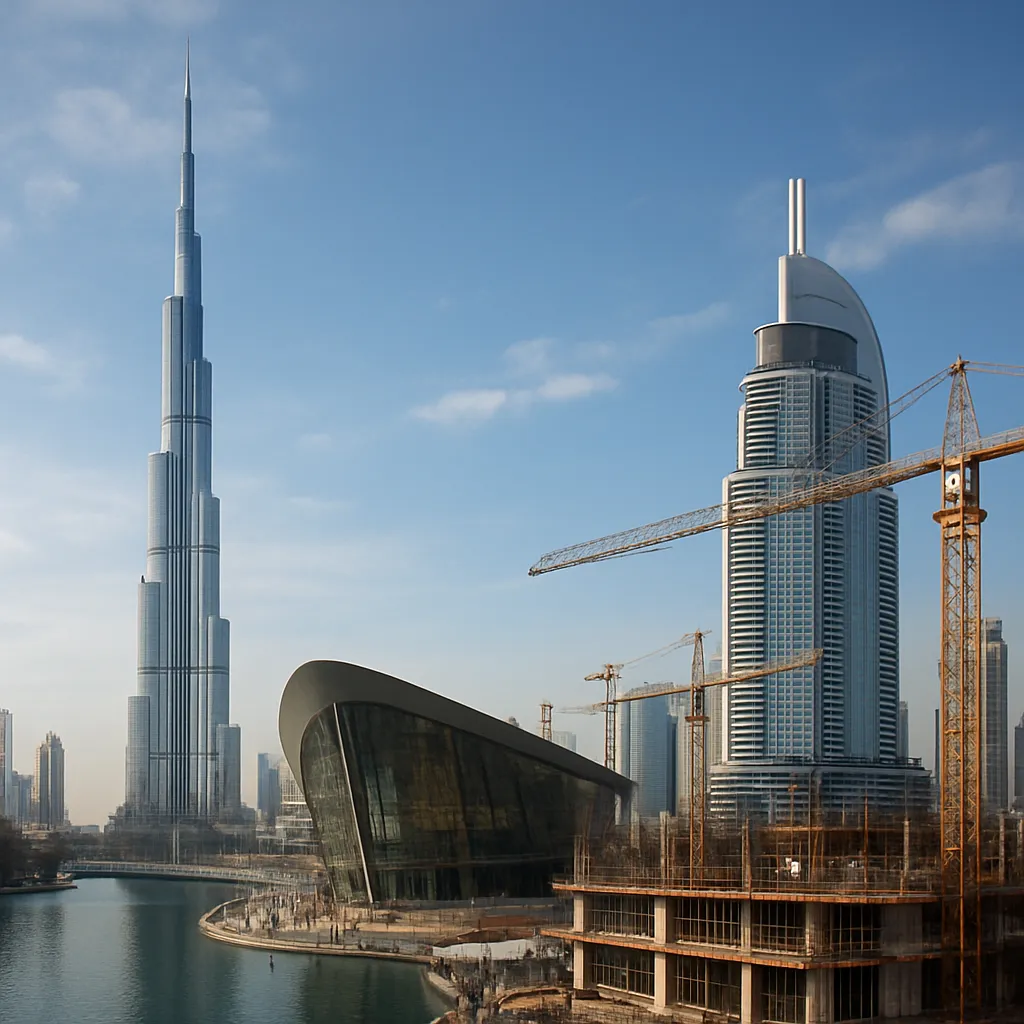
When one thinks of Dubai, the mind often drifts to the iconic silhouette of the Burj Khalifa. Yet beyond the tallest building in the world, a host of other projects has pushed the limits of creativity and innovation.
Twisting Towers and Dynamic Forms
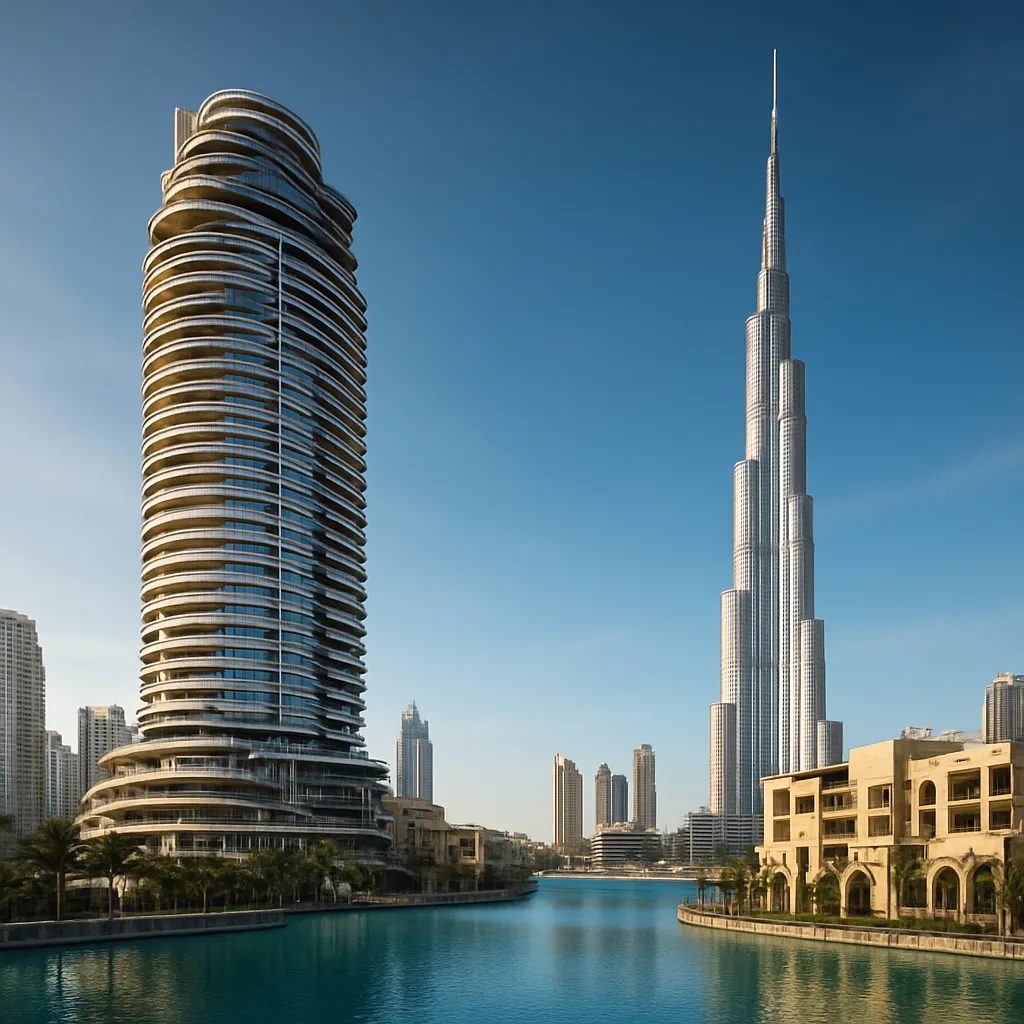
The twisting tower concept has become emblematic of Dubai’s appetite for the dramatic. By rotating each floor plate incrementally from the base to the top, architects achieve a sense of motion that transforms a static structure into a kinetic form. This approach is not mere visual flair: it optimizes views for residents, reduces solar heat gain on certain facades, and introduces a novel sense of aerodynamics into the urban skyline.
- Pentominium: Although still under development, this planned supertall tower promises a 90-degree twist over its entire height, creating unique floor layouts on every level.
- Cayan Tower: Completed in 2013, it remains one of the region’s best-known twisted structures.
Floating and Cantilevered Platforms
Some of the most daring proposals for Dubai’s future skyline aim to defy conventional foundations. The concept of floating modules—prefabricated units suspended off the ground by tension-cable systems—has attracted attention from visionary engineers. Such modules could eventually house luxury apartments, sky gardens, or even drone ports. Structural innovations in high-strength composites and carbon-fiber cables make these sketches more than mere fantasy, pointing toward a horizon where buildings hover above the sand.
Sustainable and Green Skyscraper Solutions
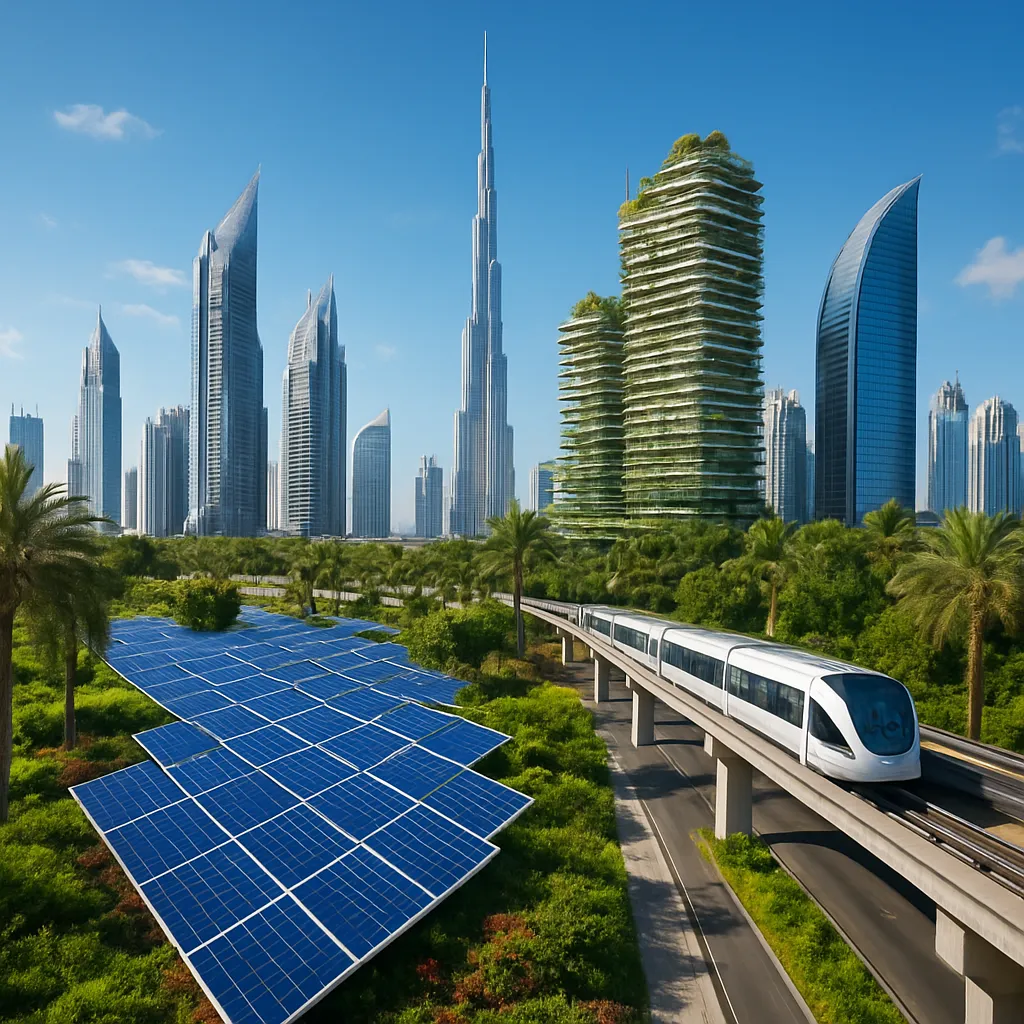
As global attention shifts toward climate resilience, Dubai has championed sustainability in its high-rise sector. Designers integrate vegetated surfaces, passive cooling strategies, and renewable energy installations to create eco-friendly towers that perform exceptionally in the harsh desert environment.
Living Facades and Vertical Gardens
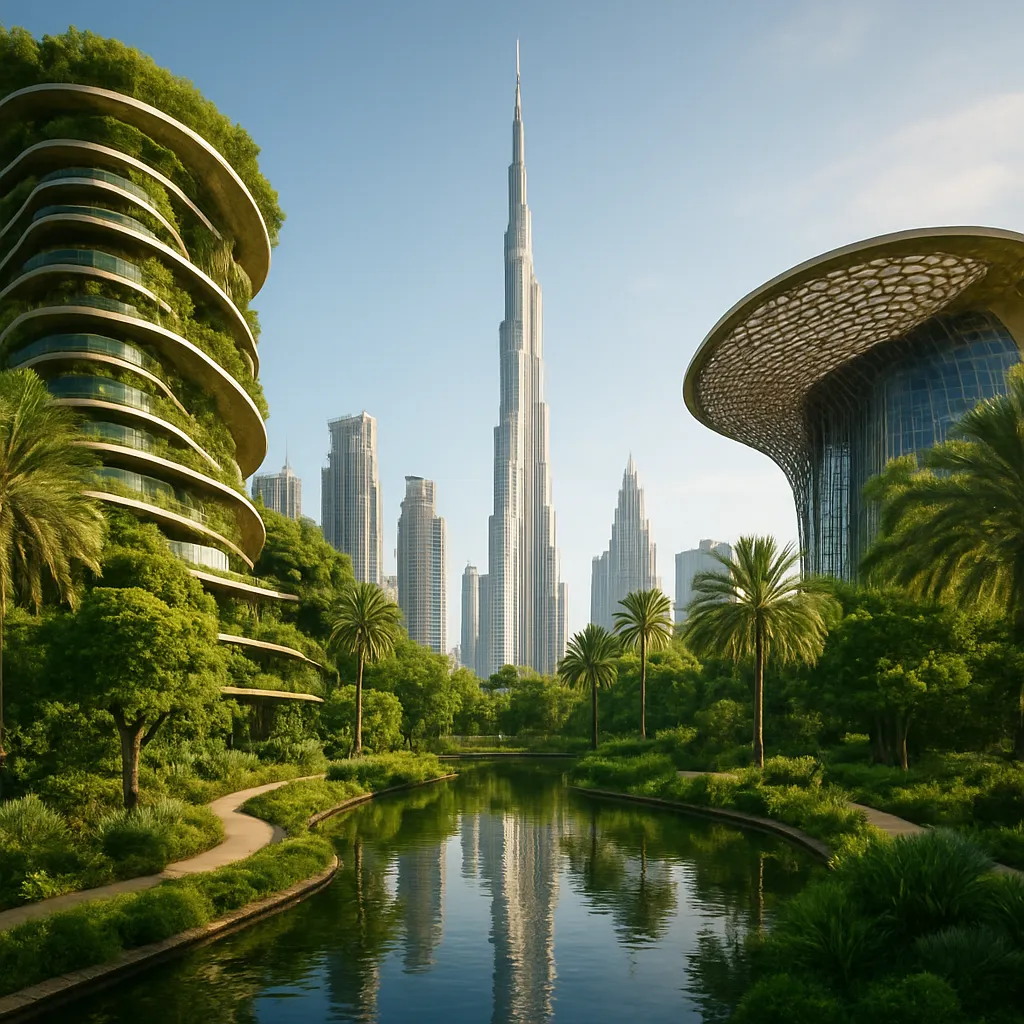
Covering an entire skyscraper façade with plantings achieves several goals: shading, improved air quality, and an eye-catching aesthetic. Some examples include multi-tiered green terraces winding up the side of a tower, as well as façade panels that host succulents and vines. These systems are often coupled with smart irrigation, using recycled water and sensors to regulate moisture and temperature.
Waste-to-Energy Integration
Certain developments in Business Bay and Downtown Dubai now experiment with on-site waste management systems. Organic refuse from residential units is processed in compact anaerobic digesters at ground level, generating biogas that can be piped into microturbines. The electricity produced powers common-area lighting, elevators, and even façade illumination, boosting a building’s eco-friendly credentials while reducing its carbon footprint.
Wind-Catching Towers
Given the desert’s strong seasonal breezes, several architects have designed towers with integrated wind-harvesting funnels. These vertical shafts funnel and accelerate airflow toward turbines concealed within the structure. By converting wind energy to electricity, the building can offset a portion of its operational loads, exemplifying a proactive approach to renewable integration.
Emerging Technologies Shaping Future Skylines
The skyscrapers of tomorrow will not only be taller and greener but also smarter. Dubai’s construction sector is embracing robotics, 3D printing, and digital twin modeling to streamline design and optimize performance.
3D-Printed High-Rise Components
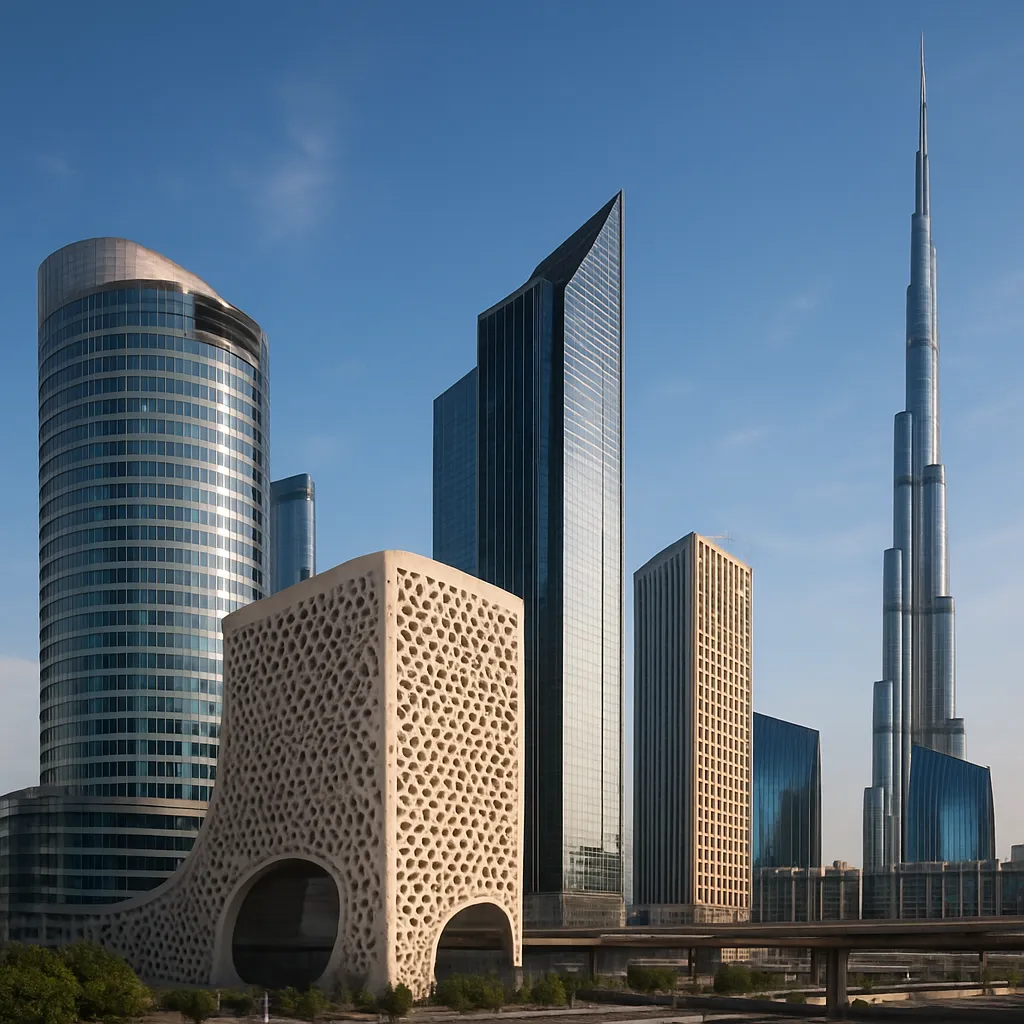
Advances in large-scale additive manufacturing have enabled architects to 3D-print structural elements, façade panels, and decorative motifs. By combining concrete mixes with specialized polymers, companies can produce complex geometries off-site, then assemble them on location. This method reduces material waste by up to 60% and accelerates project timelines.
Drone-Assisted Maintenance and Inspection
Routine inspections of façades hundreds of meters above ground were once labor-intensive and dangerous. Now, fleets of autonomous drones equipped with thermal cameras and laser scanners traverse the exterior of skyscrapers, identifying microcracks, heat leaks, or moisture incursions. This high-tech approach ensures ongoing adaptive maintenance and extends a building’s operational life.
Smart Glass and Dynamic Insulation
Electrochromic glazing can switch from transparent to opaque in seconds, responding automatically to sunlight levels or occupant preferences. By combining these panels with phase-change materials embedded within walls, towers achieve a form of pioneering thermal regulation. Occupants enjoy consistent comfort while the building minimizes its reliance on mechanical cooling.
Emergent Trends and Future Prospects
As the emirate continues its rapid expansion, several emergent trends suggest exciting possibilities:
- Modular Sky Villages: Entire neighborhoods built in the air, where units can be reconfigured like building blocks.
- Zero-Carbon Footprint Projects: Towers designed to produce as much renewable energy as they consume, from foundation to spire.
- Mixed-Reality Experiences in Lobbies and Observation Decks: Integrating holographic guides, interactive maps, and immersive art installations.
By harnessing these visionary concepts alongside proven engineering principles, Dubai is poised to maintain its reputation as a global incubator for superlative architecture. Each new skyscraper unfolds a narrative of ambition, innovation, and environmental stewardship, cementing the city’s place on the cutting edge of urban design.