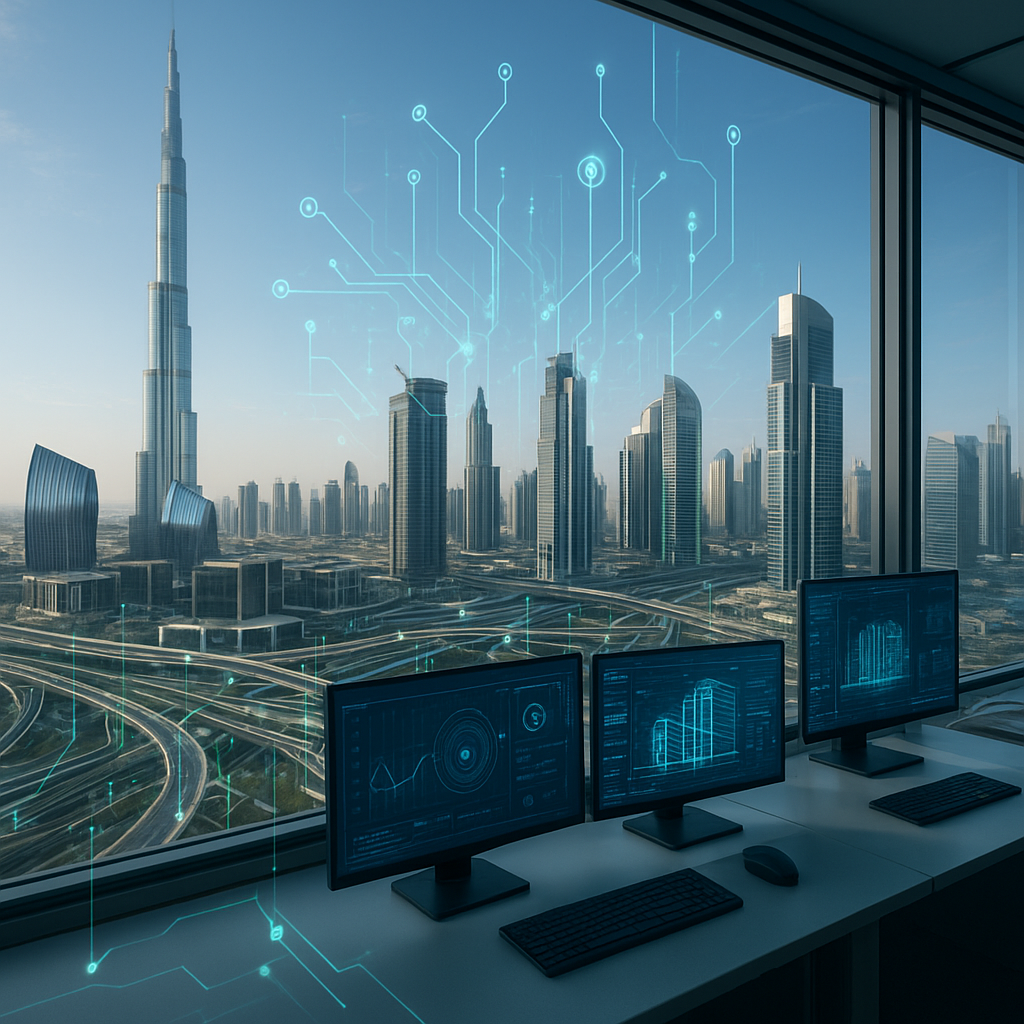
Dubai’s skyline has become synonymous with innovation and ambition, propelled by an unwavering commitment to technological advancement. This article delves into the heart of the city’s **smart** buildings and its expansive **digital** infrastructure, offering a detailed exploration of how these developments are reshaping urban living.
Smart Building Technologies Transforming Urban Spaces
From towering skyscrapers to luxury residential complexes, Dubai’s building landscape is defined by its integration of cutting-edge technology. Developers and architects collaborate with tech firms to equip structures with advanced systems that optimize performance and enhance occupant comfort. These systems rely heavily on sensors, IoT networks, and real-time analytics to maintain ideal environmental conditions, reduce energy consumption, and ensure **operational** efficiency.
One prominent example is the implementation of automated climate control, where sensors monitor temperature, humidity, and CO2 levels to adjust HVAC settings dynamically. The result is a living environment that adapts to occupancy patterns, minimizing waste while maximizing comfort. Such mechanisms can slash energy usage by up to 30%, a figure that underscores the economic and environmental benefits of intelligent design.
Another critical facet is the integration of advanced security systems. Using AI-driven video analytics and facial recognition, smart buildings can identify potential threats and manage access without human intervention. This approach not only streamlines security operations but also elevates the user experience by providing seamless entry through biometric authentication. The underlying **connectivity** infrastructure ensures these systems operate without lag, thanks to high-speed fiber networks and 5G coverage.
Additional innovations include:
- Smart lighting networks that adjust brightness and color temperature based on natural light availability and occupant preferences.
- Automated blinds and shading systems synchronized with weather forecasts to regulate solar gain and minimize cooling loads.
- Predictive maintenance platforms that aggregate equipment performance data, enabling proactive service scheduling and reducing downtime.
By harnessing these technologies, Dubai’s property developers are not just creating buildings—they’re engineering ecosystems that respond in real time to the needs of both occupants and stakeholders.
Scalable Digital Infrastructure: The Backbone of Smart Cities
Behind every intelligent building lies a robust digital framework designed to handle massive data flows and deliver uninterrupted services. Dubai has invested heavily in a multi-layered infrastructure comprising high-capacity data centers, extensive fiber optic networks, and edge computing nodes. This architecture ensures low-latency connectivity and scalable compute power crucial for advanced applications.
At the core are Tier III and Tier IV data centers, equipped with redundant power supplies and advanced cooling systems. These facilities comply with stringent international standards and are strategically located to serve urban hubs as well as remote developments. They house critical services ranging from government e-portals to private enterprise platforms, fostering a reliable digital ecosystem.
Complementing the data centers are city-wide fiber optic links that interconnect commercial districts, residential areas, and transport corridors. This high-bandwidth network supports video surveillance, smart traffic management, and public Wi-Fi hotspots. With gigabit-level access now commonplace in many parts of the city, businesses and residents alike benefit from seamless cloud connectivity.
Edge computing plays a pivotal role in processing time-sensitive data close to its source. In a high-rise building scenario, for example, local edge servers handle video streams for security cameras, offloading traffic from centralized data centers and reducing response times. Similarly, machine learning models that predict energy consumption patterns run at the edge to produce instant insights and trigger control actions without latency.
Dubai’s commitment to future-proofing its infrastructure is evident in ongoing trials of 6G networks and quantum communication links. While still in experimental phases, these technologies promise orders-of-magnitude faster data rates and unparalleled security, reinforcing the city’s ambition to remain at the forefront of digital innovation.
Integration of Sustainability and Resilience Strategies
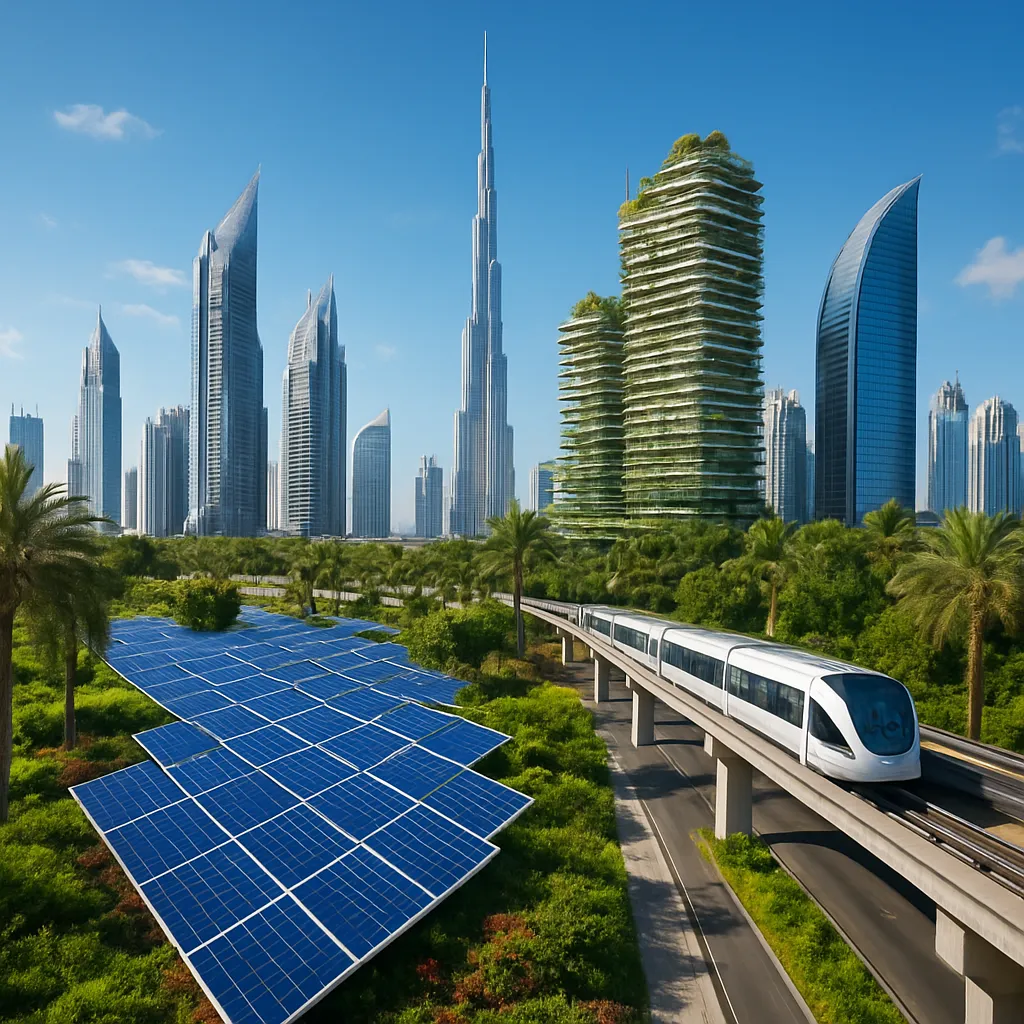
Smart buildings and digital networks in Dubai are not solely about high-tech conveniences; they are crafted with **sustainability** and **resilience** at their core. Designers harness renewable energy sources—particularly solar power—by integrating photovoltaic panels on facades and rooftops. These energy systems feed directly into building management platforms, which allocate power to critical loads and store surplus energy in advanced battery arrays.
Water scarcity is another challenge addressed through innovative solutions. Greywater recycling and smart irrigation networks reduce freshwater consumption in landscaping. Sensors embedded in soil measure moisture levels and automate watering schedules, ensuring greenery thrives without waste. These systems are orchestrated by central platforms that provide real-time dashboards for facility managers, highlighting performance metrics and guiding optimization efforts.
Flood mitigation is an integral component of urban resilience. Smart buildings incorporate raised podiums and permeable paving to manage stormwater runoff. Underground reservoirs temporarily store excess water during intense rainfall, while digital pumps activate based on real-time sensor data. This adaptive approach safeguards infrastructure and minimizes disruption to daily operations.
In addition to environmental measures, Dubai’s smart buildings are designed to withstand external threats ranging from cyberattacks to extreme weather events. Robust cybersecurity frameworks protect critical control systems, employing network segmentation and multi-factor authentication. Physical resilience is enhanced by structural health monitoring devices that track vibrations, load stresses, and material fatigue, alerting engineers to potential issues before they escalate.
The emphasis on sustainability and resilience ensures that Dubai’s buildings remain valuable assets over their life cycles, supporting long-term urban growth while mitigating environmental impact.
The Human Experience: Smart Living and Working
Ultimately, technology must serve people. Dubai’s smart buildings prioritize the human experience by offering personalized services and intuitive interfaces. Occupants can use mobile apps to reserve shared amenities, adjust apartment temperatures, or receive visitor notifications. In commercial towers, smart elevators utilize destination dispatch systems to reduce wait times and enhance vertical transport efficiency.
Workspaces within these structures embrace flexible layouts and adaptive environments. Collaborative zones are equipped with digital whiteboards, immersive video conferencing tools, and adaptive lighting schemes that align with circadian rhythms. This fosters productivity and well-being, attracting talent and driving innovation.
Health and wellness are also key considerations. Air quality monitors trace particulate matter and volatile organic compounds, triggering enhanced ventilation when levels exceed defined thresholds. Occupants receive alerts and suggestions, empowering them to make informed choices about their surroundings. In addition, biometric access panels track building entry and exit statistics, enabling facility managers to optimize space utilization and cleaning schedules.
For residents, smart homes feature automated routines that adjust lighting, media, and climate based on daily habits. Voice-activated assistants and AI-driven recommendation engines learn preferences over time, creating a truly personalized living environment. As more households adopt these systems, the cumulative data supports broader city-scale insights, driving continuous improvement in urban services.
Future Outlook: Scaling Innovation Across the Emirates
Dubai’s success in smart buildings and digital infrastructure is already influencing regional aspirations. Initiatives such as the Dubai Internet of Things (IoT) Strategy and the Dubai 10X program aim to export these models to other emirates and beyond. Collaboration with international research institutions accelerates development in fields like autonomous mobility, digital twins, and blockchain-enabled construction supply chains.
One promising avenue is the deployment of digital twins—virtual replicas of buildings and neighborhoods that simulate performance under various scenarios. Digital twins enable planners to test energy-saving strategies, optimize evacuation routes, and predict maintenance needs before they arise. When integrated with real-time sensor data, these platforms become powerful decision-support tools for both public authorities and private developers.
Moreover, the intersection of blockchain with building management holds potential for secure transactions, transparent supply chain tracking, and streamlined permitting processes. Smart contracts can automate compliance checks, reducing bureaucratic delays and lowering costs for stakeholders.
As Dubai continues to refine its smart city blueprint, the lessons learned here will inform global best practices. The blend of **technology**, sustainability, and human-centric design position the city as a living laboratory for urban transformation.
Note: The integration of smart building systems and digital infrastructure in Dubai underscores a broader shift towards cities that leverage data and automation to enhance quality of life. By maintaining a relentless focus on innovation, the city sets a benchmark for others pursuing the next generation of urban development.