Binghatti Gate in Jumeirah Village Circle is a contemporary residential development that reflects Dubai’s fast-moving urban growth and the evolving preferences of city residents. Positioned within one of Dubai’s most sought-after master-planned communities, this building combines attention-grabbing design elements with practical amenities, offering both residents and investors a compelling proposition. The following article explores the building’s location, architectural characteristics, amenities, developer background, market context and practical considerations for residents and buyers.
Location and context
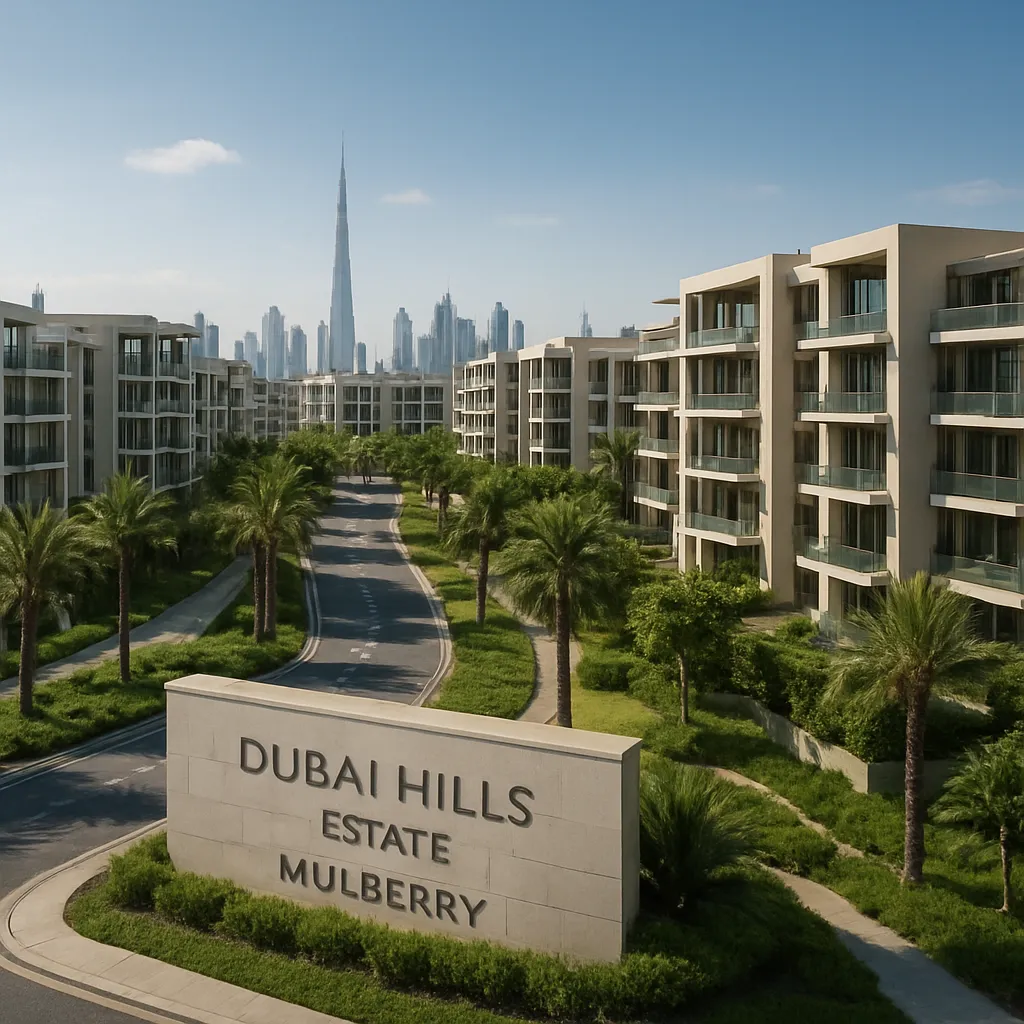
Binghatti Gate is located in Jumeirah Village Circle (JVC), a mixed-use development in central Dubai known for its family-friendly layouts, parks and a blend of apartments and villas. JVC sits strategically between major arterial roads, providing relatively quick access to several of Dubai’s primary districts. The building enjoys proximity to neighborhoods such as Dubai Marina, Media City, Arabian Ranches and Motor City, making it attractive for professionals who commute to business hubs as well as families seeking amenities and green spaces.
JVC’s urban plan centers on a series of landscaped circles and pocket parks, and Binghatti Gate benefits from this planning approach by offering residents a sense of community and access to walkable green areas. The precise positioning within JVC makes the building convenient for local retail, schools, and leisure options—while retaining connection to Dubai’s larger transport network, including Al Khail Road (E44) and Sheikh Mohammed Bin Zayed Road (E311).
Architecture and design language
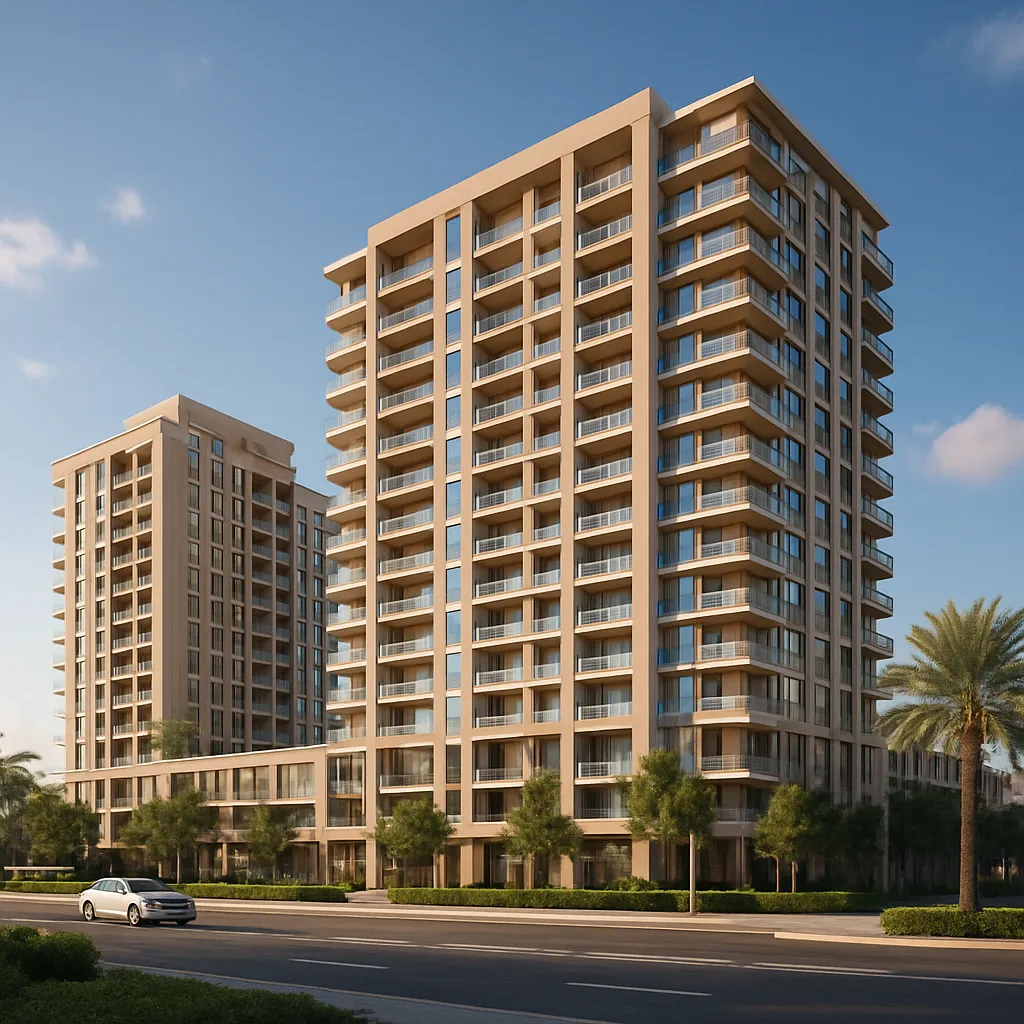
Binghatti developments are widely recognized for their distinctive façades and thoughtful architectural gestures, and Binghatti Gate is no exception. The building’s exterior plays with geometry, rhythm and texture to create a standout presence within the JVC skyline. Rather than a plain glass box, the project emphasizes sculptural forms, shaded balconies, indented volumes and a layered facade that casts changing shadows over the day—an approach that is both aesthetic and functional for a hot climate.
Typical materials include high-quality concrete, composite cladding elements and energy-efficient glazing. The façade detailing often incorporates repeated geometric modules that break down the massing and provide visual relief. Internally, layouts are designed to maximize natural light while controlling solar gain; recessed balconies and overhangs help to shade living spaces. The architectural language is contemporary yet grounded, intended to appeal to a broad market of end-users and investors looking for a modern but durable residence.
Spatial organization
- Podium and entrance: A welcoming lobby with security and concierge spaces, often with retail units at street level to animate the frontage.
- Residential floors: A mix of compact and larger units with efficient circulation and core placement for elevators and services.
- Roof and terraces: Communal terraces and landscaped areas that provide outdoor amenities and city views.
Amenities and unit mix
Binghatti Gate aims to deliver a balanced set of amenities typical for modern Dubai residential towers. The offering targets both short-term occupiers and long-term residents by combining lifestyle features with practical services.
- Swimming pool and leisure deck—designed for residents’ relaxation and family use.
- Fitness center and gym—equipped for everyday workouts and wellness activities.
- Children’s play area and landscaped gardens—providing safe outdoor spaces within the community fabric.
- Basement and podium parking—ensuring adequate residents’ parking and visitor bays.
- 24/7 security, CCTV and concierge services—standard features for residential comfort and safety.
- Retail podium—small shops and cafes at ground level to support everyday conveniences.
The unit mix typically includes studios, one- and two-bedroom apartments, and sometimes three-bedroom layouts depending on the specific block or phase. Unit sizes are planned to suit both single professionals and families. Interiors are usually finished to market standards with modern kitchens, built-in wardrobes and tiled living areas; options for upgraded finishes and fittings are often available for buyers seeking enhanced specification.
Developer profile and reputation
Binghatti Developers has established itself as a prominent player in Dubai’s residential sector, known for executing projects with distinctive façades and timely delivery. The company’s portfolio spans a range of residential types—from low- to mid-rise volumetric housing to high-rise towers—each project seeking to balance design ambition with cost-efficient construction and market appeal.
A key part of Binghatti’s appeal to buyers is the combination of recognisable architectural identity and a consistent delivery model. Buyers often cite the developer’s focus on façade character and amenity planning as differentiators in a crowded market. For investors, the brand recognition in Dubai’s residential landscape supports marketability to renters and future resales.
Practical access, transport and connectivity
One of JVC’s longstanding selling points is its central location relative to many of Dubai’s live-work-play nodes. Binghatti Gate benefits from:
- Direct or short drive access to Al Khail Road and Sheikh Mohammed Bin Zayed Road, allowing relatively efficient car travel across Dubai.
- Proximity to community retail centers within JVC—local groceries, cafes, and services within walking distance for many residents.
- Reasonable commute times to Dubai Marina and JLT, as well as to business districts like DIFC and Media City, depending on traffic conditions.
- Access to public transport options such as taxis, app-based ride-hailing services and nearby bus routes; the future expansion of Dubai Metro and tram networks enhances long-term connectivity prospects.
Market positioning and investment potential
Binghatti Gate positions itself in a segment that targets buyers seeking affordable to mid-market residences in central Dubai. JVC has been favoured by investors for its relatively competitive price points compared to neighboring communities while still offering good access to central employment and leisure nodes.
Several general market observations relevant to prospective buyers and investors:
- Affordability: JVC units commonly represent a more affordable entry point into Dubai property ownership compared with some waterfront or downtown areas, appealing to first-time buyers and buy-to-let investors.
- Rental demand: The community attracts families and professionals, producing steady rental demand for well-maintained and amenity-rich units.
- Capital growth: As Dubai’s urban development continues, well-located JVC properties can benefit from broader price appreciation across the city—though local performance depends on macroeconomic conditions, supply dynamics and project delivery quality.
- Rental yields: Historically, areas like JVC have demonstrated competitive rental yields relative to average Dubai levels, often supporting yield-driven investors.
Buyers should evaluate current market listings for up-to-date pricing and yields, consider service charges and community governance, and review the building’s exact specifications and completion status before making investment decisions.
Construction quality and materials
Construction standards in Binghatti projects aim to meet Dubai’s regulatory requirements while delivering functional finishes. Typical construction characteristics include reinforced concrete frames, modern façade systems combining insulated cladding and high-performance glazing, and durable interior materials selected for rental durability.
Developers increasingly incorporate water-saving fixtures, LED lighting and energy-efficient equipment in mechanical systems to reduce operating costs for residents. While Binghatti Gate is not necessarily presented as a high-certification green building, many design decisions—such as recessed balconies and shaded glazing—serve pragmatic energy-reduction goals in a hot climate.
Maintenance and service considerations
- Service charges: Prospective buyers should review historical and projected service charges to understand ongoing ownership costs.
- Warranty and handover: Check the developer’s policy on defects liability periods and after-sales support for finishes and MEP items.
- Property management: The reputation and responsiveness of the building’s management team can materially impact resident satisfaction and long-term value retention.
Community life and neighborhood amenities
Beyond the building footprint, life in JVC and around Binghatti Gate is shaped by communal green spaces, pocket parks, cafés, schools and local convenience retail. The area draws families who value accessible outdoor areas and a quieter residential atmosphere compared with busier parts of the city.
Nearby amenities that contribute to resident lifestyle include:
- Supermarkets and daily groceries
- Fitness studios and sports clubs located in adjacent communities
- Restaurants and cafes catering to multi-cultural tastes
- Schools and nurseries serving community families
- Healthcare clinics and pharmacies for routine medical needs
Design influences and cultural context
Binghatti Gate’s aesthetic nods to a contemporary reinterpretation of regional sensibilities: shading devices, layered volumes and careful modulation of openings respond to local climate and cultural preferences for privacy and outdoor living. This synthesis of functional climate response with modern design is increasingly common across Dubai projects, where developers balance global architectural trends with Middle Eastern context.
The building contributes to the broader narrative of JVC as a community focused on liveability rather than only luxury spectacle—making it attractive to a wide demographic that includes families, working professionals and investors seeking dependable rental income.
Practical advice for prospective residents and investors
- View a variety of units and orientations to assess daylight, balcony exposure and noise levels.
- Compare service charges across similar JVC buildings to understand ongoing costs.
- Investigate actual completion dates and handover documentation when purchasing off-plan or under construction.
- Consult recent sales and rental comparables in JVC to set realistic expectations for price and yield.
- Meet the building management and ask about prior residents’ feedback if resales are available—good management is a strong predictor of tenant retention and property value stability.
Interesting facts and contextual notes
- Binghatti’s projects have gained attention for façades that create a strong brand identity—many buyers recognize the developer’s signature use of geometric motifs and layered textures.
- Jumeirah Village Circle was developed with a grid of circular and semi-circular parks, which gives the area a distinctive planning pattern compared with typical linear developments.
- The area’s relative affordability, in combination with a family-friendly environment, has helped it maintain consistent rental demand even when central Dubai markets fluctuate.
Summary and outlook
Binghatti Gate in Jumeirah Village Circle represents a blend of contemporary architecture, practical amenities and strategic location in one of Dubai’s most resilient residential communities. The building is designed to attract a mix of end-users and investors through a considered balance of style and functional living space. For those evaluating a purchase, the appeal lies in the developer’s visual identity, the community setting of JVC and the pragmatic amenity set that supports everyday life.
Prospective buyers and renters should evaluate current market data for up-to-date pricing and rental yields, confirm the building’s specific specifications and finishes, and consider long-term community plans that could influence future value. Binghatti Gate stands as an example of Dubai’s mid-market housing typology—where thoughtfully executed design and community-oriented planning meet the practical needs of modern urban life.
Note: For the most accurate and current statistics—such as exact unit counts, floor numbers, sale prices and rental yields—consult the developer’s official sales materials, the Dubai Land Department, or licensed local real estate agents who can provide verified market data and transaction records.