Business Bay is one of Dubai’s most dynamic urban developments, a modern mixed-use district that has reshaped the city’s central skyline. Rising from reclaimed land and masterplanned plots, it is characterized by a dense cluster of high‑rise towers, a network of canals and boulevards, and a persistent drive toward creating a 24/7 business and residential hub. This article examines where Business Bay is located, what it is best known for, notable buildings and architectural highlights, statistical and economic information, and the challenges and prospects the district faces as it matures into a global urban quarter.
Location, origins and urban concept
Business Bay sits adjacent to Downtown Dubai and runs along the newly created waterway that extends the historic Dubai Creek into what is often called the Dubai Canal. The district occupies a strategic position in the city’s central spine, linking Sheikh Zayed Road and the older commercial zones to the fast-expanding southern neighborhoods. From the outset its planners envisaged a mixed-use environment — a place where offices, residential towers, hotels and leisure facilities would co-exist in a compact, walkable grid.
The development was announced in the early 2000s and accelerated after 2005, when Dubai’s desire to diversify its economy and enhance its skyline coincided with major private and public investment. Business Bay’s masterplan laid out a blend of narrow plots for high-rise towers and low-rise pockets intended for retail, cultural and public uses — the aim being to create a continuous urban fabric rather than isolated gated towers. The project embraced both international and regional developers, drawing design talent from across the globe.
Geographical and transport context
Key to Business Bay’s appeal is its connectivity. It is a short drive or metro ride from major nodes like Dubai International Financial Centre (DIFC) and Dubai International Airport. The neighborhood is served by Metro stations close by, an extensive bus network, and arterial road links such as Al Khail Road and Sheikh Zayed Road. The neighborhood’s proximity to Downtown Dubai — home to the Burj Khalifa and Dubai Mall — increases its value as a business and lifestyle address.
Water and landscape integration
One of the defining elements of the district is its relationship with water. The Dubai Water Canal, completed in the mid-2010s, carved a new waterfront edge for Business Bay. The canal brought promenades, bridges and public parkland, reshaping the district from a purely vertical skyline into an environment where waterfront leisure and urban public space play a prominent role. Alongside promenades, pocket parks and plazas were incorporated to soften the density and improve the public realm.
Notable buildings and architectural highlights
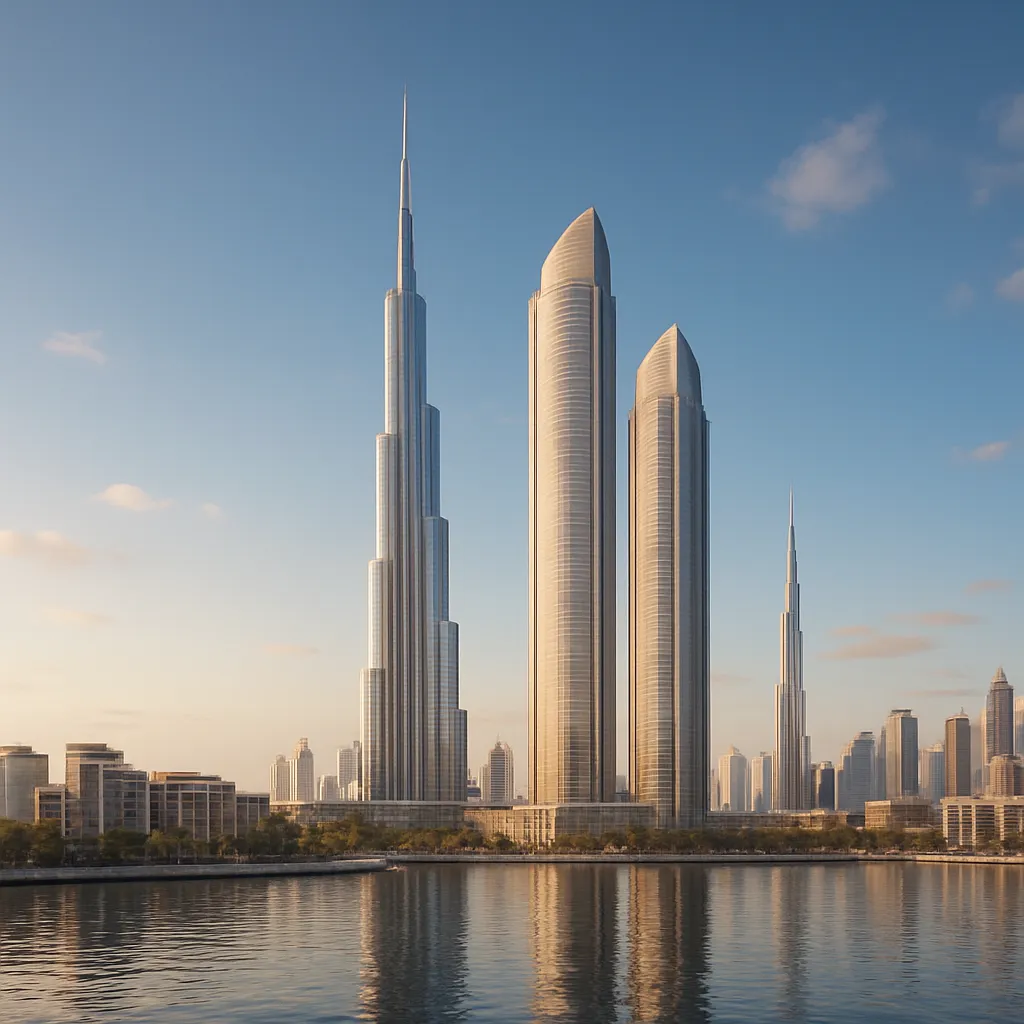
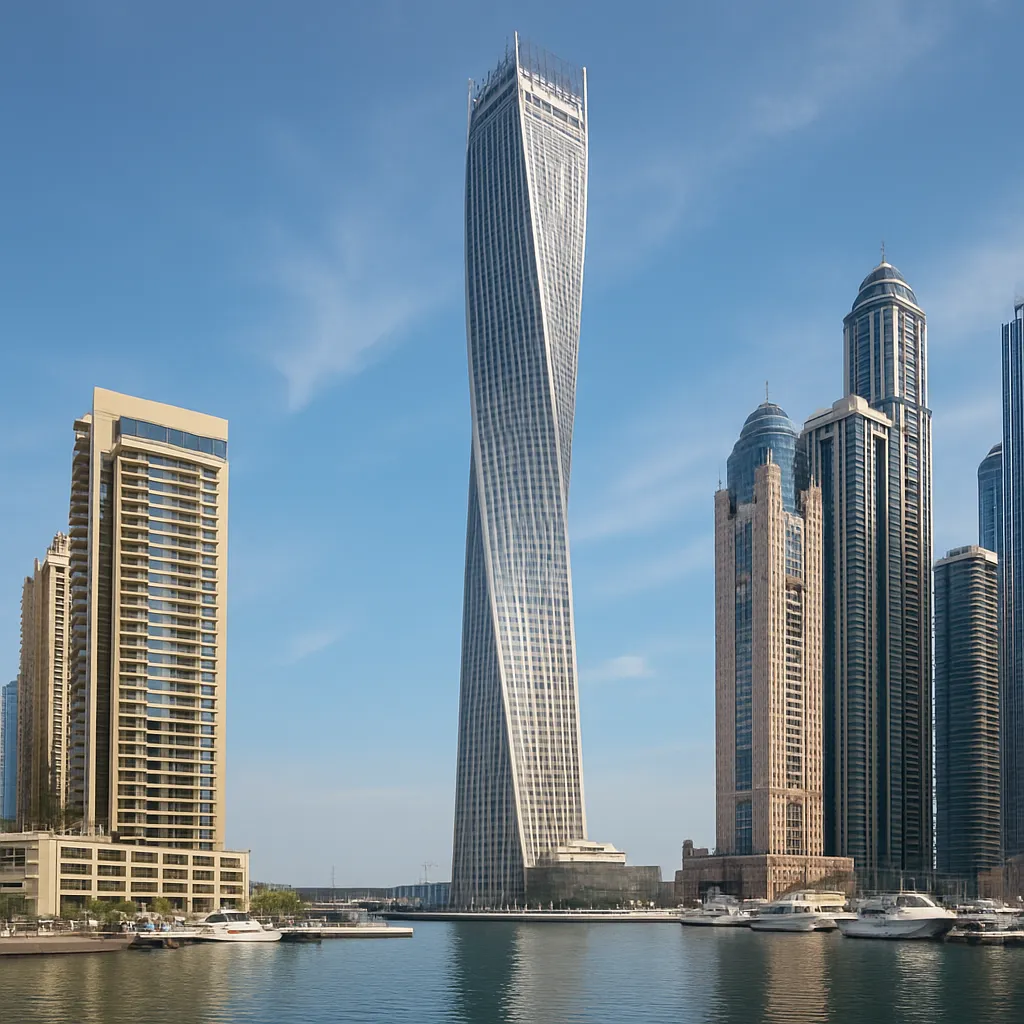
Business Bay is especially well known for the diversity of its towers: corporate headquarters, luxury hotels, residential skyscrapers and innovative mixed-use podiums. While the district’s skyline is ever-changing, a number of projects stand out for their design, scale or cultural significance.
- The Opus by Omniyat — Designed by Zaha Hadid Architects, The Opus is often singled out for its sculptural form: a glass tower with a distinct central void that creates a dramatic silhouette. The building combines office, hotel and retail functions, and has become an icon for contemporary architecture in Dubai.
- JW Marriott Marquis — The twin towers of JW Marriott Marquis Dubai are among the tallest purpose-built hotel towers in the world. Located within Business Bay, the hotel complex has become a major venue for business events and luxury hospitality, reinforcing the area’s role as both a corporate and tourist destination.
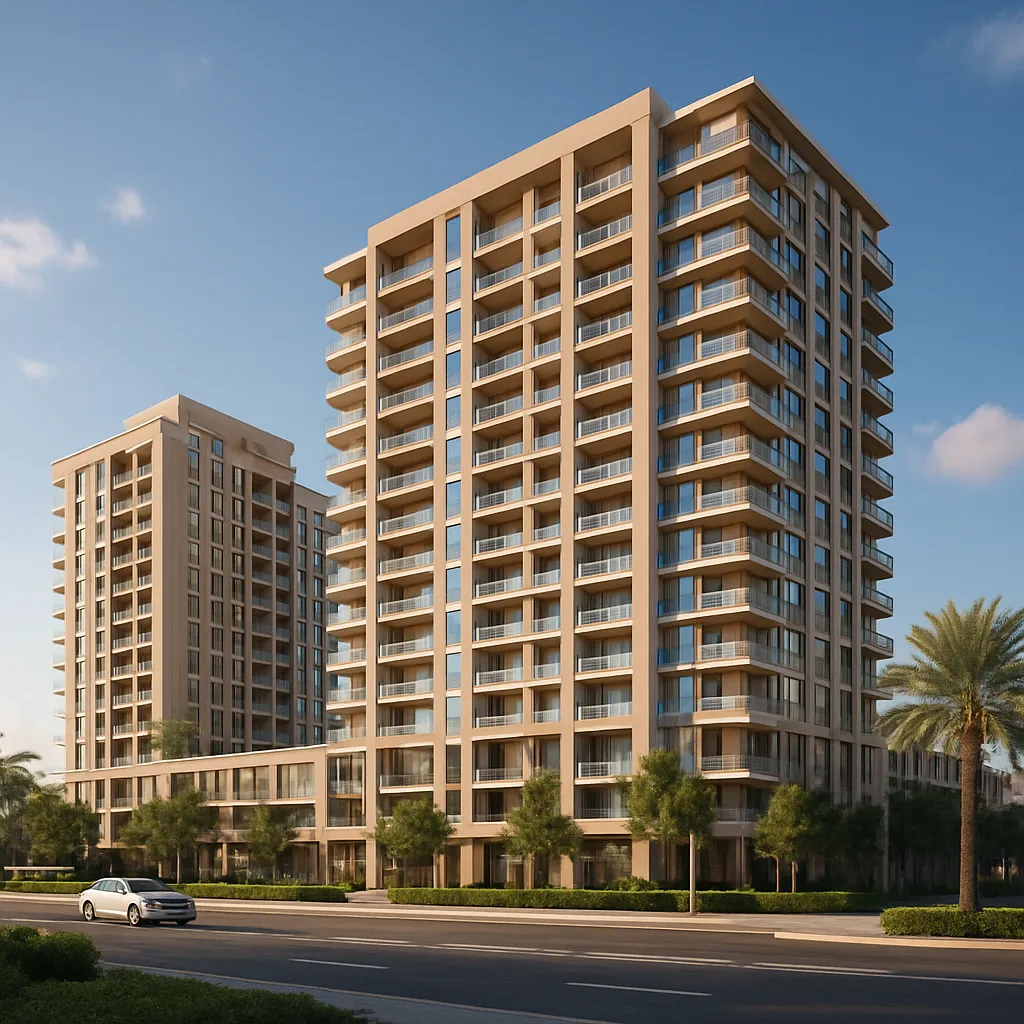
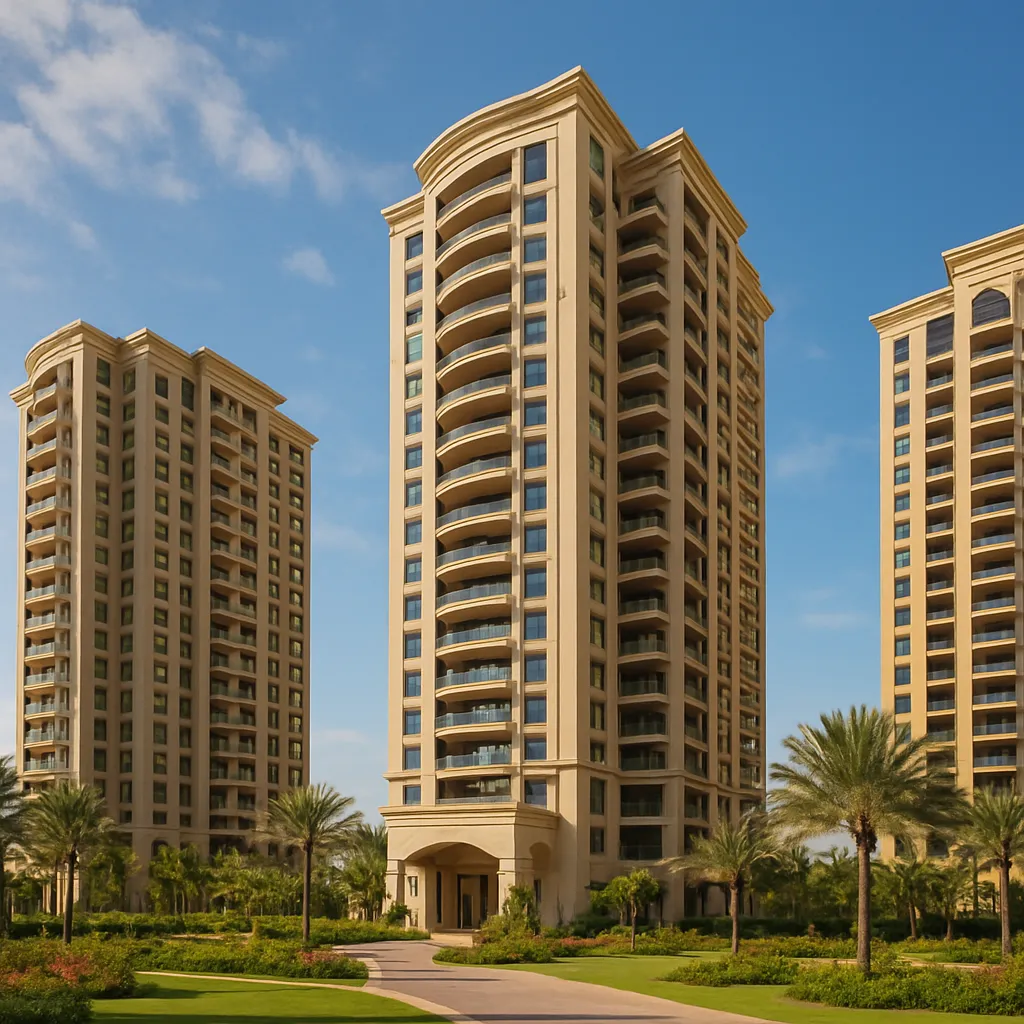
- Executive Towers and Business Bay Residences — These clusters represent the district’s large-scale residential offerings and include commercial podiums, public spaces and integrated facilities aimed at creating a stable urban population.
- Bay Square — A low-rise precinct within Business Bay, Bay Square provides a contrast to the high-rise realm: it is designed for creative businesses, boutique offices, restaurants and street-level activity. Bay Square is often referenced as the kind of human-scale environment that planners sought to intersperse within a high-density district.
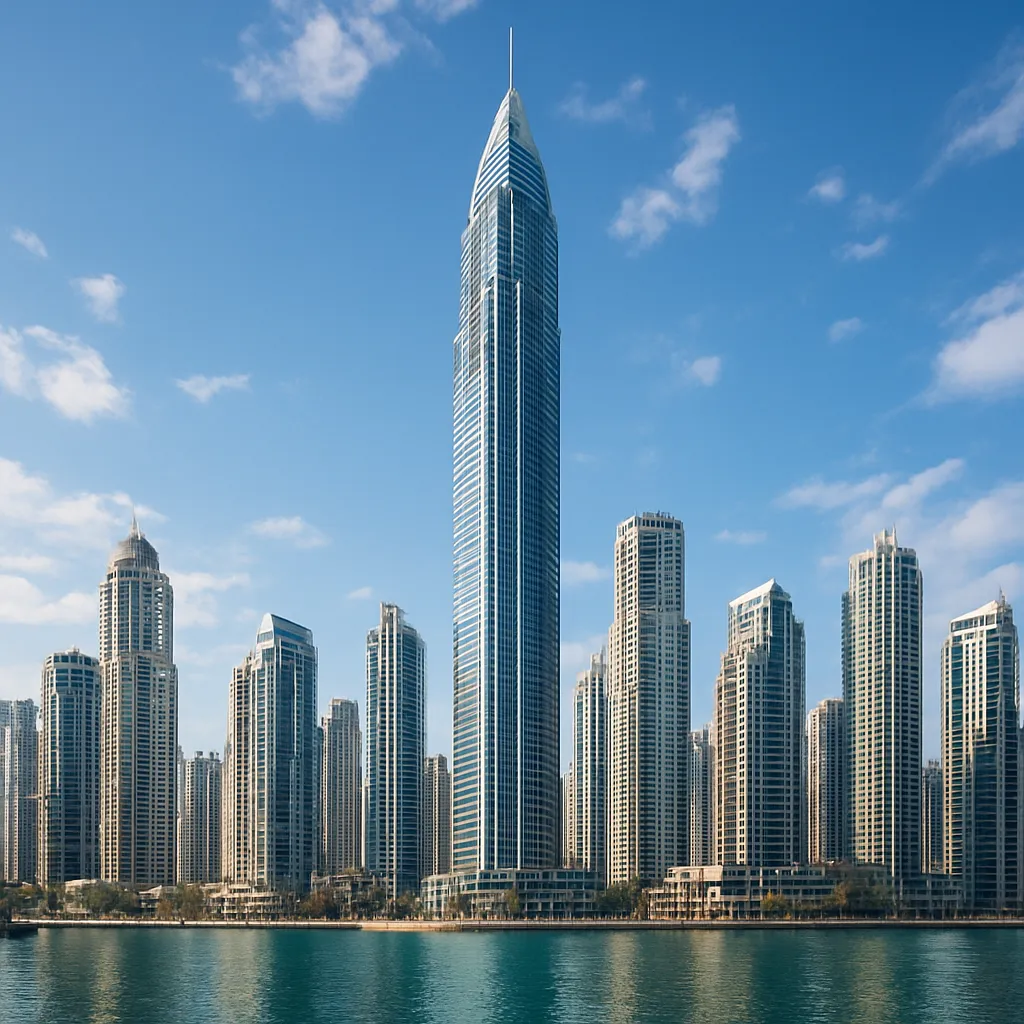
- Numerous speculative high-rises — A continual stream of developer-led towers have added variety to the skyline, including slender residential spires, glass-faced office blocks and branded hotel residences. The architectural language ranges from international corporate glass to expressive, landmark designs.
Many of these buildings have mixed programs: podiums with retail and F&B outlets, mid-level office floors, and upper-level serviced residences. That blend is deliberate, intended to keep streets active beyond the 9–5 workday and to build a sustainable local economy within the district.
Design themes and sustainability
Although Business Bay’s architecture leans heavily into high-rise typologies, recent projects have paid more attention to sustainability and microclimate. Developers have incorporated shading devices, efficient façade systems, and energy-conserving mechanical systems. The introduction of public parks, pedestrian promenades and tree-lined streets also responds to the need for outdoor comfort in Dubai’s hot climate and supports improved urban walkability.
Statistics, capacity and economic significance
Business Bay is often referenced in planning and investment literature with a few headline statistics. The development covers an area of roughly 46 million square feet (around 4.3 million square meters), making it one of the largest mixed-use urban expansions in Dubai in recent decades. The plan anticipated a substantial number of towers — hundreds of plots were allocated across the masterplan for commercial and residential development.
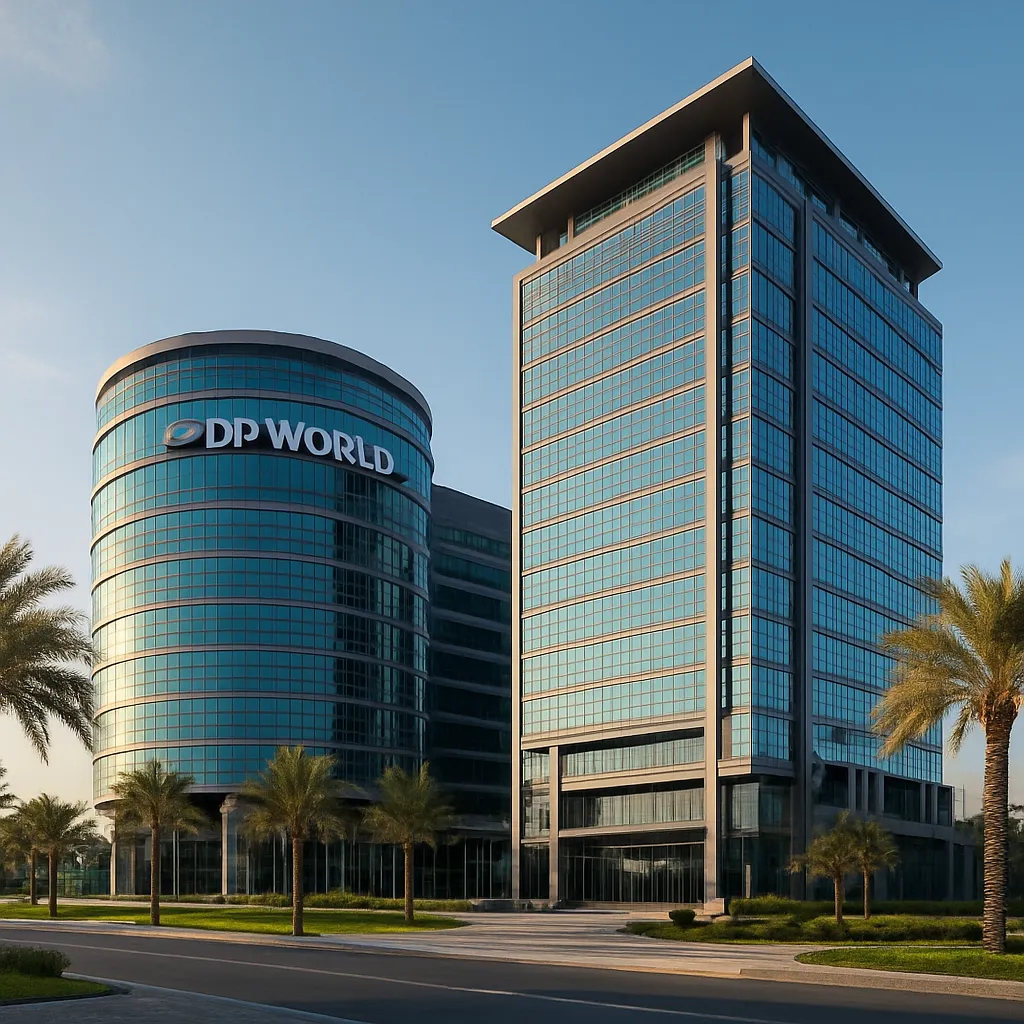
In economic terms, Business Bay is positioned as a central business district, meant to host regional headquarters, professional services, hospitality and high-end residential supply. The district supports thousands of businesses and tens of thousands of residents and workers, contributing a meaningful share to Dubai’s office market and urban housing stock. Many multinational firms and regional offices have taken space here to be close to the Downtown area and to leverage the prestige associated with business addresses in the neighborhood.
Real estate and market dynamics
The real estate market in Business Bay has followed Dubai’s broader cycles. During periods of strong demand, rental and sale prices for prime office and apartment products rose sharply; during softer cycles, the market adjusted through increased incentives and competitive pricing. The district’s mix of hotel rooms, serviced apartments and freehold residential units makes it attractive for both investors and end-users. Over the past decade, Business Bay has matured from speculative early phases into a more stabilized market segment with both investor-owned and owner-occupied properties.
Commercial and hospitality capacity
Business Bay’s hotel capacity is significant thanks to large hotels like the JW Marriott Marquis and multiple international brands. This concentration of hotel rooms supports business meetings, exhibitions and tourism while also anchoring local dining and retail options. Office space in the district ranges from boutique suites to larger floorplates suitable for corporate headquarters, and many towers offer flexible configurations for tenants.
Living, working and urban life
One of the district’s explicit goals has been to create a place where people can live, work and play. Its residential towers house a mix of families, expatriate professionals and single occupants, while the office towers house local and international firms. The presence of serviced apartments and branded residences has also made Business Bay a choice location for business travellers who prefer extended stays.
Retail, dining and leisure
Retail in Business Bay includes high-street shops, supermarkets, gyms and boutique retail. The ground floors of many towers are activated with cafés and restaurants that serve both daytime office crowds and evening residents. The waterfront promenades and pocket parks along the canal provide spaces for jogging, cycling and outdoor dining, adding a leisure dimension to everyday urban life.
Community and amenities
As the district matured, community amenities followed: schools, medical clinics, supermarkets and childcare facilities became more available to serve permanent residents. The presence of cultural and lifestyle venues — art galleries, event spaces and boutique leisure operators — has slowly expanded, though Business Bay is still primarily recognized as a commercial and residential center rather than a cultural district.
Challenges, criticisms and urban resilience
No urban project of Business Bay’s scale is without challenges. Common criticisms include the rapid pace of vertical construction, which sometimes prioritized tower count over integrated, human-scale streetscapes. The original phasing led to pockets of underused land and unfinished public spaces during economic downturns. Additionally, high-density developments in hot climates require careful attention to shading, wind microclimates and pedestrian comfort — issues that planners and developers have incrementally addressed.
Traffic congestion during peak hours can be an issue, as the concentration of offices and hotels produces significant vehicle flows. That has emphasized the need for robust public transport links, last-mile solutions and traffic management. Another concern is the long-term sustainability of a heavily towered district in the face of climate considerations; however, newer projects increasingly incorporate energy-efficient systems, green roofs, and landscaping to mitigate heat island effects.
Resilience and adaptive reuse
Business Bay has shown adaptive capacity: underutilized buildings and podiums have been repurposed for new uses, and developers have introduced amenities to attract tenants and residents. The growth of leisure and retail along the canal, as well as the conversion of some office floors to flexible workspaces, illustrate the district’s ability to respond to changing market demands.
Future directions and strategic opportunities
Looking ahead, Business Bay’s future is tied to Dubai’s broader urban strategy: to strengthen the city’s service economy, attract international firms, and enhance livability in central areas. Several trends are likely to shape the district:
- Continued densification, with infill development and the completion of mid- and high-rise plots still under construction.
- An increasing emphasis on sustainable building practices and green public spaces to mitigate climate impacts and improve resident comfort.
- Further evolution of the waterfront as a leisure and cultural destination, benefiting from programming, pop-up events and pedestrian enhancements.
- Integration of mobility solutions — including expanded public transport and micro-mobility options — to reduce reliance on private vehicles and improve accessibility.
- Greater mix of uses, with more experiential retail, co-working spaces, cultural venues and street-level activation to support a vibrant 24-hour economy.
These directions are consistent with Business Bay’s role as a central urban node: not merely a collection of towers, but an evolving neighborhood that seeks to balance commercial gravity with residential livability.
Interesting facts and cultural notes
A few compelling points that illustrate Business Bay’s identity:
- The district’s name — Business Bay — signals its intended role as a regional business hub, a deliberate branding strategy to attract corporate tenants and investors.
- Iconic architecture such as The Opus has helped raise Business Bay’s profile among architects and global design media, showing that Dubai’s contemporary skyline continues to be a canvas for experimental forms.
- The Dubai Water Canal’s creation transformed former road-facing plots into valuable waterfront property, and the promenades have become key venues for public events and leisure activities.
- Business Bay’s mixture of hotel and residential inventory positions it to serve both short-term visitors and long-term residents, enabling a more diversified urban economy than single-use business districts.
Conclusion
Business Bay stands as a prominent example of Dubai’s high‑ambition urbanism: a large-scale district designed to support commerce, hospitality and urban living within a compact, high-rise framework. With an area of roughly 46 million square feet, a growing roster of landmark buildings and a central waterfront, it plays a strategic role in the city’s economic geography. Challenges remain — especially in terms of pedestrian comfort, transport and phasing — but Business Bay has matured into a recognizable urban quarter that continues to evolve. As developers and the city refine designs, improve public spaces and diversify uses, Business Bay is likely to become even more integrated into the everyday life of Dubai, moving from a collection of towers to a coherent, resilient neighborhood.