Cluster B Residences is a part of the larger International City development in Dubai, a distinctive and budget-conscious residential area known for its themed architecture and multicultural community. Located within a planned township that combines residential blocks, retail strips and large wholesale hubs, Cluster B offers practical living solutions for families, professionals and investors seeking affordable accommodation in one of the emirate’s most recognizable suburban precincts. This article explores where Cluster B sits within the city fabric, what makes it notable, how its buildings are designed and managed, and what residents and potential buyers or tenants can expect in terms of services, connectivity and market dynamics.
Location and urban context
Cluster B is one of many similarly designed clusters that compose International City, a master-planned development by Nakheel that stretches across several square kilometres in the Al Warsan area of Dubai. International City itself was conceived as an affordable, high-density residential and commercial hub, positioned on the outskirts of central Dubai to offer lower-cost housing options while keeping reasonable links to economic and shopping nodes.
Geographically, International City lies south of the Dubai Creek and close to the Ras Al Khor industrial and wildlife areas. It is bounded by the Dubai–Al Ain Road (E66) and easily accessed from several major roads. As a result, Cluster B benefits from the district’s proximity to:
- Dragon Mart and the Dragon City retail/wholesale complex, a major commercial destination for Chinese goods and general merchandise;
- Ras Al Khor Wildlife Sanctuary, noted for its flamingo populations and environmental significance;
- several industrial and warehouse districts that provide employment opportunities for residents;
- major transport corridors giving access to central Dubai, Dubai International Airport and other emirates.
The cluster is integrated into the broader street and service network of International City and typically lies within walking distance of community facilities such as supermarkets, cafés, clinics and schools that cater to a mixed expatriate population.
Architecture and building typology
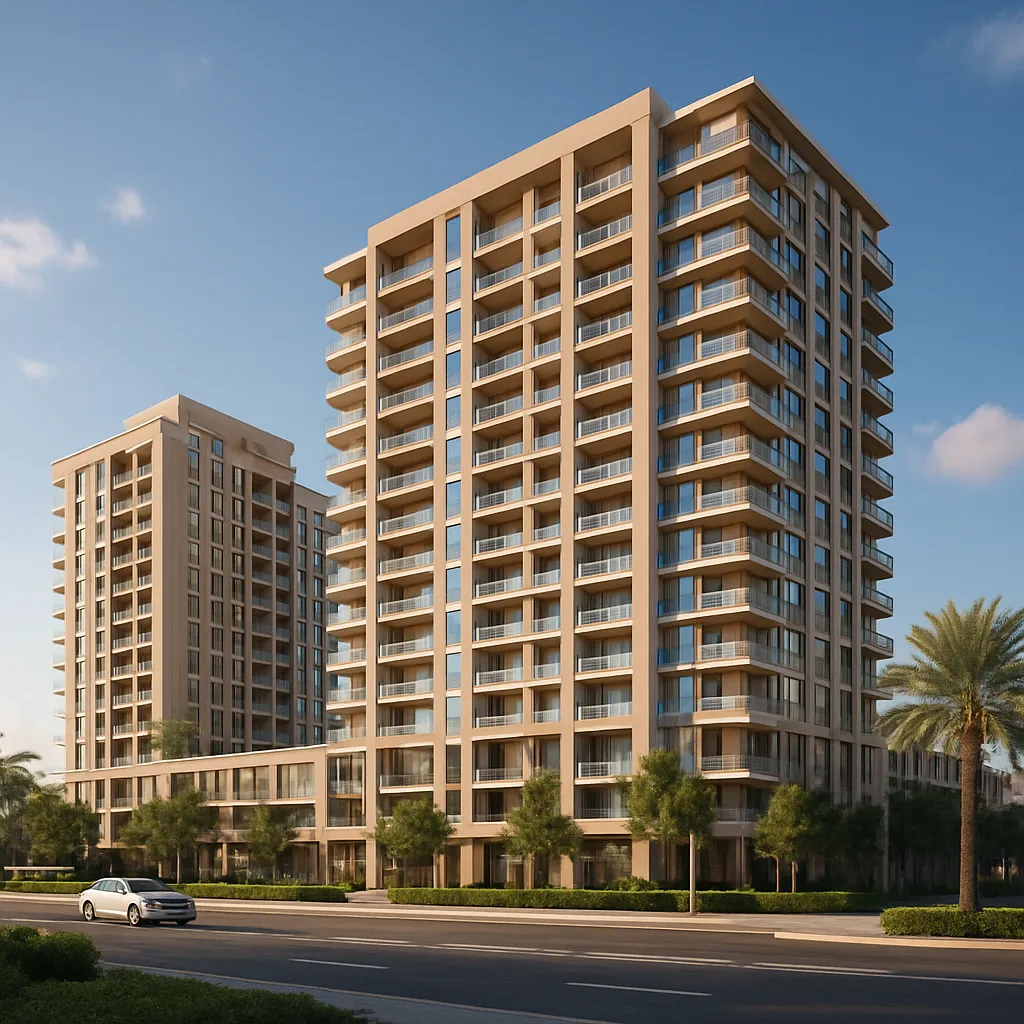
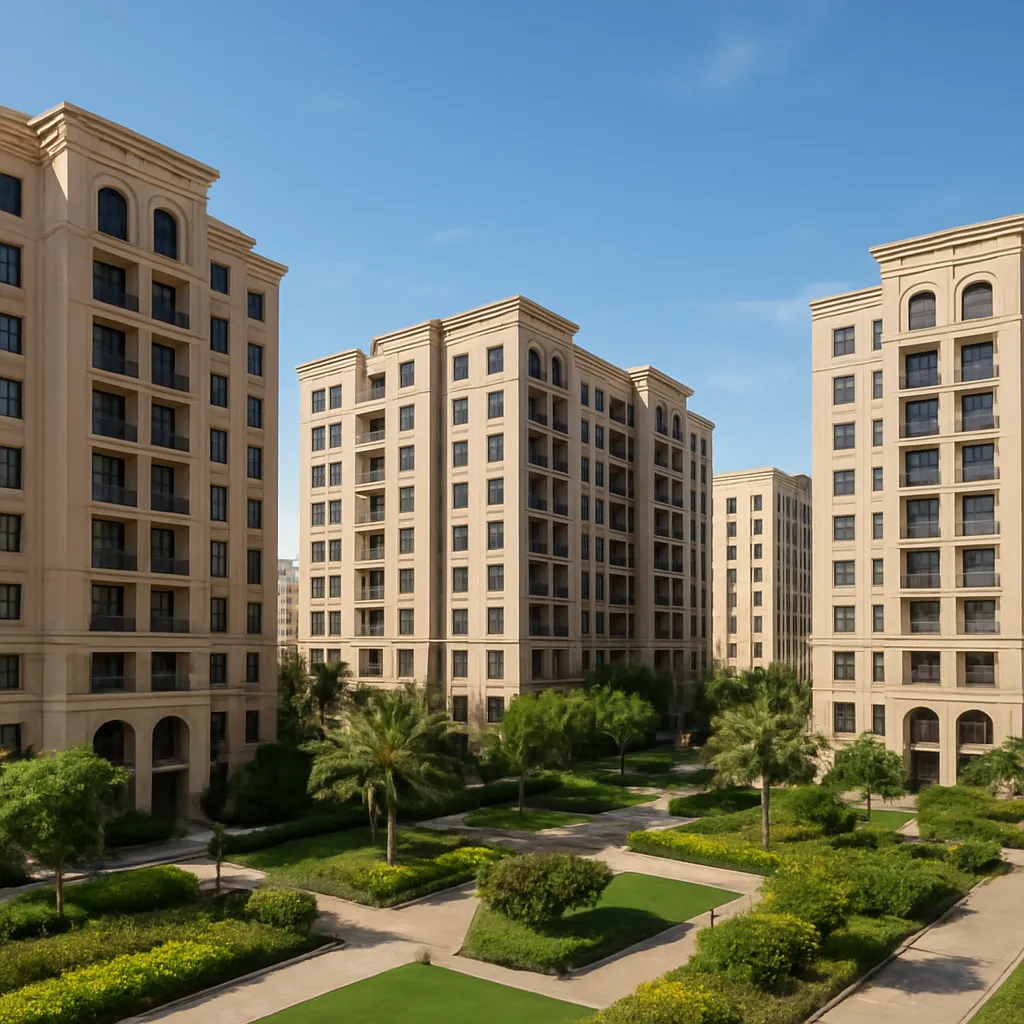
The buildings in Cluster B follow the general typology seen across International City: low- to mid-rise apartment blocks with practical, economical floor plans and external facades that reflect the overall themed aesthetic of the city. While International City is famous for its nationality-themed precincts (for example, the China, Spain or Russia clusters), Cluster B is typically more functional in its visual language and focuses on maximizing usable residential space rather than elaborate ornamentation.
- Scale and form: Most buildings in Cluster B are between four and seven storeys high. This scale supports high residential density without requiring elevator-dependent high-rise construction, which helps keep costs down.
- Unit mix: The common apartment configurations include studio, one-bedroom, two-bedroom and three-bedroom units. Many blocks also integrate ground-floor retail for convenience services such as grocery shops, laundries and small cafés.
- Materials and finishes: Construction uses standard reinforced concrete frames and blockwork infill, with simple external finishes designed to withstand Dubai’s climate while minimizing maintenance. Interiors are typically fitted for immediate occupancy and may be offered either furnished or unfurnished depending on the owner.
- Parking and services: On-site parking is usually provided at-grade or in small podiums. Buildings are managed through community management firms and building-level service contracts that handle maintenance, cleaning and security.
Community character and demographics
One of the most distinctive attributes of Cluster B and International City at large is their multicultural composition. The area accommodates a wide range of nationalities, with large contingents of South Asian, Filipino, Arab and other expatriate communities. This diversity is reflected in the retail offer, restaurants, grocery stores and community services available in and around Cluster B.
Typical demographic characteristics include:
- young to middle-aged working families and professionals seeking cost-effective living;
- a significant proportion of long-term renters who prefer stable, lower-cost accommodation compared with central Dubai;
- small business owners that operate shopfronts in the ground-floor commercial spaces;
- students and seasonal workers connected to nearby industrial and retail employment hubs.
Community events and small informal markets sometimes take place in public spaces, reinforcing the neighborhood’s vibrant and practical atmosphere.
Services, amenities and daily life
Living in Cluster B means having easy access to the basic everyday amenities that residents need. The design of International City was intended to cluster services around residential blocks so that daily shopping, schooling and health care are within short travel distances.
- Retail and food: Numerous supermarkets, convenience stores, bakeries and budget restaurants serve the cluster. Visitors and residents alike often head to Dragon Mart for wholesale shopping or to nearby malls for a broader retail experience.
- Education and health: Several nurseries, private schools and medical clinics are located within or near International City. These smaller-scale services meet the immediate needs of families; larger hospitals are accessed in central Dubai or other parts of the city via arterial roads.
- Public spaces: Parks, walking paths and small playgrounds are distributed through the community. While green space is not as extensive as in newer master-planned suburbs, the provision is functional for neighborhood recreation.
- Security and management: Buildings typically have on-site security and are covered by community maintenance programs. The quality of building management can vary between owners and property management companies, which is typical for large mixed-ownership developments.
Transport, connectivity and access
Connectivity is a key selling point for Cluster B despite its more peripheral location relative to Dubai’s downtown. The area is served by public buses and is well connected by road to the rest of the city. Key points about transport include:
- regular RTA bus routes link International City with central Dubai districts and metro stations;
- taxis and ride-hailing services are widely available and commonly used by residents;
- the road network places Cluster B within reasonable driving distance of Dubai International Airport and central business districts, though commutes can vary significantly depending on traffic and time of day;
- future public transport improvements in the wider area are occasionally proposed in municipal plans, which could further enhance accessibility over time.
Overall, residents value Cluster B for the trade-off between affordability and access: housing costs are generally lower than in inner-city neighborhoods while maintaining a functional connection to jobs and services.
Market dynamics and statistics (typical figures)
Statistical and market information for Cluster B should be treated as indicative because prices and occupancy patterns change with broader real estate cycles. However, the following general figures are representative of the International City residential market and can help frame expectations for Cluster B:
- occupancy: International City often shows high occupancy rates relative to newer, more expensive areas because of its affordability. Typical occupancy for well-maintained blocks can exceed 80% to 90% at stable times.
- rental ranges (approximate): studio apartments often rent from AED 18,000 to 30,000 per year; one-bedroom units may rent from 22,000 to 38,000; two-bedroom units commonly rent from 30,000 to 50,000. These ranges vary with furnishing, exact building condition and market trends.
- sales prices (approximate): units in International City historically sell at substantially lower per-square-foot prices than in central Dubai; prices might range from AED 300 to AED 700 per square foot depending on unit condition and location within the community.
- demographic weight: International City hosts tens of thousands of residents; while an exact population figure for Cluster B alone is not typically published, the entire development has been estimated at times to house multiple tens of thousands of people across all clusters combined.
Please note these numbers are approximate and will vary over time. For precise, up-to-date figures, prospective tenants, buyers and investors should consult local real estate agents, market reports and Dubai Land Department data.
Investment perspective and rental considerations
Investors looking at Cluster B should weigh several points:
- Yield potential: Because purchase prices are relatively low compared with central locations, gross rental yields can be attractive, particularly for investors focused on steady rental income. Yields are often higher than prime location properties but may be offset by slower capital growth potential.
- Tenant mix: The dominant tenant base is working-class and middle-income expatriates who value cost and convenience. Turnover can be higher than in luxury segments, so property managers must be efficient at marketing and low-vacancy management.
- Maintenance and management: Investment performance is strongly linked to building condition and management quality. Properties that are well maintained and professionally managed tend to command better rents and have lower vacancy periods.
- Regulatory and legal environment: Investors should be aware of applicable UAE property ownership rules, registration procedures, service charge obligations and tenancy laws. Working with a local broker or legal advisor is recommended.
Challenges and considerations for residents
While Cluster B provides clear cost advantages, residents and prospective occupants should be aware of some common challenges:
- variable building quality: since many units are privately owned and managed, standards can differ widely between buildings;
- traffic and commuting: although road connections are good, rush-hour traffic can make commutes longer than anticipated to central or popular employment areas;
- limited premium amenities: unlike high-end masterplans, International City prioritizes basic communal amenities rather than luxury leisure facilities;
- service charges and maintenance: community service charges vary; residents should check historical records for the specific building to understand ongoing costs.
Interesting facts and local highlights
Cluster B benefits from several local attractions and broader development features that contribute to its appeal:
- Dragon Mart: one of the region’s largest Chinese wholesale markets sits within International City and attracts regional shoppers and traders. Its presence makes Cluster B particularly convenient for small business owners and bargain shoppers.
- themed urbanism: International City’s concept of themed districts gives the entire development a unique identity in Dubai’s urban landscape, and Cluster B forms part of this eclectic cultural mosaic.
- wildlife proximity: the nearby Ras Al Khor Sanctuary offers an unusual juxtaposition—residents can access important natural habitats and birdlife within a short drive from the urban neighborhood.
- affordability mission: International City, and by extension Cluster B, was deliberately developed to provide lower-cost residential options as Dubai expanded, making it historically important to the city’s housing diversity.
Practical advice for prospective tenants and buyers
If you are considering Cluster B as a place to live or invest, here are practical tips to guide decision-making:
- visit multiple units at different times of day to assess noise, traffic and light conditions;
- check the building’s service charge history and any pending maintenance or special assessments;
- review proximity to essential services like groceries, schools and clinics relative to your daily needs;
- ask for a history of rental occupancy and tenant turnover if buying as an investment;
- confirm transport options for the routes you will frequently use, including bus schedules and road travel times during peak hours;
- if possible, speak to current residents about building management and community life to gain firsthand insights.
Future outlook
The long-term prospects for Cluster B are linked to Dubai’s broader urban and economic trends. As the emirate continues to invest in transport infrastructure and diversify its economy, peripheral communities such as International City may benefit from improved connectivity and renewed demand. However, the degree to which values and rents appreciate will depend on the pace of infrastructure upgrades, changes in housing demand and ongoing competitiveness of more central neighborhoods.
For residents, Cluster B is likely to remain a practical option where affordability, community diversity and proximity to key retail hubs like Dragon Mart matter most. For investors, careful selection of well-managed properties can yield stable rental returns, though expectations for rapid capital growth should be tempered by the cluster’s established market position.
Summary
Cluster B in International City represents a pragmatic choice within Dubai’s housing spectrum: it is part of a larger, themed township developed to provide affordable, functional housing with direct access to retail and wholesale amenities. The buildings are modest in scale, generally well-suited to families and working professionals, and supported by a diverse and vibrant community. While choices in Cluster B come with trade-offs—most notably relative distance from central business districts and variability in building standards—the cluster’s advantages in cost, convenience and cultural variety make it an enduring component of Dubai’s urban mosaic.