This article presents a comprehensive look at Cluster D Residences in International City, Dubai. It covers the location and historical context, architectural characteristics, living conditions and amenities, transport links, market statistics and investment considerations, as well as practical tips for residents and investors. The aim is to provide a detailed, usable reference that highlights what makes Cluster D distinct within the greater International City neighborhood.
Location and general overview
Cluster D Residences are part of the larger International City development located in the eastern sector of Dubai, near the Al Warsan area and the Ras Al Khor Industrial District. International City is an iconic, themed residential and commercial project originally developed by Nakheel. The development was conceived as a low-rise, high-density urban area constructed around a grid of country-themed clusters. Cluster D is one of these clusters and is primarily residential, accommodating a mixture of studios, one-bedroom and two-bedroom apartments that serve a large expatriate population.
Geographic context
Cluster D is positioned within easy driving distance of several key areas:
- Approximate 20–30 minutes by car to Dubai International Airport (depending on traffic).
- Direct access to Sheikh Mohammed Bin Zayed Road (E311) and proximity to Al Khail Road (E44) by short connector roads.
- Close to major employment and retail hubs, including Dubai Silicon Oasis and Dubai Festival City.
History and development background
International City was launched in the early 2000s and steadily expanded through the mid-2000s as part of Dubai’s fast-paced urban growth. The project’s concept emphasized a collection of themed clusters named after countries and regions (such as China, England, and Spain), intended to create a cosmopolitan residential environment at affordable price points relative to central Dubai neighborhoods. Cluster D emerged as one of the practical residential blocks tailored to middle-income residents, offering functional apartments, retail spaces, and local community infrastructure.
Developer and planning
The principal developer of International City is Nakheel, a major Dubai-based real estate developer. The master plan prioritized density and mixed usage: residential buildings interspersed with small retail plots, parks, and schools. Over time, International City has evolved into a self-contained neighborhood with a strong sense of community and a wide range of everyday amenities.
Architecture and urban layout
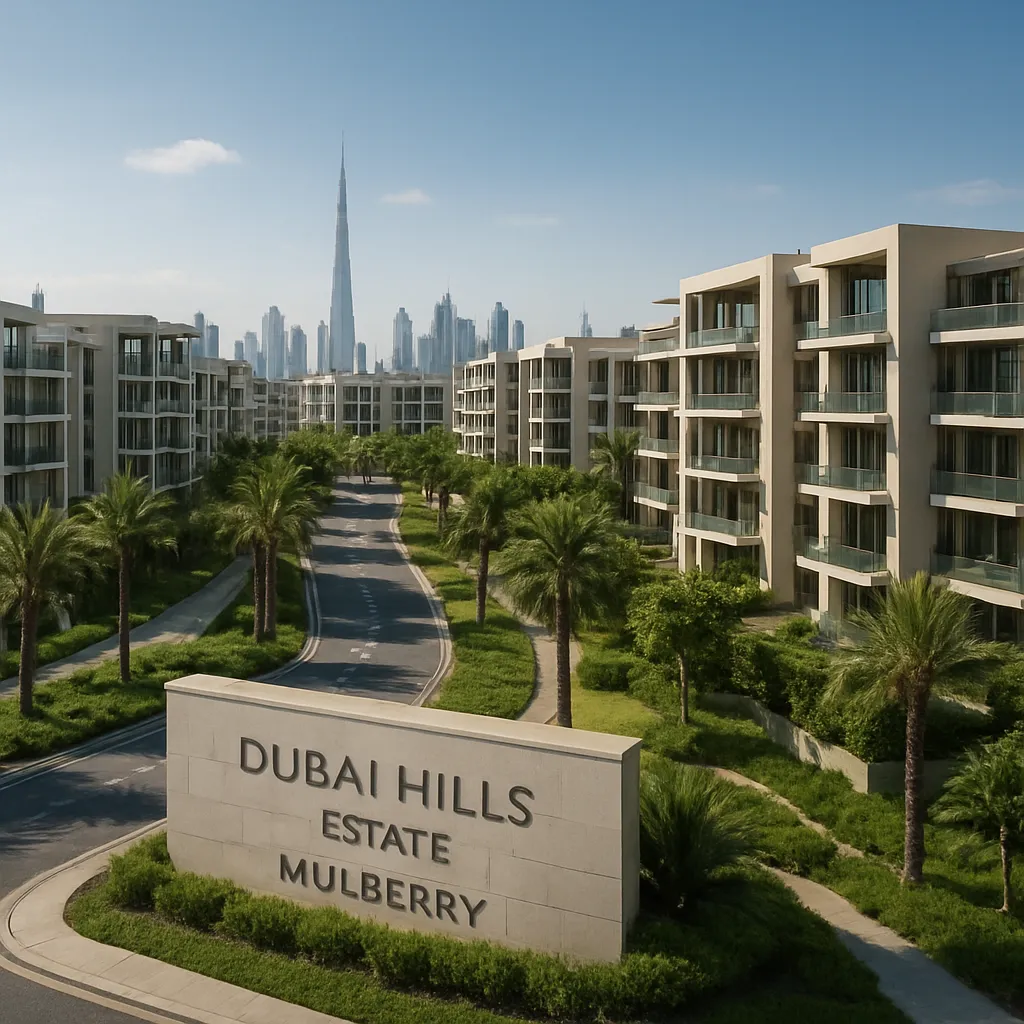
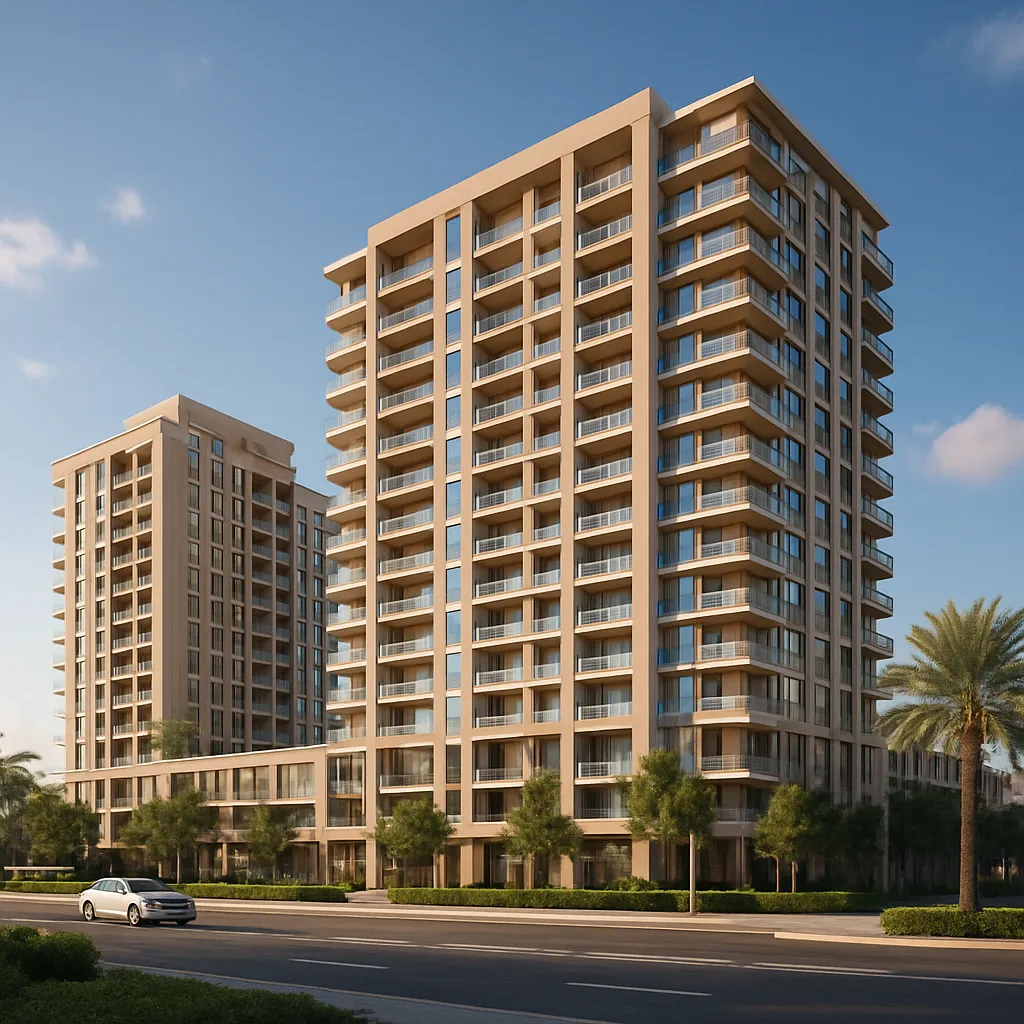
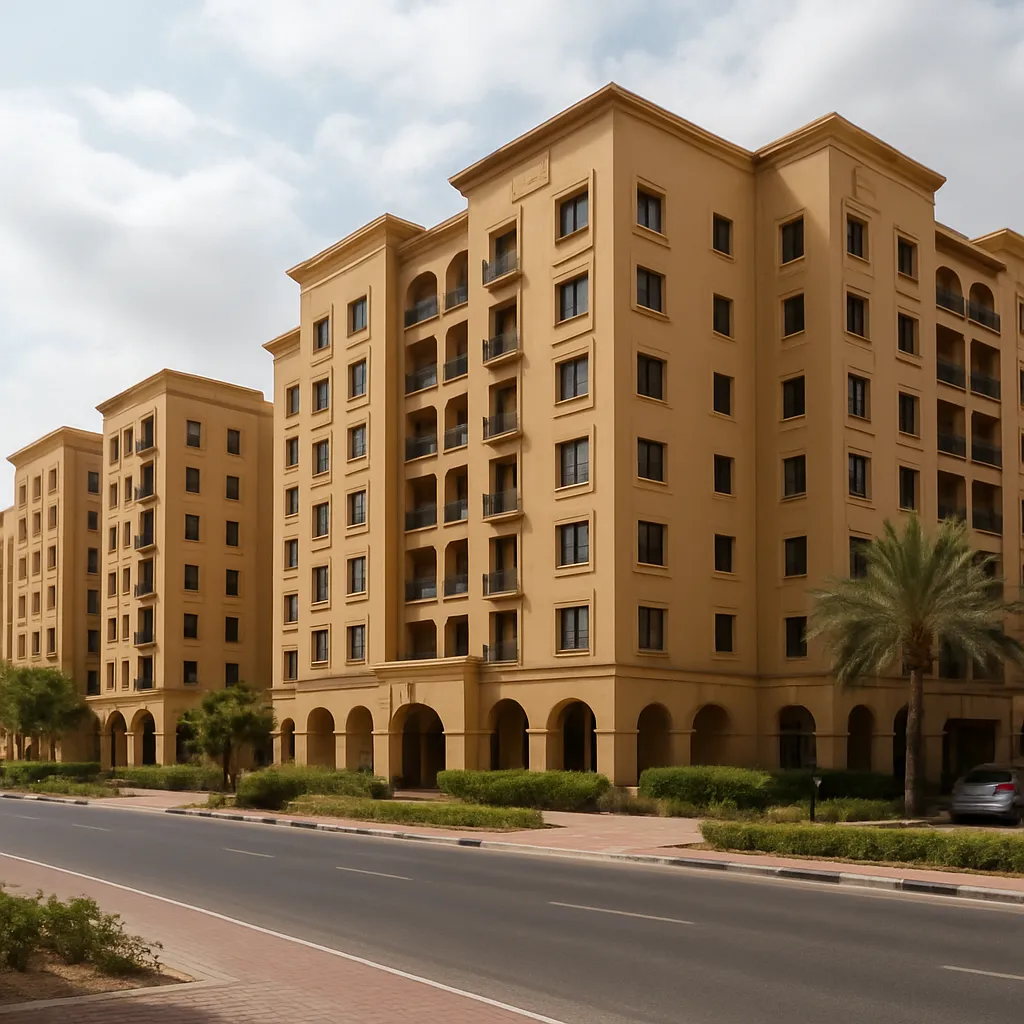
Cluster D follows the low- to mid-rise pattern common across International City. Buildings are typically between four and eight stories, with straightforward, rectangular footprints. The architectural expression is pragmatic rather than avant-garde; the emphasis is on providing economical, well-planned living units.
Building typologies and apartment layouts
- Studios: compact units suitable for single occupants or short-term rentals.
- One-bedroom apartments: popular among young professionals and small families.
- Two-bedroom apartments: chosen by larger families or tenants seeking more space.
Floor plans tend to favor efficient circulation, modest balconies, and combined living/dining areas. Kitchens are commonly equipped with fitted cabinets and basic appliances; premium finishes may be available in renovated units.
Construction quality and maintenance
Construction workmanship across International City has varied by phase and block. Cluster D buildings were built to meet practical residential standards of the 2000s. Over time, many buildings have undergone maintenance and renovation work, either organized by owners’ associations or landlords. Tenants and buyers should be aware of differences in upkeep between individual buildings — some blocks show recent refurbishments and upgraded facades, while others may require more ongoing maintenance.
Amenities and daily life
One of Cluster D’s strengths is its proximity to a concentration of everyday services and amenities within walking distance or a short drive. The broader International City neighborhood includes large hypermarkets, themed retail plazas, restaurants, local clinics, schools, and community parks. Within Cluster D specifically, residents typically find:
- Small convenience shops, laundries, and cafes on ground floors.
- Community mosques and multi-faith prayer spaces.
- On-site property management offices in some buildings.
- Limited dedicated parking, supplemented by street parking zones.
The neighborhood supports a distinctly multicultural atmosphere, with cuisines and shops catering to a wide array of nationalities. International City is particularly known for its reasonably priced restaurants and grocery stores offering international products.
Demographics and community
Cluster D, like much of International City, attracts a diverse population of expatriates and budget-conscious residents. The area is favored by families, young professionals, and labor-market workers who prioritize affordability and accessibility over prestigious addresses. There is a strong rental market with turnover tied to employment cycles and visa sponsorship arrangements.
Community features
- Strong presence of community groups and informal networks that help newcomers settle in.
- Local schools and nurseries serving the residential population.
- Community events and seasonal markets are occasionally organized in adjacent retail areas.
Transport links and connectivity
Cluster D benefits from functional road connectivity and local transport options. Key points:
- Bus services: Several Dubai Roads and Transport Authority (RTA) bus routes serve International City, linking it with Dubai International Airport, Al Nahda, and other neighborhoods.
- Metro access: There is no metro station inside International City; the closest metro lines are accessible by a 15–30 minute bus or taxi ride.
- Private transport: Most residents use cars or taxis for commuting. Car ownership is common due to the convenience and flexibility it provides in Dubai.
Traffic can be busy during peak hours on arterial roads nearby. Ride-hailing services (e.g., taxis, app-based services) are widely available and frequently used by residents for short trips or airport transfers.
Market statistics and real estate outlook
Cluster D’s real estate market follows broader trends for International City, which is often positioned as a value-driven residential market within Dubai. Prices and rents fluctuate with overall Dubai market dynamics, supply of new developments, and currency flows associated with expatriate populations.
Typical price and rent ranges (approximate, indicative)
- Studio apartments: sale prices historically range from approximately AED 200,000 to AED 350,000; annual rents in the ballpark of AED 18,000–28,000.
- One-bedroom apartments: sale prices often near AED 300,000–500,000; annual rents roughly AED 25,000–45,000.
- Two-bedroom apartments: sale prices commonly in the AED 450,000–700,000 range; annual rents between AED 35,000–65,000.
Rental yields in International City have historically been attractive compared with more central Dubai locations, often providing higher gross yields because of lower purchase prices and steady tenant demand. Yields can vary widely but have been reported by market analyses to be in the higher single digits to low double digits (gross), depending on unit condition and exact location within the district.
Supply and demand dynamics
The supply of apartment stock in International City is substantial, which keeps prices comparatively moderate. Demand is sustained by the affordability factor and proximity to employment zones in eastern Dubai. However, competition from new affordable developments and improvements in transport connectivity across Dubai can influence future price movements.
Nearby attractions and services
Cluster D is close to several notable local destinations and practical services:
- Dragon Mart and Dragon City retail areas (large Chinese trade and retail hubs) — major shopping and wholesale centers within easy reach.
- Dubai International Airport — useful for frequent flyers.
- Al Warsan Parks and green spaces — opportunities for outdoor recreation.
- Dubai Outlet Mall and Mirdif City Centre — additional retail and leisure options a short drive away.
Safety, regulations and community governance
Safety in Cluster D is similar to many residential neighborhoods in Dubai — generally stable, with active municipal services and policing. Building security levels vary by block; some buildings have controlled access and CCTV while others rely on community vigilance. Prospective buyers and tenants should verify the presence of active owners’ associations, service charge arrangements, and the status of maintenance funds.
Homeowners’ associations and service charges
Owners in Cluster D are typically subject to service charges and community fees that cover building maintenance, cleaning, landscaping and security where applicable. The exact amount and scope of services differ by building and by the management company. It is recommended to request recent statements of service charges, reserve fund levels, and any planned capital expenditures before purchasing.
Environmental and sustainability considerations
International City’s original design predated many of the newer sustainability standards seen in recent Dubai projects. Nonetheless, some buildings and residents have adopted energy-saving measures, such as LED lighting, improved insulation during renovations, and water-saving fixtures. Prospective investors and residents interested in sustainability should check for recent retrofits or opportunities to improve energy efficiency within specific units.
Practical tips for buyers and tenants
For those considering moving to or investing in Cluster D Residences, the following practical points are helpful:
- Inspect the property physically: check plumbing, electrical fittings, water pressure and air-conditioning performance.
- Review service charge statements and any outstanding maintenance or renovation plans for the building.
- Consider unit orientation and ventilation: units facing internal courtyards or open areas often have better airflow and quieter surroundings.
- Assess parking options carefully; some units do not come with dedicated garages and rely on shared parking.
- For investors, calculate rental yields conservatively and factor in management and vacancy costs.
- Engage a licensed real estate agent and, for purchases, request a title search and confirmation of clear ownership and no outstanding encumbrances.
Notable challenges and opportunities
Challenges for Cluster D include building-age related maintenance in some blocks, occasional congestion of street parking, and limited direct public transport connections compared with metro-served neighborhoods. However, these are balanced by clear opportunities: lower entry prices for buyers, steady rental demand from price-sensitive tenants, and a strong local retail fabric that supports everyday living.
Potential for value uplift
Value uplift can be achieved through targeted renovations, improved property management, and enhanced community amenities. Developers or investor groups that focus on upgrading façades, common areas and security can increase rental rates and sale prices, because demand for affordable but well-managed housing remains significant in Dubai.
Case studies and comparative notes
When compared with other affordable Dubai neighborhoods, Cluster D’s strengths are its integration into the larger International City ecosystem and proximity to major trade hubs like Dragon Mart. Compared with newly built affordable towers in satellite communities, Cluster D tends to offer larger apartment sizes for the price, but with older finishes and less modern mechanical systems.
Final observations
Cluster D Residences in International City represent a pragmatic housing option within Dubai’s diverse real estate market. The area is marked by affordability, a multicultural community spirit, and proximity to retail and employment hubs. Investors and residents who value convenience and cost-effectiveness — and who are attentive to maintenance and management details — can find strong opportunities here. As with any real estate decision, thorough due diligence, realistic budgeting for maintenance, and a clear understanding of the local rental market will be key to success.
Key words emphasized: Cluster D, International City, Dubai, Nakheel, affordable, multicultural, residences, connectivity, investment, amenities.