The Mirdif City Centre Office Tower is an integral component of the wider Mirdif City Centre complex in the Mirdif district of Dubai, United Arab Emirates. Sitting alongside one of Dubai’s best-known suburban shopping centres, the office tower exemplifies the city’s model of mixed-use development where retail, leisure and corporate functions co-exist. This article explores the tower’s location, architectural and functional characteristics, role in the local economy and community, transport links, and several interesting facts and figures. Where precise public data is limited, context and widely acknowledged facts are used to provide a clear picture of this building and its surrounding district.
Location and urban context
The Mirdif City Centre complex, including the office tower, is located in the Mirdif neighbourhood of Dubai, a largely residential area situated to the northeast of the city centre and close to Dubai International Airport. Mirdif has developed steadily over the past two decades as a suburban district offering family-oriented housing, parks and local amenities. The presence of a major retail and office complex like Mirdif City Centre has reinforced the area’s status as a convenient hub for both residents and companies that prefer proximity to the airport and residential communities.
Neighbourhood character and demographics
Mirdif is characterised by low- to mid-rise residential developments, gated communities, villas and several apartment complexes. The district attracts families, Emirati households and expatriates seeking quieter alternatives to Dubai’s high-density central districts. By anchoring a major retail destination with an adjacent office tower, the complex serves the daily needs of local residents while drawing visitors from across Dubai for shopping, dining and entertainment. The office tower complements this function by providing corporate and professional services that benefit from proximity to retail and leisure amenities.
Strategic positioning
The tower’s strategic advantages include easy access to the airport, multiple arterial roads and nearby residential pockets. The location reduces commuting times for professionals working in customer-facing roles in retail or hospitality, while also offering businesses a visible address without the premium costs of Dubai’s central business districts. The Mirdif City Centre Office Tower therefore appeals to tenant profiles such as regional service centres, professional practices, retail back-office operations and small- to medium-sized corporate offices.
Architecture and design
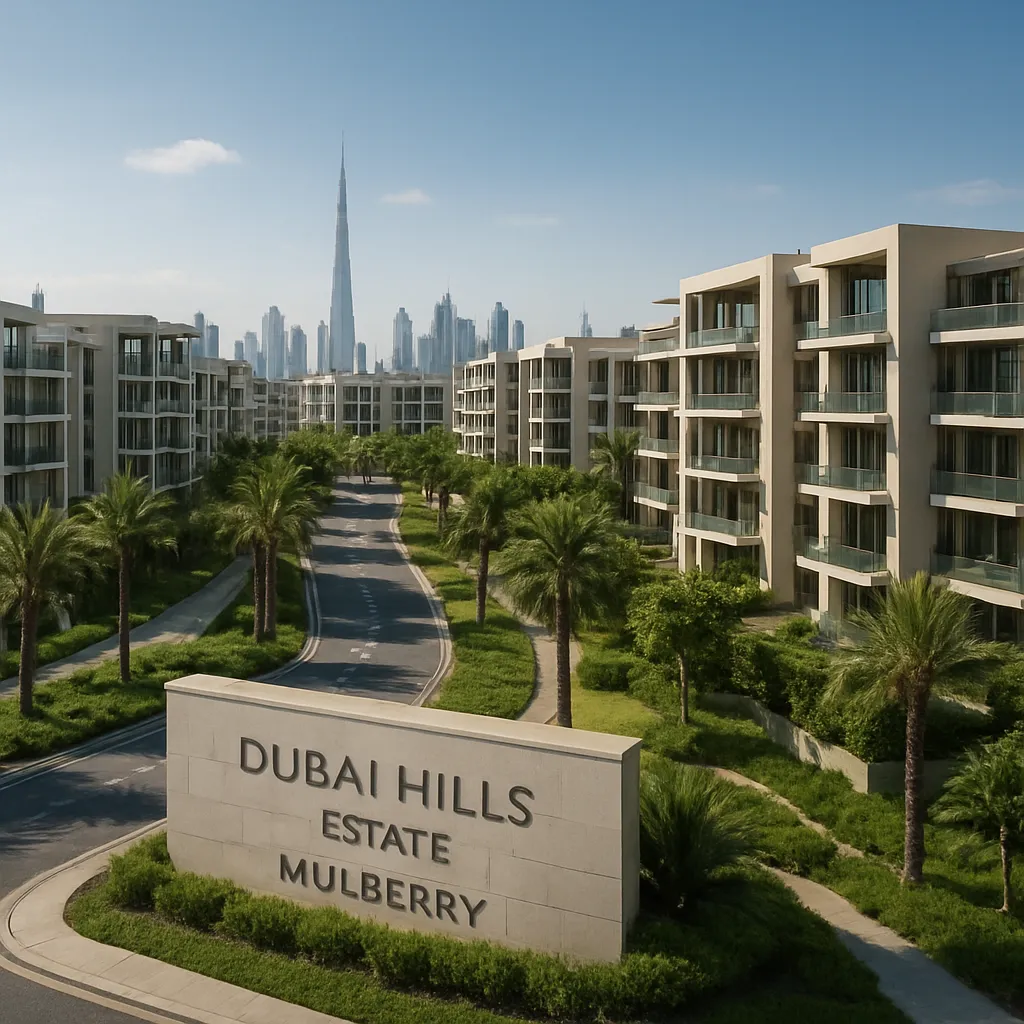
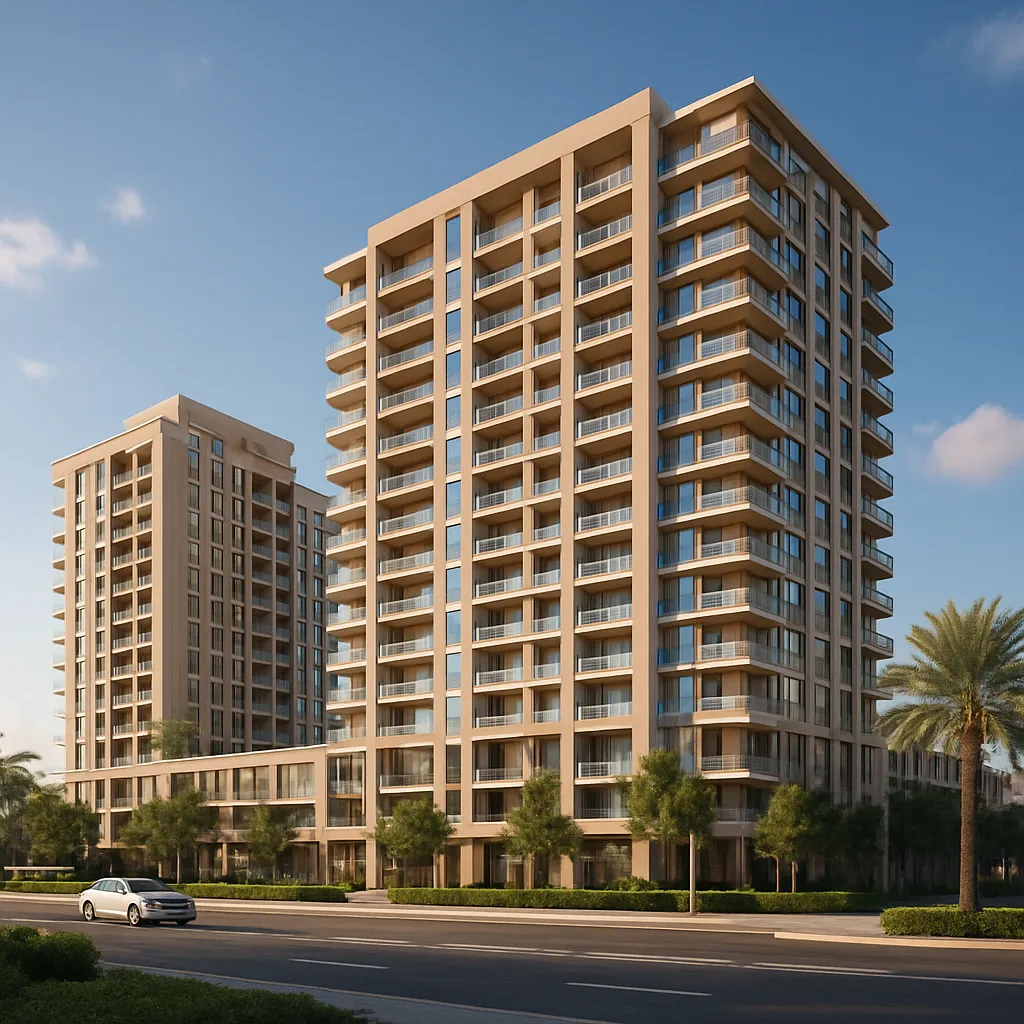
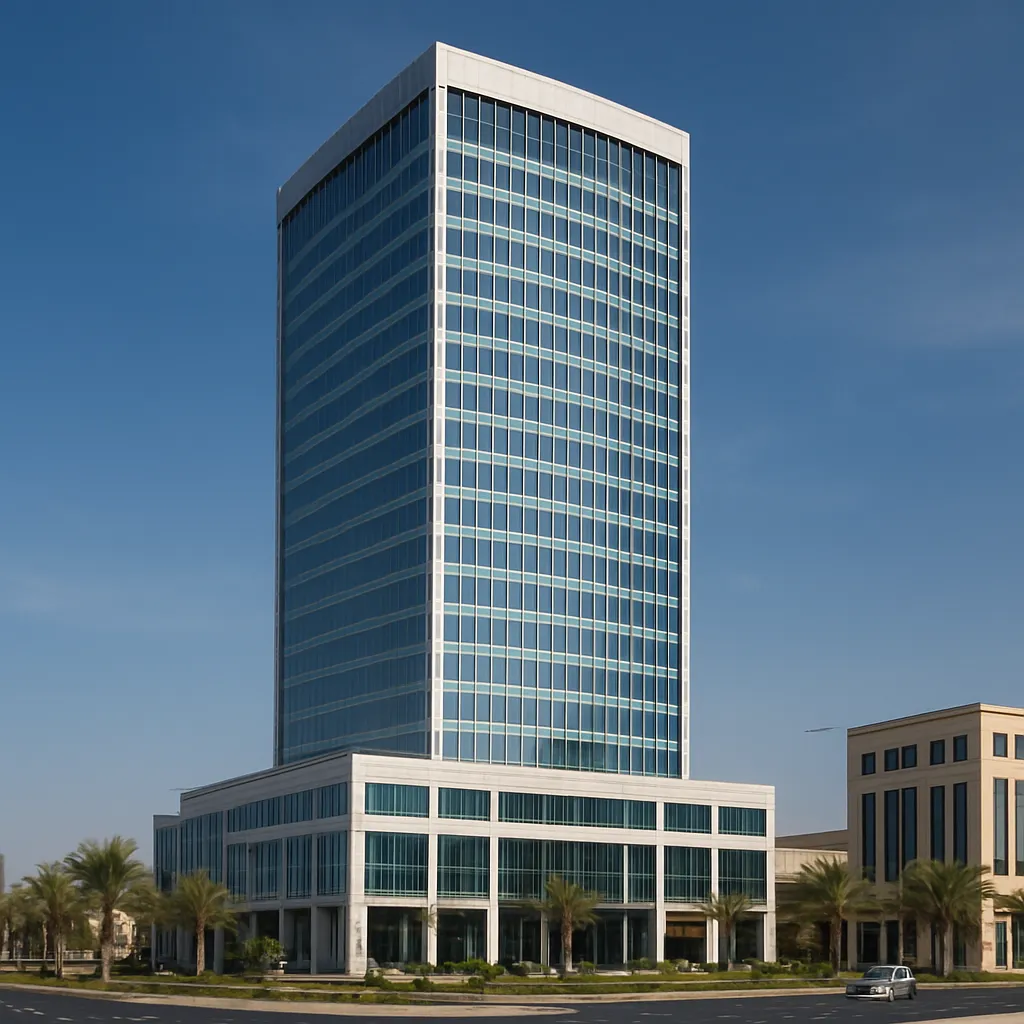
Architecturally, the office tower was conceived as part of the unified aesthetic of the Mirdif City Centre complex. While the mall focuses on expansive horizontal retail space, the tower provides a vertical counterpoint designed to integrate visually and functionally with the plaza and pedestrian zones. The building’s design balances practicality—efficient floorplates and modern building systems—with exterior treatments that harmonise with the mall’s façade and landscape features.
Design principles
- Integration: The tower was designed to connect with the mall precinct via covered walkways, service corridors and shared parking areas so that office occupants enjoy immediate access to retail and food & beverage options.
- Visibility: While not intended as a city-defining skyscraper, the tower occupies a recognisable position within the Mirdif skyline, offering tenants clear street frontage and signage opportunities.
- Flexibility: Internal layouts are generally planned to accommodate a range of tenant needs, from open-plan workspaces to subdivided suites suitable for smaller enterprises.
Materials and environmental considerations
Common contemporary materials—glass curtain walls, aluminium cladding, concrete structural systems—feature in the tower’s construction. Landscaping around the podium and entry points emphasises shading and cooling strategies appropriate to Dubai’s climate. Although the office tower is part of a large modern development, specific sustainability certifications for the tower itself (such as LEED rating or Estidama) are not universally publicised; nevertheless, the overall complex follows trends in Dubai of incorporating energy-efficient lighting, HVAC controls and water-saving fixtures in newer developments.
Functionality, amenities and tenant mix
The principal purpose of the Mirdif City Centre Office Tower is to offer professional and corporate spaces that benefit from adjacency to an established retail and leisure destination. This symbiotic relationship creates a day-to-day dynamic where workers can access banking, dining, shopping and recreation within minutes, reducing the need to travel elsewhere during work breaks.
Typical amenities for tenants
- On-site parking shared with the retail complex, often including covered and multi-level parking bays.
- Lobby and reception areas with security screening and visitor management.
- Proximity to restaurants, cafés and a food court within the adjacent mall.
- Access to entertainment amenities such as cinema complexes and family leisure zones, useful for client events and after-work activities.
- Service and logistics corridors that link retail and office service providers, enabling efficient loading and supply management.
Tenant profile
Tenants in such suburban office towers typically include professional service firms (lawyers, accountants, consultancies), regional branches of service-oriented businesses (insurance, property management), call-centre operations, healthcare and wellbeing clinics, and corporate support functions for retail businesses. The diversity of tenants reflects the building’s role as a flexible, cost-effective alternative to CBD office spaces.
Transport links and accessibility
Accessibility is one of the tower’s key strengths. Mirdif City Centre sits near major road corridors linking central Dubai to the eastern districts and the airport. This improves daily commuting for employees and provides convenient routes for clients and suppliers. Public transport integration has been improving across Dubai, and the complex is served by bus routes and taxi services linking to metro stations and other parts of the city.
Parking and last-mile connectivity
The associated parking capacity of the Mirdif City Centre complex is substantial to accommodate retail visitors, and office users share this provision. The parking, combined with taxi and ride-hailing drop-off zones, supports a range of commuting behaviours. For employees without private cars, coordinated bus services and shuttle options often operate to nearby residential clusters.
Economic and social role
By providing office space within a retail-led mixed-use development, the Mirdif City Centre Office Tower contributes several economic and social benefits to the Mirdif district and greater Dubai.
Economic contribution
- Employment generation: The combination of retail and office functions creates a multiplicity of job types—retail staff, professional services, facility management and logistics roles.
- Business incubation: Smaller companies and service providers often use suburban office towers as affordable stepping stones to growth, benefitting from the mall’s footfall and visibility.
- Support for retail: Office workers increase daytime spending at mall outlets, sustaining cafés, quick-service restaurants and service-oriented businesses.
Community and social amenities
Beyond commerce, the tower helps anchor community activity. The mall’s family-friendly amenities—play areas, cinemas, and eateries—become extensions of the workplace ecosystem, enabling a work–life balance that appeals to employees with families. The presence of office workers contributes to a more vibrant daytime street life in what might otherwise be a strictly residential neighbourhood.
Statistics and technical data (observed and contextual)
Some data about the wider Mirdif City Centre complex are publicly known and help to put the office tower into context. The retail centre itself was developed and launched by the Majid Al Futtaim group and is recognised as one of Dubai’s prominent suburban malls. The office tower shares services and infrastructure with the complex rather than existing as a fully independent campus.
Key figures (contextual)
- The wider Mirdif City Centre mall opened to the public in the early 2010s and has been managed by Majid Al Futtaim, a major regional developer and mall operator.
- The mall hosts a broad range of retail outlets, restaurants and leisure facilities, which together attract hundreds of thousands of visitors annually—making it an important traffic generator for the office tower.
- Exact specifications such as the precise number of floors, total gross leasable area of the office tower, or exact tenant roster are not always publicly centralised; however, office towers associated with suburban malls in Dubai typically offer medium-sized floorplates and practical acoustics and comfort systems designed for 20–200 employees per suite depending on fit-out.
Where specific measurements are not available in public domain materials, it is common practice to treat the tower as a mid-rise commercial building purpose-built to serve local and regional business needs. Developers in Dubai usually plan such towers with modern mechanical systems, multiple lifts, emergency systems and telecommunications infrastructure compatible with regional standards.
Interesting facts and noteworthy features
While the Mirdif City Centre Office Tower is not typically singled out in international architectural awards, its importance arises from the role it plays within the mixed-use complex and the daily lives of the community it serves. Below are several noteworthy points about the complex and the tower’s relationship to it.
1. Part of a successful suburban mall formula
The Mirdif City Centre development embodies a successful suburban mall formula that integrates retail, entertainment and offices in a single destination. This formula has been replicated across many parts of Dubai and the wider Middle East, responding to consumer demand for convenience and comprehensive on-site services.
2. Developer pedigree
The complex is associated with Majid Al Futtaim, an established developer with a regional reputation for large-scale retail and mixed-use developments. This association gives tenants and visitors a degree of confidence in long-term management and maintenance standards.
3. A daytime economy booster
Office occupants help extend the mall’s daytime economy beyond weekend peaks; weekday footfall from working professionals supports food outlets and service providers. This stabilising effect can be particularly valuable for businesses dependent on steady weekday trade.
4. Community-centred events and activations
The mall and surrounding precinct regularly host events—seasonal festivals, family activities, fitness classes and corporate promotions—which routinely include office workers among participants or attendees. These activations enhance the sense of a shared community space.
Practical considerations for prospective tenants
For businesses considering leasing space in the Mirdif City Centre Office Tower, several practical factors often inform the decision-making process.
Lease economics and space planning
- Rental rates for suburban office towers are generally lower than central business districts, making them attractive to cost-conscious firms and regional branches.
- Space planning often includes flexible fit-out options so tenants can adapt floorplates to open-plan, cellular offices or hybrid formats aligned with evolving post-pandemic workplace preferences.
- Shared services—such as security, waste management and building maintenance—are typically bundled into service charge arrangements, so tenants should review these costs carefully as part of total occupancy expenditures.
Quality-of-life factors for employees
Employees benefit from a short commute for local residents, easy access to leisure and dining options and a quieter working environment compared with downtown districts. For organisations that host clients in person, the mall’s amenities provide multiple informal meeting venues and dining choices.
Future outlook and potential developments
Looking ahead, suburban developments like Mirdif City Centre and their associated office towers are likely to remain relevant as Dubai’s urban footprint continues to expand. Several trends will influence their evolution:
- Hybrid work: Continued adoption of hybrid and flexible work patterns may reduce demand for large single-occupant floorplates but increase demand for flexible, technology-enabled office suites close to residential clusters.
- Experience-led retail: As retail evolves toward more experience-led formats, office towers adjacent to malls may benefit from increasingly attractive amenities that enhance tenant recruitment and retention.
- Transport improvements: Any enhancements to public transport and last-mile connectivity in the Mirdif area will improve accessibility and broaden the talent pool for tenants.
- Sustainability retrofits: Older buildings and precincts will gradually see investments in energy efficiency, waste reduction and water conservation measures—improving operating costs and environmental performance.
Conclusion
The Mirdif City Centre Office Tower is a representative example of Dubai’s approach to suburban, mixed-use development: pragmatic, community-oriented and integrated with retail and leisure facilities. While the tower itself may not aim for architectural landmark status, its value lies in offering functional office space within a vibrant, amenity-rich environment. For local businesses and multinational service providers alike, the tower offers a balanced proposition of accessibility, visibility and convenience. As urban patterns continue to balance centralised business districts with well-serviced suburban nodes, buildings like the Mirdif City Centre Office Tower will continue to play a meaningful role in the city’s commercial landscape.