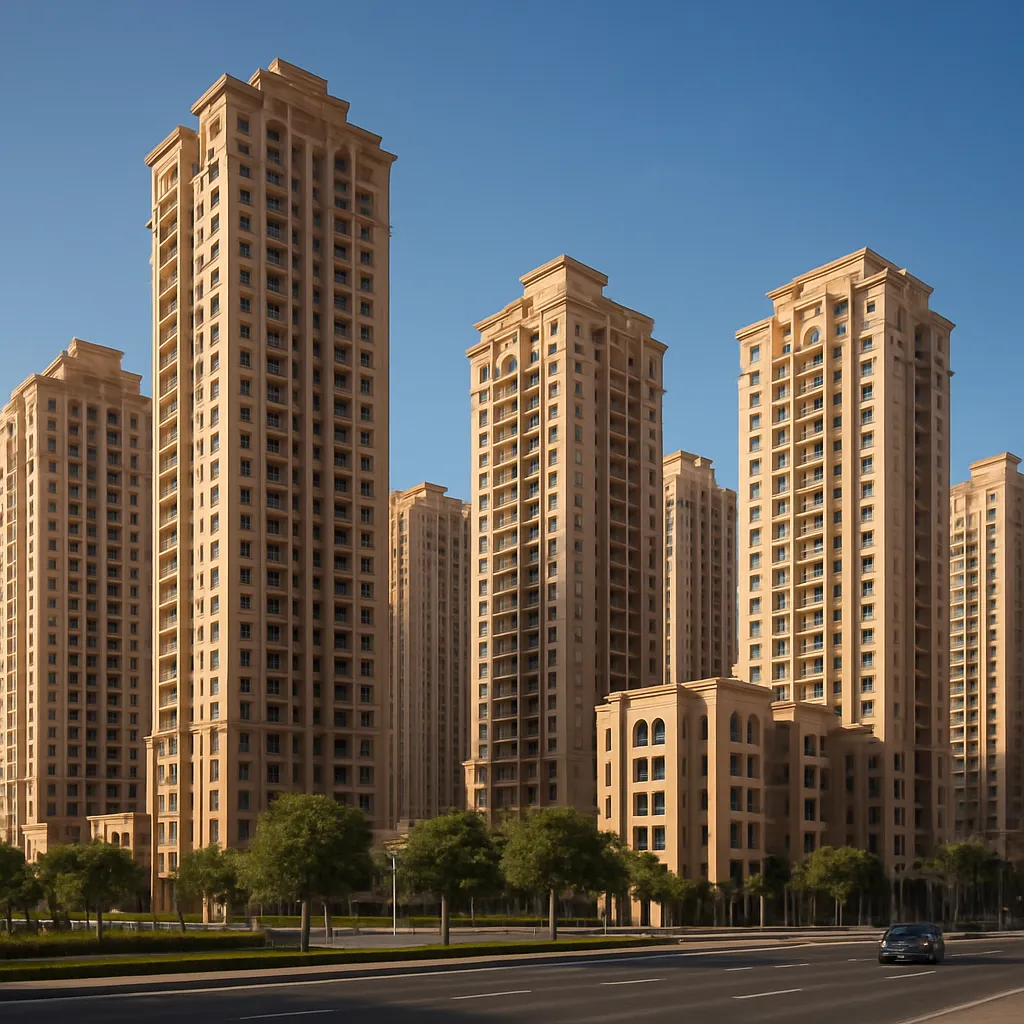
Al Warsan International City Towers Cluster A is a residential and mixed-use component of Dubai’s larger International City development. Located on the eastern edge of Dubai, near the Al Warsan area, this cluster combines practical, affordable housing with convenient access to commercial hubs and major transport arteries. The complex is part of a distinctive urban experiment in Dubai: a planned, themed community that mixes modest residential units with retail, services and vibrant multicultural street life. Below you will find a detailed overview of location, design, community life, statistics where available, and practical information for residents and visitors.
Location and urban context
Al Warsan International City Towers Cluster A sits in the eastern sector of International City, a sprawling development conceived by developer Nakheel. International City itself occupies a strategic position between the main urban core of Dubai and the desert fringes, at the intersection of several major routes. The cluster is close to the Al Warsan neighborhood, which gives it its local name, and is within easy driving distance of major roads such as Sheikh Mohammed Bin Zayed Road (E311) and Al Ain Road (E66). This location places Cluster A within reachable distance of business districts, retail centers and logistics zones while maintaining relatively lower land values compared with central Dubai districts.
The surrounding urban fabric is a mixture of low- and mid-rise residential blocks, retail strip centers, warehouses and destination malls. One of the most prominent nearby landmarks is Dragon Mart, a large commercial complex specializing in Chinese manufactured goods and wholesale trade. International City is also relatively close to Dubai Outlet Mall, the Festival Plaza area and desert recreational areas to the east. Travel times are typically in the range of 15–30 minutes to many commercial nodes, depending on traffic and destination.
Architecture, planning and design
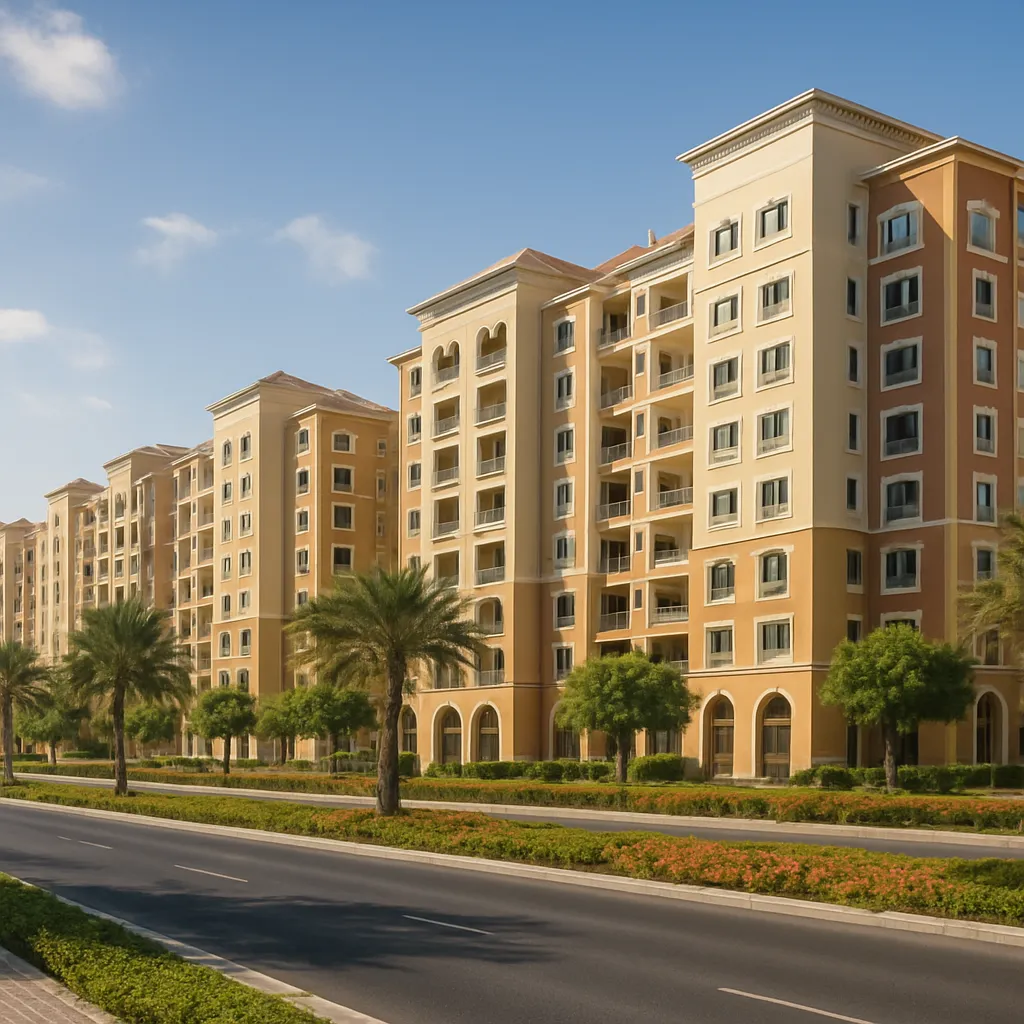
International City is notable for its themed clusters named after countries or regions; these clusters are expressed through color, cladding and surface articulation rather than literal architectural replication. While Cluster A in the Al Warsan Towers area is not one of the picturesque “country façade” clusters (such as Spain, Italy, or China), it follows the development’s overall philosophy: high-density, cost-effective construction with an emphasis on functional living spaces.
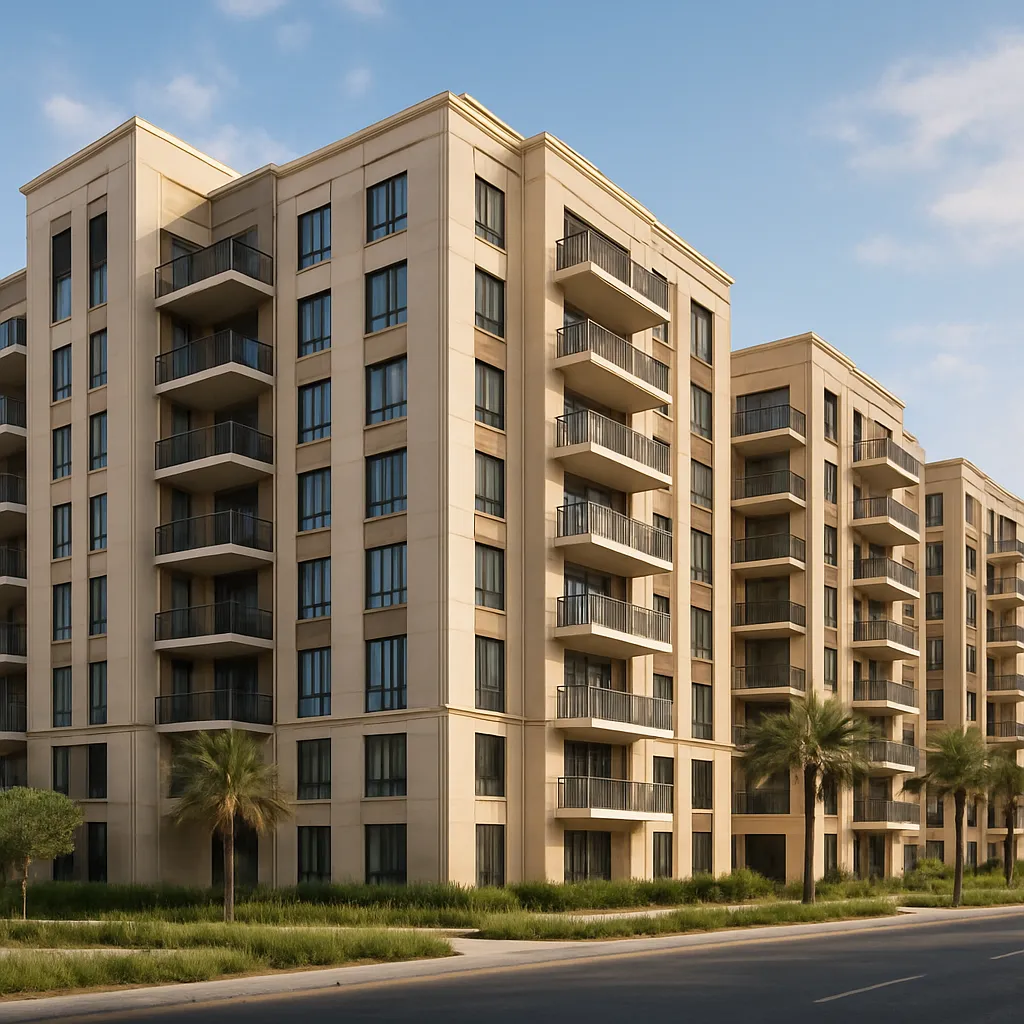
The towers in Cluster A are primarily reinforced concrete structures with masonry infill and externally finished façades designed for durability and ease of maintenance. Building envelopes prioritize straightforward maintenance over elaborate ornamentation, reflecting the project’s affordability goals. Typical residential layouts include studio, one-, two- and three-bedroom apartments; floor plates are compact and organized to maximize rental unit counts and common circulation efficiency.
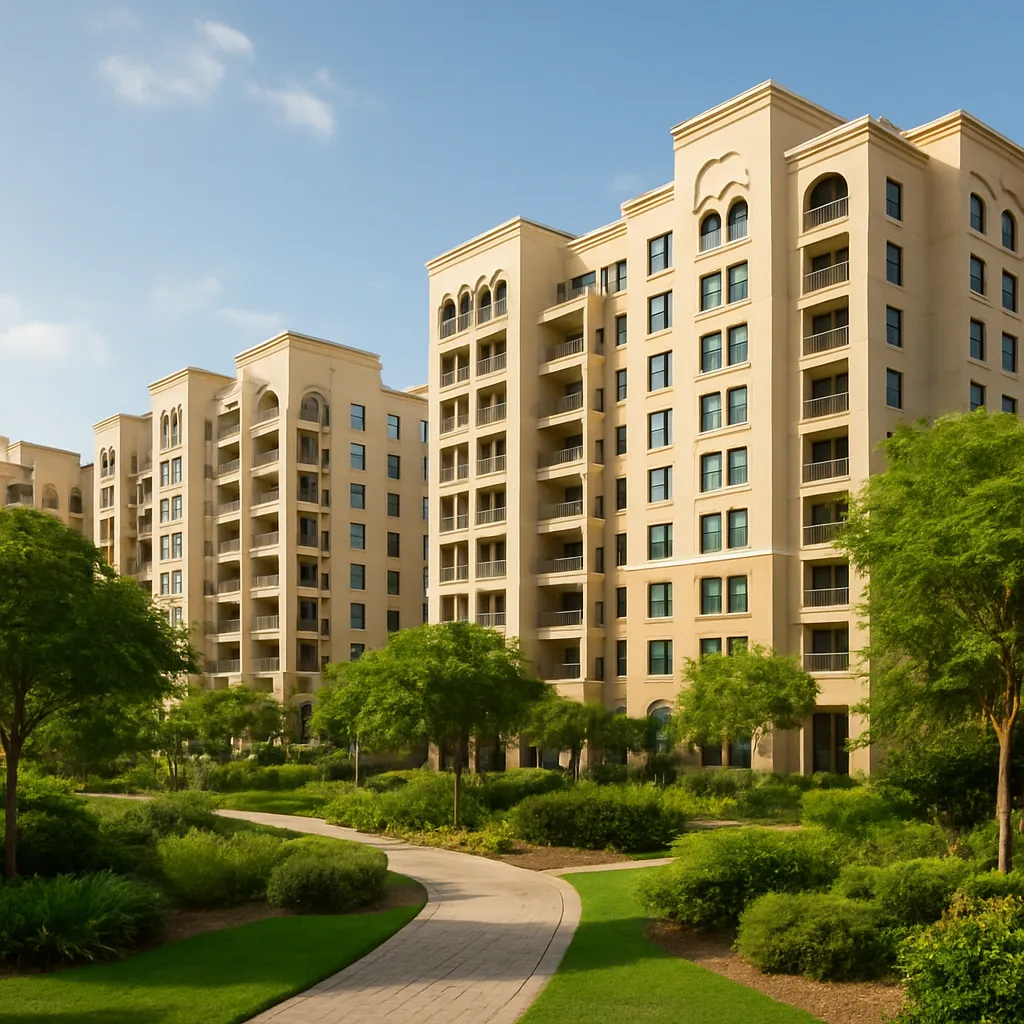
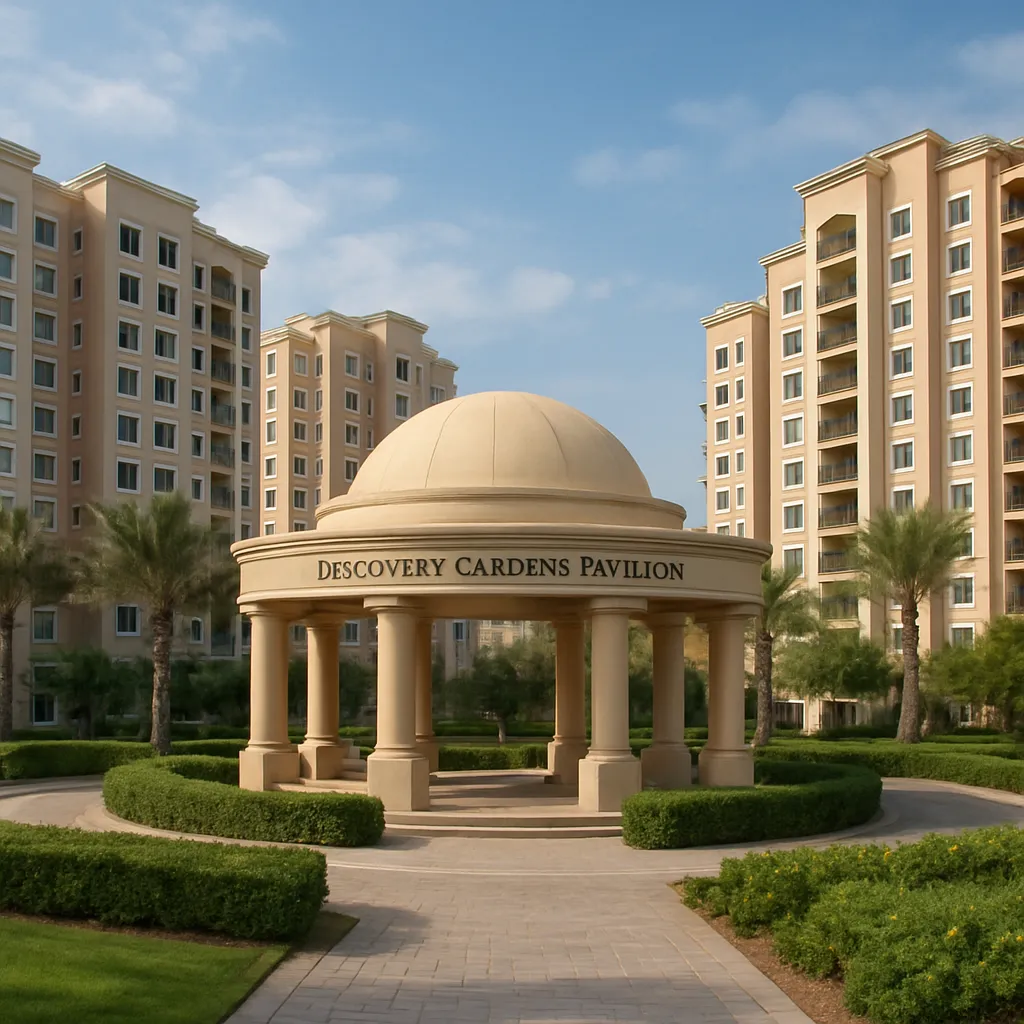
Public realm planning in International City favors wide internal streets, set-back shopfronts and shared surface parking. Landscaping is modest, focusing on hardscape and drought-tolerant planting suited to the Dubai climate. The cluster’s massing is intended to create an urban corridor effect, with podium-level retail and services forming the street edge and residential towers rising above to provide density without an excessive footprint.
Materials and construction considerations
- Concrete frames and reinforced slab systems are the norm for towers in Cluster A.
- Façade finishes generally use plaster, paint, ceramic tiles and some metal cladding where needed for feature elements.
- Windows and glazing are typically double-glazed in newer refurbishments but many original units rely on standard single-glazing with added shading to control solar gain.
- Building services prioritize robustness: central water supply, local pump systems for pressure, and communal electricity distribution with individual metering.
Residential life, amenities and community
Cluster A functions as a predominantly residential neighborhood with integrated retail and service offerings at street level. The population is richly multicultural, with a mix of expatriate communities — South Asian, Arab, Filipino, African and other nationalities — reflecting Dubai’s broader demographic composition for affordable housing sectors. This diversity is visible in the variety of shops, restaurants and services available locally.
Key on-site amenities and proximate services include convenience stores, local markets, laundries, barber shops, small clinics, pharmacies and a range of budget and mid-range eateries. Schools and community centers serving the broader International City area are a short drive or bus ride away. Religious facilities, including mosques and prayer rooms, are present to serve the resident population.
For larger-scale shopping and entertainment needs, residents commonly use Dragon Mart (noted above) and other nearby malls. Public spaces are modest but functional: small parks, children’s play areas and pedestrianized walkways are distributed through the cluster, facilitating neighborhood interaction.
Transport and accessibility
- Cluster A is connected to Dubai’s RTA bus network; multiple routes link International City with metro stations and central districts.
- Road access is a strength: proximity to E311 and E66 enables relatively direct car travel to business districts, ports and airports.
- Ride-hailing services and taxis are widely available; many residents rely on private vehicles for daily commuting.
- Walking and cycling are possible within the cluster, though heat and sidewalk continuity limit these options during summer.
Economic profile and rental market
Al Warsan International City Towers Cluster A occupies a niche in Dubai’s property market as an affordable residential option. Over the years, International City has attracted tenants and investors seeking lower entry costs and higher potential rental yields compared with Dubai’s premium neighborhoods. The resident profile — largely working families and professionals in non-luxury employment sectors — supports a steady rental demand for studio to three-bedroom units.
Typical apartment offerings in Cluster A include:
- Studio apartments — compact units often rented by single occupants or couples.
- One-bedroom apartments — a popular choice for small families and professionals.
- Two- and three-bedroom apartments — attracting larger families seeking value for space.
Rental rates fluctuate with broader market conditions, but historically International City has offered rents below Dubai’s urban average. Investors often target yields in the mid-single-digit to low-double-digit range (expressed annually), depending on purchase price, unit condition and rental demand dynamics. Exact yields and prices can vary significantly by building condition, refurbishment, floor level and proximity to commercial conveniences like Dragon Mart.
Approximate statistics and market indicators
- Population density for International City as a whole is among the higher tiers for Dubai’s residential districts, due to compact apartments and multi-family occupancy.
- Typical gross rental yields historically fall in an approximate range often cited between 5% and 8% annually for well-managed units, though exceptional deals or market changes can push these figures outside this band.
- Vacancy rates have varied over time; as Dubai’s supply surged in the late 2010s and early 2020s, vacancy pressures affected affordable segments as well, but demand often recovers quickly due to lower rents.
Note: The statistics above are indicative and depend on market conditions at the time of inquiry. For property transactions, professional valuation or up-to-date listings from licensed brokers will provide precise numbers.
Notable features and interesting facts
– Theme-based urban planning: International City’s original concept to create themed clusters after different countries is a distinctive marketing and urban design approach. Although Cluster A is more pragmatic than decorative clusters, the overall masterplan’s identity is unique in Dubai’s inventory of developments.
– Dragon Mart adjacency: The proximity to one of the region’s largest hubs for Chinese products gives Cluster A residents direct access to wholesale shopping, international trade connections and employment opportunities in retail and logistics.
– Affordability and inclusiveness: Cluster A demonstrates Dubai’s capacity to provide housing across multiple price points, supporting workforce housing and expatriate communities that fuel many service sectors.
– Urban experimentation: International City as a whole has been described as an experiment in blending high density with themed identity and cost efficiency. The lessons from its planning and operation have informed how developers and authorities think about middle-market housing in the emirate.
– Community resilience: Over the years, the area has matured into a stable residential neighborhood with local entrepreneurship, micro-businesses and a lively street economy that caters to daily needs.
Challenges and considerations
While Cluster A provides significant advantages for budget-conscious residents and investors, several practical challenges should be acknowledged:
- Infrastructure aging: Some buildings constructed in the early phases of International City require refurbishments and ongoing maintenance to bring units to contemporary standards.
- Traffic and transport: Peak-hour congestion on external roads can impact commute times; reliance on private vehicles remains common.
- Perception: International City and similar districts are sometimes perceived as lower-status compared with Dubai’s luxury neighborhoods, which can influence market dynamics and long-term resale values.
- Heat and microclimate: Wide expanses of hardscape and limited mature tree canopy contribute to urban heat in summer months, affecting comfort for pedestrians.
Practical tips for residents and visitors
- If you are looking for bargains and wholesale items, plan a trip to Dragon Mart outside of peak weekend hours to avoid crowds.
- For apartment hunting, inspect units in person for maintenance issues (water pressure, air conditioning, electrical fittings) and check building service history.
- Use RTA bus services and ride-hailing apps if you do not maintain a private vehicle; familiarize yourself with local routes and schedules.
- Explore local eateries and grocery stores to find authentic international cuisines at competitive prices — the multicultural population supports a wide culinary range.
- During extreme summer months, plan outdoor activity for early morning or late evening and favor indoor retail and communal facilities during daytime heat.
Future outlook and development potential
The future of Al Warsan International City Towers Cluster A will be influenced by several factors: Dubai’s broader housing policy, demand for affordable accommodation, ongoing infrastructure investments and market cycles. Potential positive drivers include upgrades to public transport connectivity, selective refurbishment programs for aging stock, and continued commercial vitality driven by Dragon Mart and nearby logistics hubs.
Investors and policymakers interested in the cluster commonly focus on targeted interventions that raise living standards without compromising affordability: façade upgrades, enhanced landscaping, better pedestrian connectivity and improved waste and parking management. Such improvements can raise both liveability and asset values while preserving the community’s essential role as an accessible residential option.
Summary
Al Warsan International City Towers Cluster A is a practical, affordable and well-located part of Dubai’s International City. It provides functional residential units in a multicultural context, with ready access to wholesale commerce, essential services and major road networks. While the cluster faces challenges typical of affordable high-density districts — maintenance needs, heat management and transport pressures — its strengths lie in accessibility, strong community networks and economic value. For residents seeking economical housing and for investors targeting rental demand with reasonable yields, Cluster A represents a compelling proposition within Dubai’s diverse real estate landscape.