Located in the heart of Dubai’s Za’abeel district, One Za’abeel stands out as a contemporary icon that blends bold structural engineering with luxurious mixed-use programming. The complex — easily recognisable by its dramatic horizontal sky bridge — is more than a high-rise: it is a statement about Dubai’s ambition to merge innovative architecture with urban life. This article explores the location, design, functionality and cultural significance of One Za’abeel, offering descriptive detail, interesting facts and available statistics where known.
Location and context
One Za’abeel sits in Za’abeel, a central district of Dubai that bridges the city’s historic and modern quarters. The site is strategically positioned between Sheikh Zayed Road and Za’abeel Park, offering direct visual and physical links to many of the emirate’s important nodes: the Dubai World Trade Centre, the financial districts along Sheikh Zayed Road, and leisure destinations along the Dubai Creek and Downtown Dubai. This prime location was chosen to maximise both accessibility and the prominence of the building on the city’s skyline.
Urban integration
Rather than presenting itself as an isolated tower, One Za’abeel engages with its surroundings through carefully designed podium spaces, landscaped entries and connections to pedestrian networks. The complex enhances the pedestrian experience with ground-floor retail and landscaped plazas that invite public use. In doing so, the development contributes to the broader move in Dubai toward more walkable, mixed-function urban blocks.
Architectural concept and design
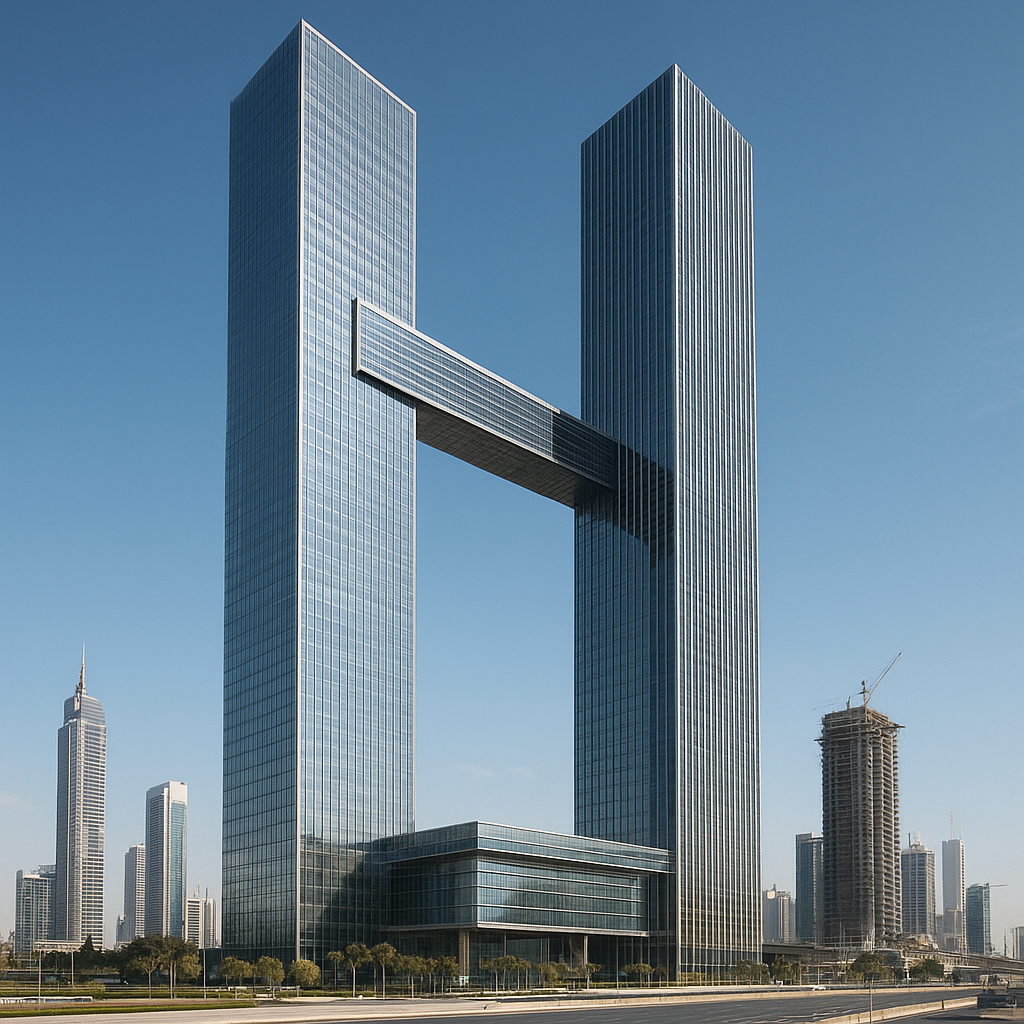
One of the most striking elements of the project is the horizontal element spanning the twin vertical volumes — commonly referred to as The Link. This feature is both an aesthetic signature and an engineering achievement. The two towers frame the horizontal structure, which appears to float between them and offers an uninterrupted panoramic vantage point.
Form and symbolism
Architecturally, the composition of vertical towers and a suspended bridge can be read as a metaphor for connection: between business and leisure, private life and public space, local tradition and global modernity. The silhouette of the complex was deliberately conceived to create a memorable landmark on the Dubai skyline while responding to functional requirements such as views, daylighting and skyline composition.
Engineering highlights
Creating a large horizontal span between two vertical towers requires advanced structural solutions. The Link acts as a cantilevered slab with complex load transfer into the towers and foundations. To ensure stability under wind loads and dynamic forces, the engineering team employed stiffened core systems, tuned dampers, and high-performance materials. These measures allow the Link to deliver both open interior volumes and a safe, comfortable experience for occupants.
Uses, interiors and amenities
One Za’abeel is a truly mixed-use development, combining hospitality, residential, office and retail elements to create a vertical urban quarter. This mixed program supports a 24/7 environment in which work, living and leisure coexist within a single composition.
Hospitality and residences
One Za’abeel has been developed to include luxury hotel components alongside long-term residential units. The hotel portion benefits from the dramatic vistas afforded by The Link and high-level floors, making it attractive for guests seeking premium experiences. Residential areas are designed to offer privacy and a variety of unit types, from compact metropolitan apartments to larger, high-end residences with expansive views.
Offices and corporate spaces
The office spaces within the towers are designed for flexibility and efficiency, targeting multinational corporations and local companies seeking prime addresses. Floor plates are typically organised to maximise natural light and to provide efficient circulation. The location’s proximity to transport routes and business centres makes it highly desirable for corporate tenants.
Retail, dining and leisure
The podium and lower levels host a curated selection of retail outlets, dining venues and leisure amenities. High-end restaurants and cafés positioned near panoramic viewing areas take advantage of the building’s vistas, while ground-floor retail contributes to street activation. Leisure facilities — including fitness centres, swimming pools and wellness spaces — support both residents and visitors.
Signature element: The Link
The most publicised and visually arresting feature of the development is The Link, the suspended sky bridge that connects the two towers. It functions as an observatory, an event space and a unique hospitality venue. The Link allows uninterrupted 360-degree views of Dubai’s skyline, from the Burj Khalifa to the coastline, making it a sought-after destination for guests and visitors.
Visitor experience
Visitors to The Link can expect panoramic terraces, high-end dining and event spaces, and vantage points designed for optimal sightseeing and photography. The sense of elevation combined with transparent balustrades and glazed façades creates dramatic visual connections with the city below. Access is often arranged through hotel bookings, events or public visitation slots when available.
Statistics and technical data (known and approximate)
While some project details may vary across sources, the following items compile widely reported and generally accepted information about the complex. Where precise figures are uncertain, approximations are indicated.
- Function: Mixed-use (hotel, residential, offices, retail, observation/event space)
- Composition: Two towers connected by a horizontal sky bridge (The Link)
- Height: The towers are high-rise structures — estimates commonly place the complex among medium-to-tall skyscrapers in Dubai; the overall composition rivals many of the city’s prominent mixed-use developments (exact tower heights vary by source).
- Floors: The towers have multiple levels tailored to different uses — hotel floors, residential floors, and commercial office floors (floor counts reported in various references typically range across the high tens).
- Developer and stakeholders: The project involved prominent local and international development partners and professional teams (developer names and contracting firms are available through project press materials and local property registries).
- Completion: The complex was completed and opened in the late 2010s to early 2020s period; some facilities and operational components were phased to accommodate tenant fit-outs and hospitality openings.
Note: For exact numeric values such as definitive height in metres, floor counts per tower, total gross floor area and construction cost, official developer publications, planning authority filings and reputable architectural databases should be consulted. These primary sources will provide the most reliable quantitative data.
Design philosophy and sustainability
Although One Za’abeel is foremost a statement of luxury and engineering, the project also responds to environmental and operational considerations. High-performance glazing, energy-efficient mechanical systems and intelligent building management features are typically integrated into developments of this calibre in Dubai to reduce energy consumption and improve occupant comfort.
Passive and active strategies
Passive design elements include façade orientation, shading devices and careful glazing selection to mitigate solar heat gains, particularly important in Dubai’s climate. Active systems often feature efficient HVAC, LED lighting, and smart controls that adapt to occupancy and external conditions, improving overall energy consumption. Water-saving fixtures and landscape strategies that reduce irrigation needs are also commonly implemented.
Economic and cultural significance
One Za’abeel contributes to Dubai’s continued evolution as a global hub for business, tourism and design. By offering premium office space, luxury hospitality and high-end residences in a single, visible landmark, the complex strengthens the city’s competitive position in attracting international corporations, wealthy residents and discerning tourists.
Role in the property market
High-quality mixed-use developments like One Za’abeel often command premium rental and sale rates — driven by location, brand associations and unique amenities such as The Link. Such projects also support ancillary economic activity: retail, F&B, property management, events and tourism services that generate employment and revenue streams.
Symbolic value
Beyond financial measures, One Za’abeel serves as an architectural bookmark in Dubai’s skyline — an example of how contemporary design and ambitious engineering are used to craft new urban identities. The project’s visual impact, particularly from major thoroughfares and adjacent parks, reinforces Dubai’s reputation for bold architectural statements.
Public access, tourism and events
One Za’abeel’s combination of public-facing amenities and exclusive hospitality spaces makes it a flexible venue for a range of uses. The Link, with its sweeping views, is particularly attractive for events such as private dinners, corporate meetings, fashion shows and cultural happenings. Public access may be limited by security and operational considerations, but the building remains a sought-after destination for visitors seeking a premium perspective on the city.
- Event bookings: The Link and certain function spaces are often available for private events and corporate gatherings.
- Dining and hospitality: High-end restaurants and lounges capitalise on the building’s views to offer unique dining experiences.
- Tourist appeal: While not necessarily a mainstream tourist attraction like the Burj Khalifa, One Za’abeel is featured in architecture and design tours focused on modern Dubai landmarks.
Interesting facts and anecdotes
– The name One Za’abeel underscores both singularity and locality — positioning the development as a leading address within the Za’abeel district.
– The visual drama of a long, horizontal volume suspended between vertical towers is a relatively rare configuration in high-rise architecture, making One Za’abeel an object of professional interest for architects and engineers.
– The Link’s vantage points offer views that can include multiple iconic Dubai landmarks simultaneously, providing rare photographic opportunities.
– Projects of this nature typically require coordination among many disciplines — structural engineers, façade consultants, acousticians, MEP specialists and landscape designers — highlighting the collaborative nature of contemporary mega-projects.
Comparisons and precedents
The idea of connecting towers through sky bridges has precedents across the globe, from residential sky bridges to pedestrian links in commercial complexes. What sets One Za’abeel apart is the scale and the way the Link becomes a fully programmed space — an occupiable and experiential element rather than merely a circulation route. In that sense, it follows a lineage of dramatic structural expressions while carving its own niche through local context and ambition.
Practical information for visitors
Visitors planning to experience One Za’abeel should consider the following practical points:
- Access: Entry to hospitality areas and The Link may be via hotel lobbies or designated public entrances; some areas require reservations or event invitations.
- Transport: The location is well served by Dubai’s road network and is within a short drive of major transit nodes; parking and drop-off facilities are typically provided for guests.
- Best times to visit: Sunrise and sunset provide dramatic lighting for views and photography; evenings also offer evocative cityscapes with illuminated landmarks.
Conclusion
One Za’abeel is a contemporary exemplar of Dubai’s architectural ambitions: a mixed-use complex that merges functional diversity with a bold visual identity anchored by The Link. It exemplifies modern engineering, luxurious urban programming and the strategic use of iconic form to shape a city’s image. Whether viewed from the street, from adjacent parks or from within its panoramic spaces, One Za’abeel delivers a memorable experience grounded in both place and innovation.