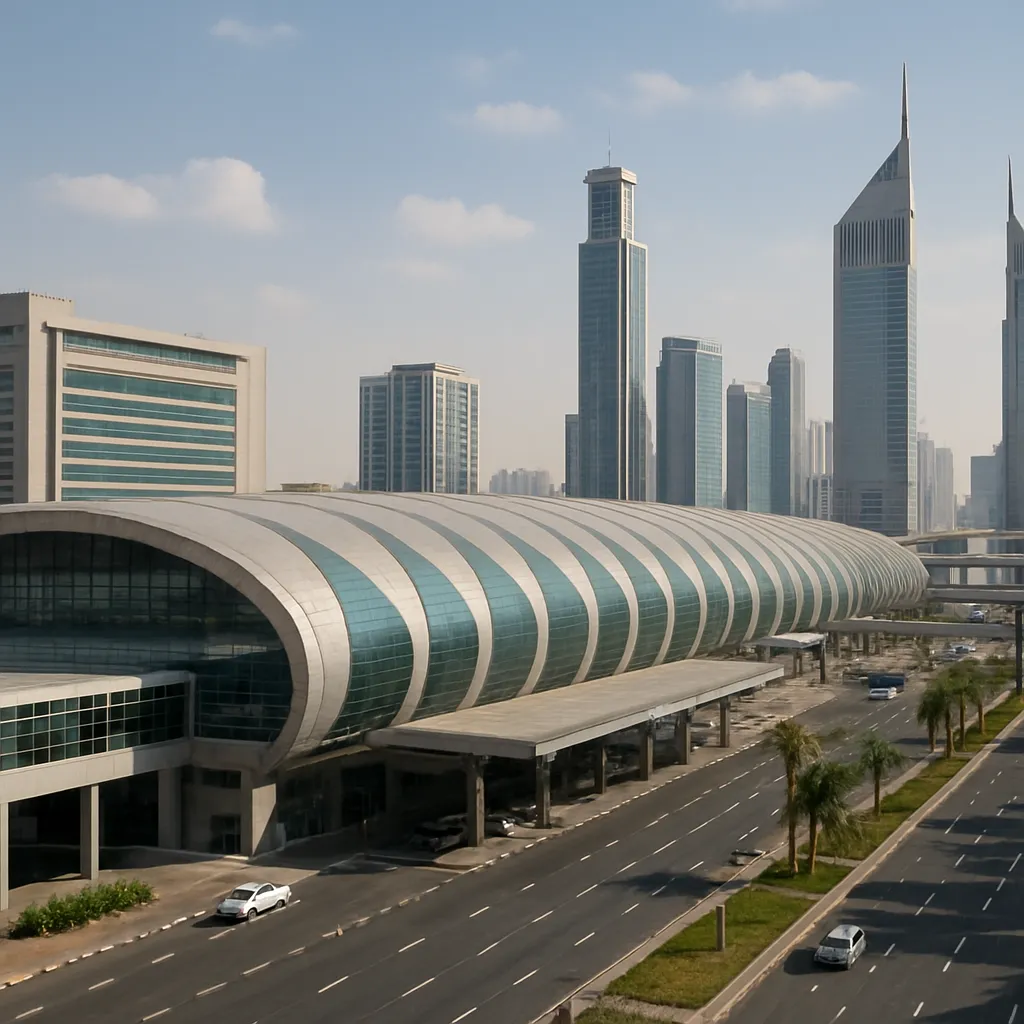
The Dubai International Airport Terminal 1 is a major component of the city’s aviation landscape and an integral part of the Airport District — a dense cluster of transport, hospitality and commercial buildings that together define Dubai’s gateway to the world. This article explores the Terminal 1 building: its location, role within Dubai International (DXB), architectural and operational highlights, connectivity and passenger experience, plus interesting facts and available statistical context. The aim is to offer a clear, useful and richly detailed overview for readers interested in aviation, urban planning, travel infrastructure and the story of one of the world’s busiest airport complexes.
Location and context within the Airport District
Terminal 1 sits inside the larger complex known as Dubai International Airport, located on Airport Road in the eastern part of the city. The airport lies close to the historic creek-area neighborhoods and is conveniently positioned for access to central Dubai, the trade districts and major highways connecting to Abu Dhabi and Sharjah. Within the Airport District, Terminal 1 neighbors Terminal 3 and Terminal 2, support buildings, cargo facilities, and a wide array of hotels, commercial developments and logistics operations that collectively create an intense zone of aviation activity.
Geographic and urban setting
- Proximity to the city center: Terminal 1 is only a short drive from downtown and business districts, typically under 20 minutes without heavy traffic — a factor that strengthens Dubai’s appeal as a global hub for transit and business travel.
- Integration in the Airport District: The terminal is part of a contiguous aviation campus where passenger terminals, cargo areas, airline offices and hospitality services sit side by side, promoting operational efficiency and passenger interchange.
- Transport corridors: Major roads and public transport lines, including the Dubai Metro Red Line, serve the area and provide direct connections to key parts of the city.
Thanks to that location, Terminal 1 functions less like a standalone building and more like a node in a complex ecosystem that supports millions of travelers each year.
What Terminal 1 is known for
Terminal 1 has a reputation for serving a large portion of international carriers and providing robust long-haul connectivity. It is known as a major hub for airlines other than the national carrier (Emirates, which primarily operates from Terminal 3) and stands out for its role in the airport’s global route network. Several attributes make Terminal 1 notable:
- International connectivity — Terminal 1 handles a high volume of international flights connecting Dubai with Europe, Asia, Africa and the Americas.
- Operational scale — As part of DXB, Terminal 1 contributes to the airport’s status as one of the world’s busiest international airports by passenger traffic.
- Passenger services — The terminal offers a broad range of retail, dining and lounge options aimed at both transfer and origin-destination passengers.
- Integration with concourses — Terminal 1’s satellite concourses expand gate capacity and aircraft handling capabilities, enabling the terminal to process large, overlapping waves of flights.
These features make Terminal 1 an indispensable part of Dubai’s aviation infrastructure and a frequent point of transit for global travelers.
Architecture, layout and passenger experience
While Terminal 1 is a functional and operations-driven structure, it also reflects Dubai’s focus on high-quality passenger experience. The architectural and interior design elements emphasize clarity of circulation, comfortable waiting zones, and generous retail areas designed to serve both business and leisure travelers.
Building layout and concourses
- Terminal 1 consists of a main check-in hall, security processing zones, duty-free and retail areas, arrival halls, and satellite concourses that hold the boarding gates. This separation between check-in and gate areas reduces congestion at peak times.
- Satellite concourses increase gate flexibility and allow aircraft docking independent of the main terminal building, improving turnaround times and operational resilience.
- Clear signage and passenger flows are designed to optimize transfer times for those in transit, an important consideration given DXB’s heavy transfer passenger volume.
Passenger amenities and retail
Terminal 1 provides many of the modern amenities travelers expect at an international hub: lounges, family services, retail boutiques, duty-free shopping, dining options ranging from quick-service outlets to sit-down restaurants, and support services such as currency exchange and travel assistance. Over the years, retail space has been curated to respond to the airport’s diverse passenger mix, blending global brands with regional specialties.
Accessibility and comfort
Facilities for passengers with reduced mobility, efficient baggage handling systems, and well-organized public spaces are integral to Terminal 1’s design. Seating, rest zones and quiet areas are distributed throughout departure and arrival halls to accommodate different traveler needs — from short transit waits to longer layovers.
Connectivity and transport links
Easy access to and from Terminal 1 is one of its greatest operational strengths. The terminal is integrated into Dubai’s surface and public transport networks, making it straightforward for passengers to move between the airport and the city or to transfer to other terminals within the Airport District.
Public transport
- Dubai Metro: The Red Line serves the airport with a dedicated station for Terminal 1, offering quick, scheduled rail links to downtown Dubai, the financial district and other urban centers. The metro station is a major convenience for cost-conscious travelers and provides predictable journey times during peak traffic.
- Bus and shuttle services: Public buses and private shuttle services run frequent routes to nearby hotels, business districts and to other terminals within the airport complex, aiding passenger transfers and last-mile connectivity.
Road access and parking
Terminal 1 is directly accessible from the surrounding highway network. Short-term and long-term parking options are located close to the terminal building, and road signage is designed to channel traffic efficiently to drop-off and pick-up points. Rideshare and taxi zones are clearly designated and commonly used, especially for point-to-point travel to city attractions and hotels.
Operational statistics and role in global aviation
Dubai International Airport has long been one of the busiest global hubs for international passengers, a position supported by the capacity and throughput of Terminal 1 along with Terminals 2 and 3. While exact figures for Terminal 1 alone are not always published separately, the broader airport statistics provide useful context.
High-level figures
- Overall airport traffic: Dubai International has historically handled tens of millions of passengers annually and in peak years has recorded figures in excess of 80 million passengers, placing it among the world leaders in international passenger traffic.
- Terminals and capacity: DXB comprises multiple terminals (Terminal 1, Terminal 2 and Terminal 3), two parallel runways and numerous concourses, enabling the airport to manage a large fleet of widebody and narrowbody aircraft across a global route network.
- Regional significance: DXB is a primary hub connecting East and West, with significant transfer passenger volumes that contribute to throughput — Terminal 1 plays a major role in processing those transfers among international carriers.
These facts underline Terminal 1’s importance within a system that handles both origin-destination and transfer traffic on a massive scale.
Interesting facts and lesser-known details
Beyond routine operations, Terminal 1 and the Airport District are associated with a number of distinctive features and activities that reflect Dubai’s ambitions and the scale of its aviation infrastructure.
Design and service innovations
- Continuous modernization: Terminal 1 has been subject to phased upgrades over time, aimed at improving passenger throughput, modernizing retail spaces, and upgrading technology for security and baggage handling.
- Focus on retail as experience: The airport environment is curated not merely for transit efficiency but as a shopping and dining destination, with duty-free shopping forming a significant part of the passenger experience.
- Integration with hospitality: The Airport District supports a dense cluster of hotels and conference facilities that serve transit passengers and business travelers, complementing Terminal 1’s role as a gateway.
Role in global connectivity
Terminal 1 serves thousands of scheduled flights each month, linking Dubai to major cities across continents. The terminal’s operating patterns reflect Dubai’s strategy to be a central transfer point: airlines schedule flights to create transfer windows, and the airport’s layout supports efficient inter-terminal movements.
Environmental and operational challenges
Like all major airports, Terminal 1 operates in a context of environmental considerations, including energy consumption and noise management. Dubai International has explored strategies to improve operational efficiency and energy performance; such measures often involve collaborative efforts across the Airport District.
Future outlook and development within the Airport District
Terminal 1’s future will be shaped by broader trends in aviation, regional growth strategies and evolving traveler expectations. Several themes are likely to influence its trajectory:
- Capacity management: As global travel rebounds and demand patterns shift, the airport will continue to balance investments across terminals to manage peak-hour demand and seasonal variations.
- Technological upgrades: Continued deployment of digital services, touchless processing, biometric systems and improved baggage handling are likely to enhance throughput and customer experience.
- Sustainable operations: Pressure to reduce the environmental footprint of large airports will inform decisions on energy use, waste management and ground operations in the Airport District.
- Urban integration: Development around the Airport District — hotels, logistics parks and commercial centers — will continue to evolve in response to passenger and cargo demand, with Terminal 1 remaining a focal point for such integration.
These directions reflect the interplay between immediate operational needs and long-term strategic planning at one of the world’s most visible aviation hubs.
Practical information for travelers
Whether you are transiting through Terminal 1 or starting your journey there, some practical tips can improve the travel experience and help manage time effectively.
- Allow adequate transfer time: Although DXB is efficient, transfers between terminals may require time depending on airline procedures and security checks. Check recommended minimum connection times with your carrier.
- Use public transport where possible: The Dubai Metro’s Airport Terminal 1 station provides a predictable and often faster connection to the city than road transport during rush hours.
- Check amenities in advance: Lounges, family rooms and special assistance services can be arranged in advance to smooth the journey, especially for passengers with limited mobility or for families traveling with young children.
- Plan for retail and dining: Terminal 1’s retail areas open early and close late; planning around meal and duty-free shopping windows can save time and enhance convenience.
Summary
Terminal 1 in the Airport District of Dubai International Airport is a major, functional, and strategically important building within one of the world’s busiest international aviation hubs. Its strengths lie in robust connectivity, well-considered passenger flows, comprehensive amenities and a role in the city’s broader strategy of linking global markets. Although many statistics are reported for the airport as a whole rather than individual terminals, Terminal 1’s contribution to DXB’s overall throughput and reputation as a global transfer center is clear.
For travelers, airline planners and urban observers alike, Terminal 1 offers an instructive example of how modern airport terminals combine architecture, operations and commercial services to meet the demands of highly international passenger flows. As aviation evolves, Terminal 1 and the surrounding Airport District will continue to adapt — balancing immediate operational needs with long-term strategies for capacity, sustainability and passenger experience.