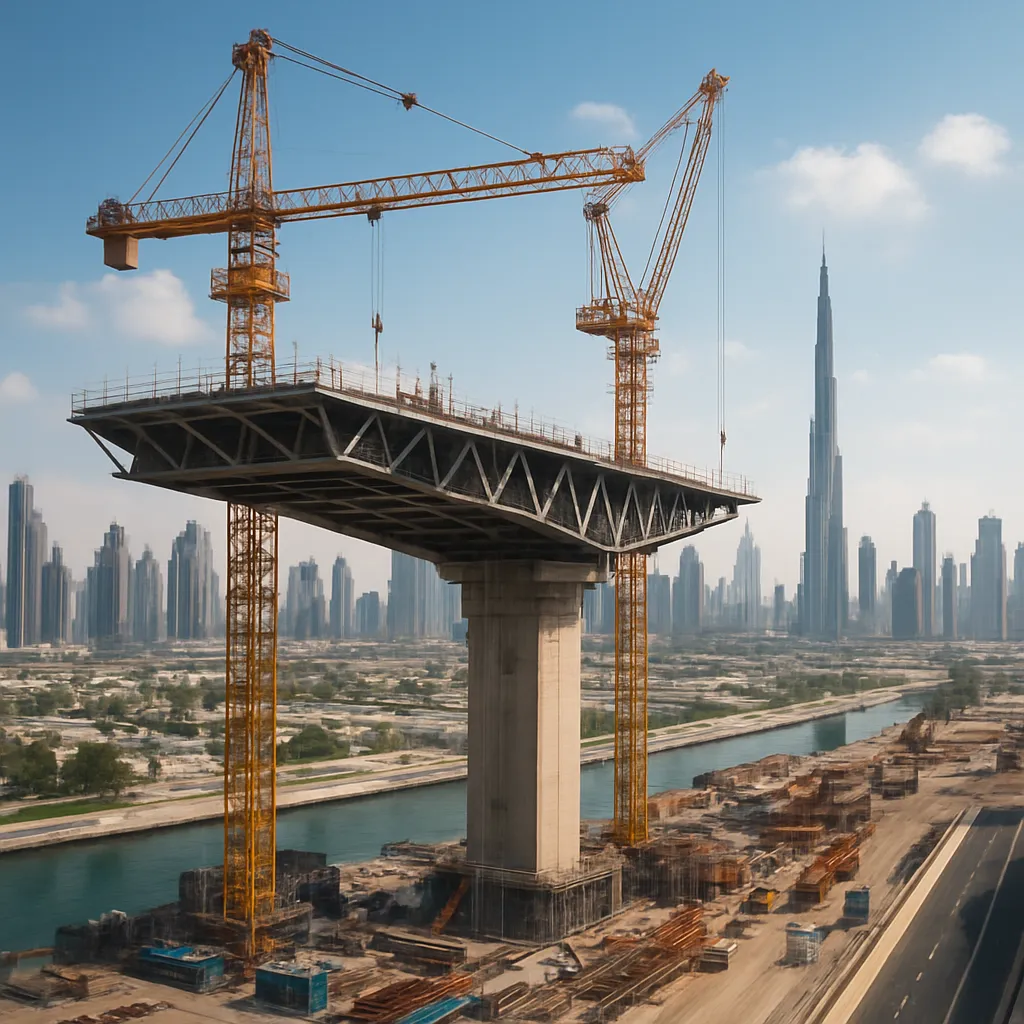
The ever-evolving skyline of Dubai has set new benchmarks in architectural ambition and structural ingenuity. Among the most striking feats are the city’s longest cantilever structures, where daring overhangs defy gravity and push the boundaries of modern construction. Engineers and architects in Dubai have embraced advanced design philosophies, pioneering materials, and rigorous analysis to create superstructures that marry form with function. This article delves into the **engineering** brilliance behind these cantilevers, exploring the challenges, innovations, and landmark projects that define Dubai’s architectural prowess.
Design Challenges and Innovations
Creating extensive cantilevers in a fast-growing urban environment like Dubai involves overcoming numerous **load-bearing** and environmental obstacles. Engineers must account for extreme temperatures, high wind speeds, and the corrosive marine atmosphere. To ensure structural **stability**, advanced computational tools such as finite element analysis (FEA) are essential. By simulating stress distributions and deflection patterns, teams can optimize the **geometry** of beams, trusses, and support columns to achieve maximum performance with minimal material usage.
An emphasis on **sustainability** has also driven innovation in material selection and construction methods. Lightweight, high-strength steels and composite systems reduce the carbon footprint while enhancing durability. Smart monitoring systems, embedded within critical joints, provide real-time data on strain, vibration, and temperature changes. This approach delivers unprecedented **precision** in maintenance planning, ensuring the resilience of these ambitious cantilevers throughout their service life.
Designing for dynamic loads—from wind gusts to pedestrian movement—requires careful attention to natural frequencies and damping characteristics. Engineers integrate tuned mass dampers or viscoelastic devices into the cantilever’s support structure to mitigate oscillations. In some cases, aerodynamic cladding and perforated façades help reduce wind-induced vortex shedding, safeguarding occupant comfort and structural integrity alike.
Case Studies of Iconic Dubai Cantilevers
- Dubai Frame
- The Dubai Frame stands as a monumental picture frame encircling the city’s past and future. Its cantilevered “top bridge” spans 93 meters, providing panoramic views of Old and New Dubai.
- Engineers employed a steel-truss system with hidden tension rods to balance the overhang. The structure rests on two vertical supports, each anchored by deep pile foundations and post-tensioned concrete cores.
- Advanced photogrammetry and laser scanning verified alignment during construction, achieving a final deviation of less than 5 millimeters across the entire span.
- One Za’abeel Sky Bridge
- At 200 meters, the sky bridge at One Za’abeel is recognized as Dubai’s longest cantilever. It connects two 66-story towers and houses observation decks, restaurants, and event spaces.
- High-performance concrete and Grade 460 steel girders create a hybrid superstructure, balancing compressive and tensile forces with exceptional efficiency.
- To control deflection under live loads, engineers designed a variable-depth truss system, thicker at midspan and tapered toward the supports.
- JW Marriott Marquis Sky Bridge
- The world’s tallest hotel features a sky bridge on the 77th floor, cantilevered over two parallel towers. Guests enjoy uninterrupted views while crossing the bridge’s 30-meter overhang.
- Construction involved high-accuracy GPS during erection, enabling the cantilever sections to meet within 10 millimeters of their intended position.
- Dynamic analysis ensured that pedestrian-induced vibrations remained within comfort thresholds, with integrated dampers minimizing sway.
Structural Analysis and Material Selection
Choosing the right **materials** is vital to withstand Dubai’s harsh climate and demanding operational requirements. High-strength steels such as S355 and S460 are common, offering excellent yield properties and weldability. For critical joints, microalloyed steels with enhanced toughness prevent brittle fracture under cyclic loading.
Concrete mixes incorporate supplementary cementitious materials (SCMs) such as fly ash and silica fume, increasing compressive strength while reducing permeability. This enhances durability against chloride ingress from coastal air and prolongs the life of embedded reinforcement. In ultra-long cantilevers, engineered composite sections combine steel tubes filled with high-performance concrete, exploiting the synergy between materials to resist bending moments effectively.
Advanced structural analysis software enables iterative optimization of the cantilever’s cross-sections. Parametric modeling adjusts beam depths, flange widths, and web thickness until deflection, stress, and natural frequency targets are met. Nonlinear time-history simulations evaluate the structure’s response to seismic events, even though Dubai lies in a low-to-moderate seismic zone. These simulations ensure a robust design margin and comply with international codes.
Connection details receive special attention to maintain overall **resilience**. Bolted splice plates, friction-welded nodes, and post-tensioned anchorage systems all contribute to a continuous load path. Engineers often perform full-scale testing of these connections in specialized labs, validating performance under combined shear, tensile, and bending demands.
Construction Techniques and Quality Control
High-precision erection methods are a cornerstone of successful cantilever assembly. Temporary support towers and custom-designed shoring systems hold segments in place until final continuity is achieved. Hydraulic jacks and strand jacking allow fine vertical and horizontal adjustments, bringing cantilever tips into perfect alignment.
Prefabrication in controlled factory environments ensures that critical components meet tight **tolerance** requirements. Modules are then transported to the site and lifted by heavy-duty cranes or strand jacks, minimizing on-site welding and reducing weather-dependent delays. A rigorous quality assurance program, including non-destructive testing (NDT) such as ultrasonic and radiographic inspections, verifies weld integrity before load transfer.
Throughout the construction phase, real-time monitoring systems track deflections, support reactions, and ambient conditions. Data from fiber-optic strain gauges and accelerometers provide actionable insights, allowing engineers to adjust shoring loads or alter erection sequences to maintain safety and performance benchmarks.
Future Trends and Emerging Technologies
As Dubai’s ambitions continue to soar, emerging technologies promise to further elevate cantilever designs. Ultra-high-performance concrete (UHPC) and carbon-fiber-reinforced polymers (CFRP) offer new possibilities for slender, longer spans. Additive manufacturing of complex steel joints could reduce weight and cost while preserving structural capacity.
Digital twin platforms replicate the behavior of existing cantilevers, enabling predictive maintenance and lifecycle management. By fusing sensor data with advanced analytics, operators can anticipate fatigue hotspots, schedule targeted repairs, and extend service life without disrupting occupancy.
The integration of renewable energy harvesting into the cantilever façade—such as flexible solar panels or piezoelectric modules—adds a layer of **innovation** that aligns with Dubai’s sustainability goals. Combined with smart shading and responsive glazing, these systems enhance occupant comfort while reducing operational energy consumption.
Through bold vision, meticulous analysis, and state-of-the-art technology, Dubai’s longest cantilever structures epitomize the fusion of art and science. As these projects redefine what is structurally possible, they also shape a new era of **skyscraper** design that balances ambition with responsibility.